
Opening Scene: The Moment Everything Changed
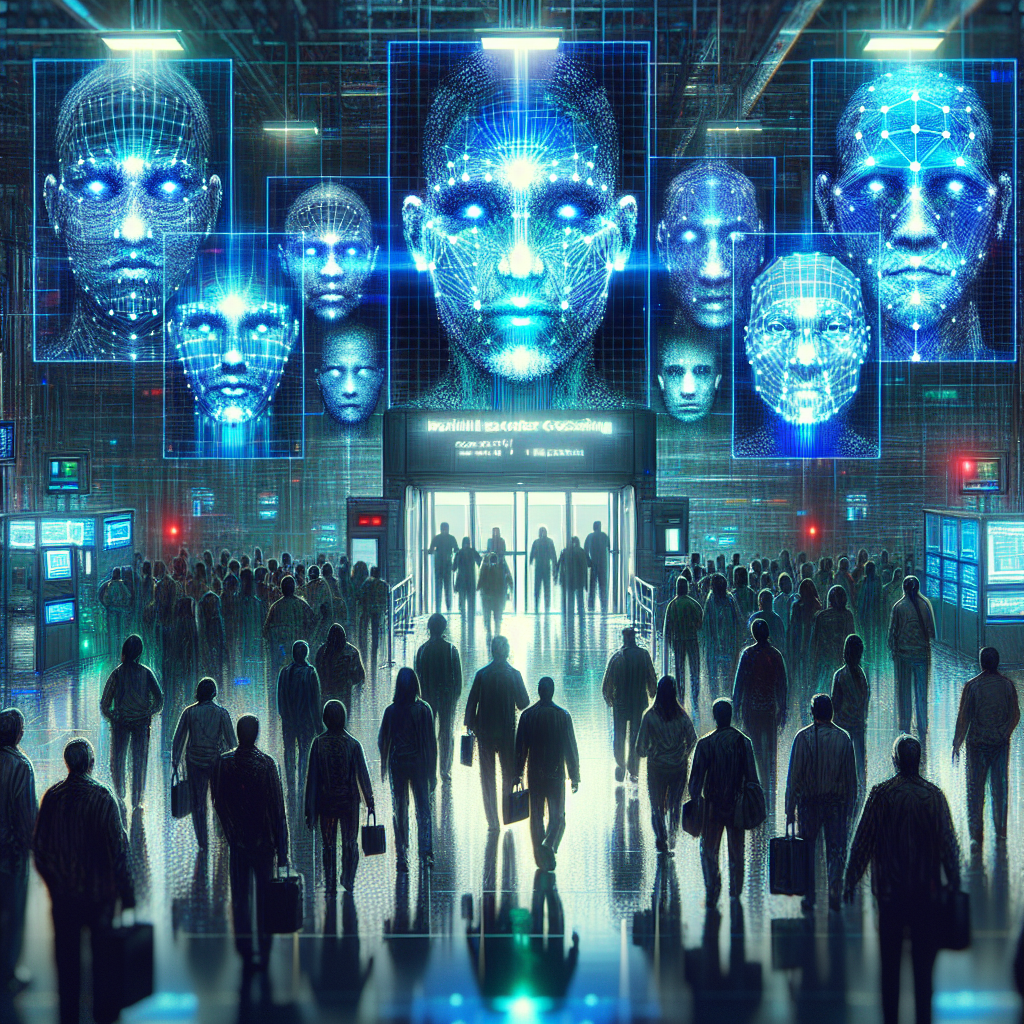
On a muggy Thursday in June 2024, as crowds stood restless at a Texas border checkpoint, an unremarkable camera watched quietly overhead. Within seconds, a grainy face in the immigration queue became a digital fingerprint—matched, cataloged, and analyzed by a secretive AI server humming hundreds of miles away. Border agents exchanged nervous glances as a laptop screen flashed a name, a decade-old mugshot, and, disturbingly, a list of the traveler’s social posts: “Likes: Bernie Sanders, #DefundICE.” The officer’s decision, in that moment, wasn’t just informed by evidence—it was shaped by a system imbued with more than technical sophistication. It carried an agenda[5].
How We Got Here: The Rise of Clearview AI and a Billion Faces
To outsiders, facial recognition software is the stuff of spy thrillers and airport security. But Clearview AI, the opaque tech company at the heart of this story, quietly built the world’s largest biometric database—more than 60 billion faces, scraped from news sites, social feeds, and public image boards, all without consent[1][5]. Their system didn’t just store the photos. It analyzed them, boiling each image down to an intricate “faceprint”—essentially a digital DNA, mapping the contours, pores, and expressions of a life lived mostly offline[5][4].
Here’s how the system works: upload a candid snapshot to Clearview’s engine, and it fans out across its database, looking for facial matches. Linked images and web addresses pop up, often revealing a person’s friends, neighborhoods, even political leanings[1][5]. The process is eerily reminiscent of fingerprint matching—except the “forensic evidence” here is your digital face, volunteered unknowingly every time you post an image online[4].
The Silent Shift: From Crime Solving to Ideological Policing
Clearview pitched its technology to law enforcement as a tool to catch criminals, solve murders, and identify missing persons[2]. But internal pitches and leaked documents—reported in investigative exposés—revealed a darker edge. The tech’s founder, a staunch Trump supporter, proposed using facial recognition at border crossings to flag not just prior offenders, but political sentiment, scanning social accounts for signs of resistance: posts critiquing the government, support for left-wing causes, or even “anti-Trump” memes[5].
This silent “screening” of ideology—blending criminal databases with social sentiment analysis—transformed a crime-fighting tool into a potential weapon for ideological profiling. The mere act of crossing a border wearing a T-shirt emblazoned with a certain slogan became grounds for investigation[5].
How the Technology Works: Under the Skin of AI Surveillance
Unlike old-school CCTV, Clearview’s AI goes beyond simple photo comparison. When confronted with a blurry or obscured picture, it uses “hallucination algorithms”: artificial intelligence trained to guess missing visual details by referencing billions of similar faces[3]. It’s like a hyper-vigilant memory, filling gaps with composite data from strangers until it finds the closest match.
In practice, this means even partial images—from protests or public rallies—can be reconstructed and linked to social profiles. The more data poured into the system, the more accurate, powerful—and, critics argue, risky—its identifications become[3][4].
A Human Face: Maria’s Ordeal
Picture Maria Gómez, a fictional teacher from El Paso. She’s never committed a crime. Yet after joining a protest against family separations, her photo circulates online. Months later, a casual border crossing for a family funeral turns into hours of detention. Agents have flagged her “affinity for left-leaning groups,” found by Clearview’s cross-check of social posts. Her life unravels as suspicions grow—not because of evidence, but because an invisible algorithm has tied her face to a “threat profile.” For ordinary citizens, the line between justice and targeting blurs, leaving fear and distrust in its wake.
The Global Backlash and Local Response
As Clearview’s reach grew, so did alarm. Outrage rippled through activist circles and civil liberties groups, prompting congressional hearings and lawsuits. Lawmakers called for moratoriums, demanding transparency. European data authorities slapped the company with multimillion-dollar fines for “massive privacy violations.” Social media giants attempted—often in vain—to block Clearview’s scrapers.
Yet, in many U.S. jurisdictions, law enforcement persisted, citing cases solved and children found[2]. Public defenders, sensing a shift, began using the same database to exonerate the wrongfully accused—a strange twist where the same tool could both target and free innocent people[2].
What’s Next / Could It Happen Again?
Even as governments push for regulation, the core technology—AI-powered recognition fueled by the internet’s endless supply of faces—continues to evolve[3][4]. Tomorrow’s iterations won’t just identify you at a distance; they’ll infer your emotions, affiliations, and perhaps even intentions from micro-expressions and digital breadcrumbs.
The big question isn’t whether facial recognition will shape our future. It’s who decides what story your face tells—and what limits, if any, should be written into code.
So what do you think? Should a face be all it takes to decide who belongs—and who doesn’t—in the eyes of the machine?
FAQ
-
What is Clearview AI facial recognition?
Clearview AI is a platform that collects billions of online photographs to create a searchable facial recognition database for law enforcement and, recently, public defenders[1][2][4]. -
Is facial recognition technology used by the government?
Yes, agencies like the FBI, ICE, and Border Patrol have integrated Clearview’s software to identify suspects or, increasingly, to flag people based on social media activity and perceived political views[4][5]. -
How does facial recognition software work?
It analyzes facial features and translates them into digital markers (“faceprints”). Modern systems, like Clearview, use AI to match even blurry or partial images by cross-referencing with similar faces in their massive database[3][4]. -
What are the risks of using facial recognition for law enforcement?
Risks include mass surveillance, misidentification, potential targeting based on political or religious views, and uncertain accuracy for marginalized groups[5]. -
Can facial recognition be used to help people?
Yes, Clearview now offers its system to public defenders to help exonerate those wrongly accused, showing its potential both for justice and abuse[2].