
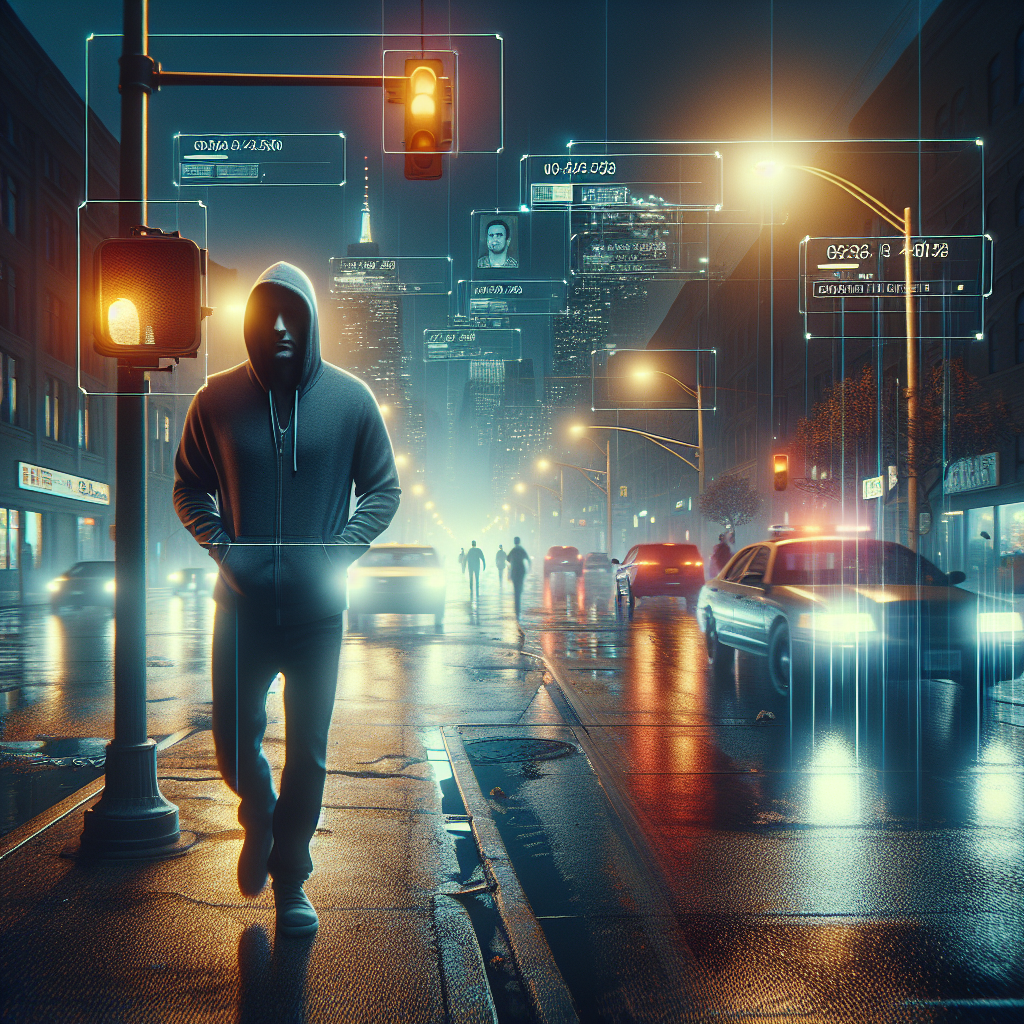
A Quiet Arrest in Texas
The camera on the officer’s body armor is rolling when the door cracks open.
On the other side stands Nick Reiner — once a face on wanted posters, now just a tired man in a blank T‑shirt, blinking into the morning light.
For months, he had been a ghost: no working phone, no car in his own name, no official address. Yet here he is, found not by chance, but by a web of high‑tech tools quietly pulsing in the background of modern life.
This is the story of how a man who tried to erase himself from the grid was slowly, methodically dragged back into the light.
The Fugitive Who Vanished Into Data
Reiner wasn’t some shadowy cartel boss with an army of fixers. He was the kind of fugitive that scares people more: an ordinary‑looking man who simply stopped playing by society’s rules.
No cell bills. No job records. No apartment lease.
He didn’t “go off‑grid” in the romantic, cabin‑in‑the‑woods sense. Instead, he tried something smarter — to live inside the noise of American life, where a million faces, cars, and credit swipes blur together.
But in 2025, that noise is exactly what gives you away.
Across agencies, investigators began to assemble what one cyber‑crime analyst called “a moving silhouette of a person” — built not from a single clue, but from many small, digital echoes.
How Tech Turned a Cold Trail Hot
The tools used to find Reiner weren’t sci‑fi prototypes. They were the kind of technologies already reshaping law enforcement everywhere — each one controversial, each one powerful.
1. License Plate Readers: The Rolling Net
Automatic license plate readers (ALPRs) are cameras mounted on police cars, traffic lights, and road poles that scan every plate that passes and log place and time.
Reiner avoided cars in his name, but investigators didn’t need him to own one. They just needed a pattern — a plate that kept showing up near addresses, stores, or neighborhoods connected to him in the past.
One investigator later described it like this:
“You don’t chase the man first. You chase the metal he might be sitting in.”
Within weeks, a handful of “nothing” hits — late‑night gas stations, a discount supermarket, a strip‑mall laundromat — started to form a rough circle on the map.
2. Data Exhaust: The Invisible Footprints
Everyday life leaks “data exhaust” — small, often forgotten traces of behavior:
- Prepaid phone top‑ups
- Wi‑Fi network pings
- Discount card swipes at stores
- Food delivery orders to “temporary” addresses
No single piece was enough to find Reiner. But taken together, they worked like forensic dusting — making his outline visible. A prepaid phone repeatedly activated in one regional area. A grocery chain loyalty card once tied to him, then “used” again months later on the other side of the state.
Nothing conclusive. But always, the same corridor. Always the same county.
3. Face Recognition: The Machine That Doesn’t Forget
Then came the break: a blurry in‑store camera shot of a man buying cheap essentials — toiletries, canned food, basic clothes.
Using facial recognition technology — software that compares the structure of someone’s face to millions of stored images — investigators ran the frame against previous booking photos. The algorithm didn’t “declare” it was Reiner; it offered a probable match.
A senior official later emphasized:
“Facial recognition isn’t magic. It gives you leads. Humans still have to do the work — and make the call.”
Humans did. They cross‑checked his gait, his build, even the way he carried his shoulders. It looked like him. Enough to send a team to quietly watch the store, and the surrounding streets.
One Ordinary Family, Living Next Door to a Manhunt
On a quiet street not far from that supermarket, Angela, a single mother of two, started noticing something off.
First, she saw a strange car parked down the block — different plates every few days, but always with people sitting inside, just watching.
Then, twice in one week, officers knocked on her door with polite but pointed questions.
Had she seen a man matching this photo?
Was anyone new renting rooms nearby?
Any odd deliveries, late‑night visitors?
Angela didn’t know it yet, but her children were playing in front yards and biking down sidewalks that had become a live surveillance zone.
Later, when she saw the arrest on the news, her reaction was complicated. Relief, yes. But also a quieter fear:
“If they can track down someone like that,” she said, “what does it mean they see about the rest of us?”
The Ethics Question No One Can Dodge
Civil liberties advocates were quick to respond. One digital rights lawyer called the case:
“A preview of a future where everyone is perpetually searchable — not just the criminals.”
The same tools that helped capture Reiner — facial recognition, mass data logs, license plate databases — are increasingly used in everyday policing, sometimes with shaky oversight and worrying error rates, especially for people of color.
Law enforcement officials counter with their own argument:
- These systems save lives.
- They prevent repeat violence.
- They make it harder for dangerous people to vanish.
Both things can be true at once:
Technology can protect — and it can pierce privacy in ways our laws haven’t fully caught up to.
Government and Industry Scramble to React
After the Reiner capture, lawmakers in several states didn’t wait. Committees convened emergency hearings on:
- How long police can store license plate records
- What level of certainty face recognition must reach before it’s used as a lead
- Whether citizens should be notified when their image appears in a law‑enforcement search
Tech companies providing these tools began issuing carefully worded statements about “responsible AI”, bias testing, and human oversight. Behind the scenes, according to one policy analyst, they were pushing just as hard to preserve their access to lucrative government contracts.
Meanwhile, activists demanded stronger “digital due process” — clear rules about how, when, and why these high‑tech systems can follow someone through their daily life.
What’s Next — And Could It Happen Again?
Could another Nick Reiner try to disappear today? Yes.
Could they stay gone forever? That’s getting harder.
As cities add more cameras, as cars, phones, and even doorbells plug into vast data networks, frictionless tracking becomes the default, not the exception. The real question is no longer “Can we find someone?”
It’s: Who gets to decide when we look — and how far we go?
If a man who tried to delete himself from the grid can be rebuilt from scattered data points and machine guesses, how long before the same machinery quietly maps you, too?
FAQ
Q1: What high‑tech tools were used to track down Nick Reiner?
Investigators relied on a combination of license plate reader systems, facial recognition software, and behavioral “data exhaust” — like prepaid phone records and purchase histories — to narrow down his location and confirm his identity.
Q2: Is using facial recognition to find fugitives legal?
In most regions, yes, but rules differ. Some cities restrict or ban law‑enforcement facial recognition, while others allow it with few limits. Ongoing debates center on accuracy, bias, and privacy.
Q3: How do license plate readers help in a fugitive manhunt?
License plate readers continuously scan and log plates, time, and location. By reviewing historical data, investigators can see where certain vehicles tend to appear, revealing patterns connected to a suspect.
Q4: Can ordinary citizens opt out of this kind of digital tracking?
Mostly, no. Public‑space systems — street cameras, traffic readers, and many databases — operate automatically. Individuals can reduce some data exhaust (like app tracking) but can’t fully escape public surveillance.
Q5: What does this case mean for the future of digital surveillance?
It shows how integrated surveillance technology can make it incredibly difficult for fugitives to stay hidden, while also highlighting urgent questions about civil liberties, government oversight, and how far society is willing to let always‑on tracking go.