
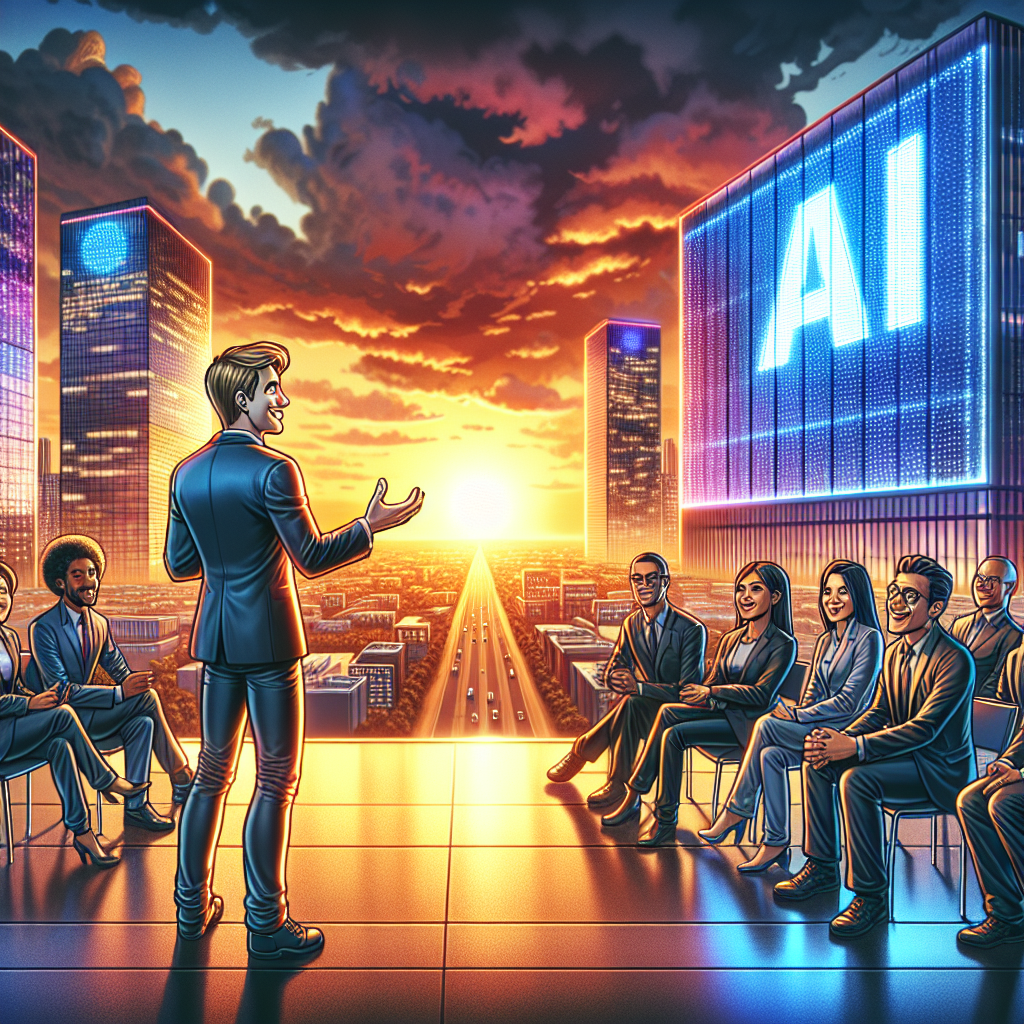
Scene: A startup campus in Palo Alto, fall 2025. Rows of electric scooters line up in front of a glassy AI lab, where a 27-year-old founder pitches investors on the next “revolution in human creativity,” her voice echoing through a eucalyptus-scented atrium. The mood is electric, buoyed by billion-dollar investments and the feverish promise of a technology that could change everything. But somewhere, in this perfect moment, a question cuts the air: is this progress, or hype on repeat?
Echoes from an Earlier Era
This isn’t the first time Silicon Valley has witnessed such wild optimism. Twenty-five years ago, the dot-com bubble dazzled the world: internet startups commanded staggering valuations, metrics like “eyeballs” and “traffic” replaced balance sheets, and venture capital poured in so fast it scorched the playgrounds of innovation. The crash, when it came, was sudden and fierce. Most upstart empires vanished[1][2][3].
Today, the numbers around AI are dizzying. In 2024 alone, global corporate AI investment hit $252.3 billion—a staggering thirteenfold leap over the past decade, and America’s tech titans like Amazon, Google, Meta, and Microsoft are putting $320 billion down on AI infrastructure this year[1]. Companies chasing the “next big thing” have minted dozens of new billionaires, and OpenAI—the brainchild behind ChatGPT—is valued at $500 billion despite launching its flagship product only two years ago[1].
Why This Moment Matters
At first glance, it feels like destiny. Unlike internet search or social media, artificial intelligence is projected to touch every aspect of our lives—from health diagnoses to city planning, from family chats to the future of work[1][4]. But beneath the gold rush, startling cracks are showing. Tech giants have poured more than $560 billion into AI infrastructure over two years, yet collectively generated just $35 billion in AI-related revenue[1]. Investment expectations are running miles ahead of what the tech currently delivers.
According to a recent MIT study, 95% of AI pilot projects fail to deliver meaningful results, despite $40 billion invested in just generative (creative) AI alone[1]. This disconnect—millions spent, pennies earned—strikingly mirrors the dot-com crisis, where the market’s hopes wildly outpaced economic reality.
Anatomy of the Modern AI Bubble
So how does an AI bubble form? It starts with promise: researchers invent something groundbreaking, and industry titans race to capitalize. Mountains of capital flood into startups. Share prices soar on speculation—not proven profits. Wall Street’s best and brightest pile in, hoping to catch the rocket before it breaks Earth’s pull[3].
The “attack vector,” to borrow a cybersecurity phrase, is hype. Founders tout futuristic demos; analysts forecast trillion-dollar markets; governments pledge support; and suddenly, everyone wants in. But the system is vulnerable. Many AI technologies are experimental—dependent on massive data centers and computational power, with little guarantee that demand will meet the supply piling up in server warehouses. It’s déjà vu for anyone who witnessed the unused fiber-optic cables of the 1990s, waiting for the world to catch up[1].
Expert Voices: Are We in Overdrive?
Sam Altman, OpenAI’s visionary CEO, is candid: “Are we in a phase where investors as a whole are overexcited about AI? My opinion is yes… Is AI the most important thing to happen in a very long time? My opinion is also yes[1].”
Yale finance analyst Dr. Fiona Reyes warns, “Euphoria masks risk. The history of market bubbles is a cautionary tale: transformative tech does not guarantee instant, broad returns. What matters is lasting value[3].”
Congressional tech policy leader Mark Kenney notes, “AI’s role is inevitable. Our task is to ensure responsible investment and sustainable growth—to avoid repeating a crash that stifled innovation for a generation.”
Everyday Ripples: The Family Next Door
Picture 38-year-old Malik Patel in suburban Ohio. He’s just retrained as a “prompt engineer,” hoping to future-proof his family’s income as local manufacturing declines. Malik builds AI-driven product catalogs for regional retailers, but finds his algorithms frequently miss the mark—costing his company time and trust. His employer is under pressure to show returns, and Malik feels the strain as leaders question whether these investments in AI will deliver at all.
Multiply Malik’s experience by millions—a workforce learning to adapt, sometimes chasing shadows, as companies search for ways to turn algorithmic breakthroughs into sustainable business.
Global Reactions: From Governments to Boardrooms
In response to the frenzy, governments are racing to regulate and invest. The European Union has fast-tracked its AI Act; US states offer tax breaks for AI startups; and China lures foreign talent with billion-dollar grants. Meanwhile, Wall Street is jittery. Analysts debate whether these valuations can hold; some hedge funds are quietly pulling out, wary of the same pitfalls that triggered the dot-com collapse[2][3][4]. Industry leaders urge patience, reminding everyone that infrastructure built today could fuel entirely new sectors tomorrow—even if the path forward is rocky.
What’s Next / Could It Happen Again?
Will the AI market collapse as spectacularly as its dot-com predecessor? History urges caution but not gloom. The internet bubble built the foundations for today’s digital economy, but the intervening decade was turbulent. AI, likewise, is certain to transform society—but not every investment will pay off, and not every prediction will come true[1][4].
As we watch this drama unfold, we face a provocative question: if the bubble pops, who will be left standing—and what lessons will shape the future of technology?
FAQ
Q: Is the AI bubble really 17 times bigger than the dot-com bubble?
A: Multiple sources confirm AI investments far outpace the dot-com era—even reaching 17 times the scale, fueled by massive infrastructure spending and soaring startup valuations[1][2][3].
Q: Why is there concern about an AI market crash?
A: The disconnect between huge investments and low revenue, plus the high failure rate of AI projects, raises fears of a repeat of the dot-com bust[1][2][3][4].
Q: What would an AI crash mean for everyday people and businesses?
A: It could result in layoffs, lost savings, slowing innovation—and a reset in how companies approach AI in daily operations.
Q: Are governments or regulators acting to prevent an AI bubble burst?
A: Yes. Global powers are moving quickly on regulations, investment guidelines, and incentives for sustainable growth[4].
Q: How does this compare to other technology bubbles?
A: Both share rapid growth, investor euphoria, and a gap between promise and reality. The difference is AI’s pervasive reach—and its uncertain timeline for fulfillment.
Q: Can the AI bubble burst suddenly, or will it slow down gradually?
A: Experts disagree. Some warn it could “pop” like the dot-com bubble, while others expect a slower correction as markets mature.
Q: Is now a smart time to invest in AI?
A: Financial experts advise caution—focus on firms with proven returns, real-world applications, and sustainable growth models.