
The Morning It All Vanished
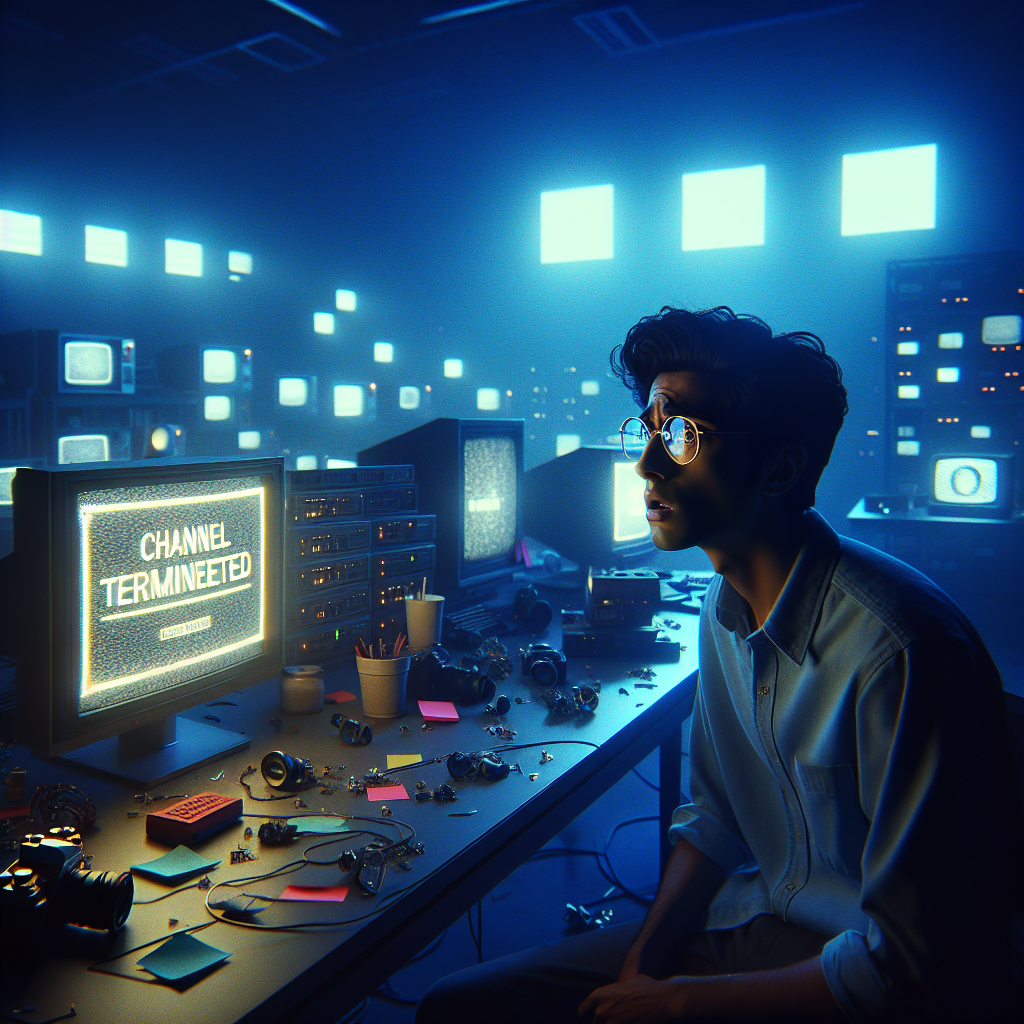
In the electric blue glow of his dual monitors, Enderman—a tech creator known for bending the boundaries between code and curiosity—blinked at a message that didn’t compute. His YouTube backup channel was terminated overnight. The official reason: linked to a foreign-language channel he’d never heard of, cited for multiple violations. Bewilderment soon turned to dread. Within days, his main channel—350,000 subscribers, nearly ten years of tutorials, experiments, and personality—was erased from existence[1].
This wasn’t just Enderman’s story. This was a digital ghost story for the algorithmic age.
When Algorithms Become Judge, Jury, and Executioner
Why did this happen? Dig beneath the surface, and the culprit is clear: artificial intelligence-powered moderation. Platforms like YouTube deploy AI, a form of automated decision-making software, to sort through billions of videos and enforce platform rules. If human moderation is a careful chess player, these systems are set on blitz mode—blindingly fast, often ruthless, and notoriously lacking in context or empathy.
For Enderman, the automated system ‘linked’ his account to another with a record of violations—a connection he neither understood nor could appeal. In an instant, both channels were digitally vaporized, “terminated for allegedly violating YouTube’s Terms of Service”[1][3]. There was no live human in the loop, no one to listen, and no path to immediate redemption.
System Error: How the AI Attack Vector Works
Let’s demystify how these errors happen. Think of the AI as a network of filters, always on the lookout for patterns: matching behaviors, email addresses, or content styles between accounts. Sometimes, AI gets it tragically wrong—tagging innocent creators for associations they never made. In Enderman’s case, his account was “wrongfully” linked to a completely unrelated foreign channel with copyright strikes[3].
If you’re wondering, “Can’t you just appeal?” The answer—painfully for creators—is not really, at least not with any urgency or clarity. The system that shut him down offered no human touchpoint, only impersonal forms and automated emails. The effect? Livelihoods gone with a single misfire.
Through One Creator’s Eyes: Digital Lives on the Line
Picture this: Anna, an aspiring educator uploading math tutorials from her tiny apartment, wakes to the same dreaded notification. Her years of lesson plans, comments from grateful students, all gone—judged guilty by machine, no opportunity to plead her case.
That human cost isn’t abstract. It’s personal and devastating, as Enderman described: “bullied” by an uncaring machine, powerless in the face of a blind verdict[1]. When creators invest their lives into content, these mistakes feel like being erased not just from a platform, but from a community and livelihood.
The Backlash: Creators and Communities Push Back
The tech world noticed. Fans rallied to archive Enderman’s videos, fighting to preserve what the machines could erase. Reddit threads simmered with outrage. “This is why you can never trust a platform with your life’s work,” one user wrote[1]. Across the creator ecosystem, there’s a rising fear that what happened to Enderman could happen to anyone.
Experts and analysts chimed in. Dr. Lily Xu, digital policy commentator, put it sharply: “Scalable moderation is necessary, but AI lacks the nuance of real judgment. At this scale, mistakes aren’t just possible—they’re inevitable.”
YouTube’s Response—and a Door Cracks Open
Did YouTube fix it? Not exactly. The company stayed silent on the specific case, declining to comment despite mounting pressure[1]. Fans and journalists filled the gap, raising uncomfortable questions: Who watches the algorithm? Who fixes its mistakes? And is there ever a way back once the system has spoken?
Yet, change might be in the air. In response to public and political pressure, YouTube initiated a limited “Second Chance” program, allowing some creators—particularly those caught by outdated COVID-19 misinformation policies or broader moderation sweeps—to eventually reapply after waiting out a year-long penalty[2][5]. Still, this doesn’t restore lost videos or subscribers; creators must build their legacy from scratch.
The Ripple Effects: Trust Shaken, Industry on Edge
This story highlights a larger tension: the race to automate comes at a cost. YouTube, like many tech giants, wields staggering power over public discourse and livelihoods. When that power is delegated to algorithms with no oversight, risk compounds.
Governments have begun noticing these flashpoints—proposing stricter transparency rules for automated moderation, and in some regions, weighing mandates for human oversight. Creator unions are springing up, demanding better appeal processes and public accountability when mistakes happen.
What’s Next: Could It Happen Again?
Could another Enderman moment occur? Absolutely—as long as algorithms reign without robust, human-driven fail-safes. Automation brings scalability, but at what cost to justice, creativity, and the digital economy itself?
So here’s the question: In an era where more of our lives, work, and identities are handled by machines, what would you do if an algorithm decided to erase you overnight?
FAQ
Q: What caused YouTube’s AI wrongful termination of tech creator channels?
A: YouTube’s automated moderation system mistakenly linked accounts based on pattern analysis, resulting in erroneous bans for creators like Enderman who had no connection to the flagged channels[1][3].
Q: Can creators appeal AI-based YouTube account bans?
A: Currently, appeals are mostly automated, with minimal to no opportunities for real-time human review. This makes rectifying wrongful terminations slow and frustrating for creators[1].
Q: What is YouTube’s “Second Chance” program for terminated creators?
A: It’s a new policy that lets some previously banned creators re-apply for new accounts after a year, but they must start from zero—no restored videos or subscribers[2][5].
Q: Why does YouTube use AI moderation?
A: YouTube uses AI to manage the immense volume of uploaded content and enforce policies at scale, but this approach can sacrifice accuracy and fairness.
Q: How are governments and communities responding to AI moderation errors?
A: There’s increasing demand for transparency, improved appeal rights, and stricter regulation around how tech companies deploy automated moderation at scale.
Q: Could wrongful AI terminations happen to anyone?
A: Yes. Any creator, regardless of size, is at risk when automated systems are the primary gatekeeper.