
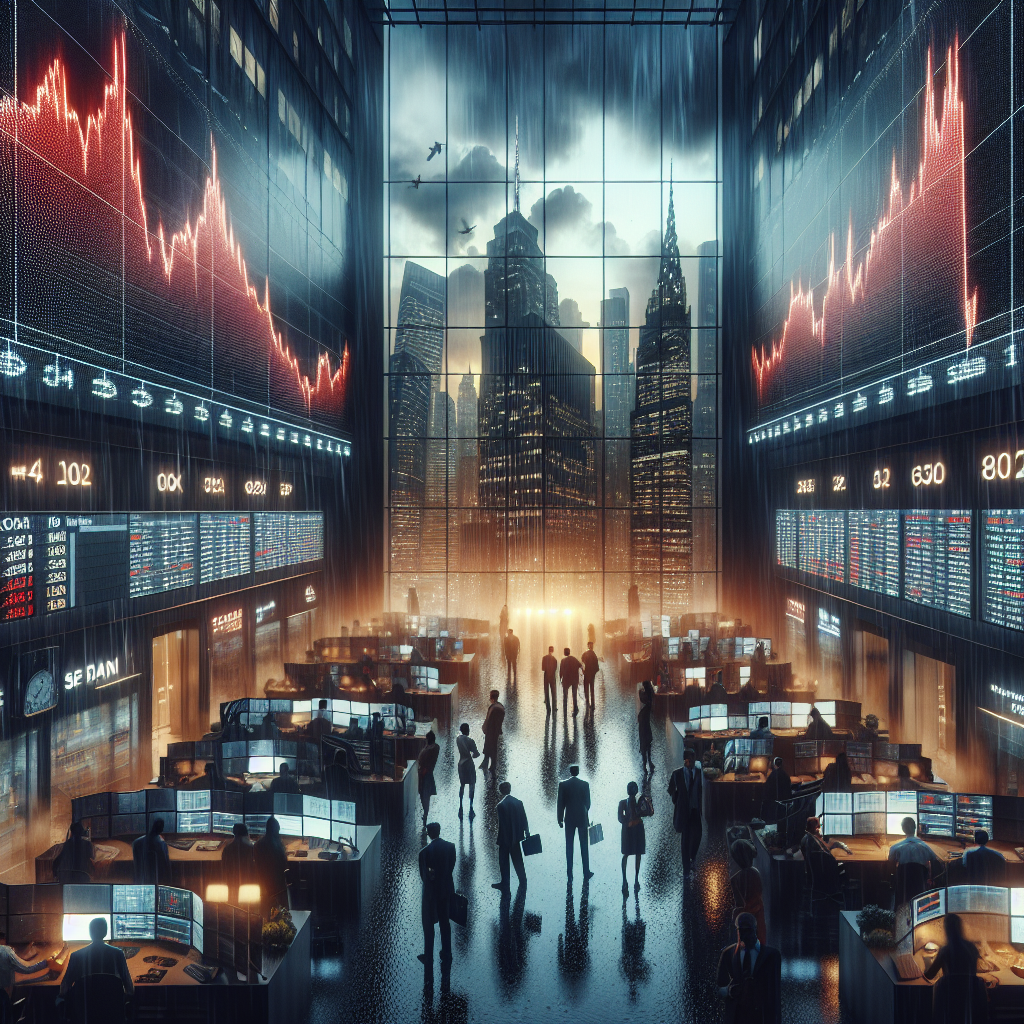
The ticker tape flickered red, a nervous pulse racing across Wall Street’s brightest screens. On November 4th, a hush fell. The fantasy that AI stocks could only go up crashed into reality—and for the first time in years, Silicon Valley’s digital gods felt mortal.
The Moment It All Cracked
It started with a whisper, the kind that rustles through the canyons of Manhattan’s trading floors: Is the AI dream too good to last? In the days before, chip-maker Palantir had dazzled with strong earnings[2]. AMD and Nvidia, kings of silicon, had posted results that would have stunned any other era. But investors didn’t cheer—they flinched.
Then, as the opening bell rang, a cascade began. Palantir tanked over 7%, its missing “clarity for 2026” stoking fear[2][5]. Oracle slipped, briefly erasing some of its blockbuster 2025 gain. Nvidia and AMD, the darlings of the AI gold rush, lost ground—even though business was booming.
Suddenly, “AI bubble” chatter—once fringe—took center stage. Sam Altman, OpenAI’s visionary CEO, warned the world that the party might be getting out of hand[1]. In the background, a chilling MIT study surfaced: 95% of companies chasing AI had yet to see any real payoff[1][3].
Like a pinprick, doubt burst the hope.
Why It Matters: The Stakes for Everyone
For months, tech stocks drove the American dream. As AI startups soared, retirement accounts, pensions, and college savings tied to the stock market followed. Companies spent recklessly, hoping to grab a slice of the AI revolution—never mind if their investments delivered[1][3].
But here’s the twist: the seven biggest “Magnificent” tech firms, all betting billions on AI, now make up over one-third of the entire S&P 500’s value[3]. When Wall Street catches a cold, Main Street shivers. Families, workers, and even governments had reason to care.
How Did It Happen?
Attack of the Valuations
In plain English: tech stocks had become expensive—maybe too expensive for their own good. Wall Street giants like Goldman Sachs and Morgan Stanley flashed red lights, warning of a “possible 10–15% correction”—fancy speak for a reality check, not a disaster[2][4].
Investors realized that while AI’s promise was dazzling, actual profits lagged behind. Major indexes like the NASDAQ plunged as much as 2% in a day[5][6]. Chipmakers led the tumble: Nvidia down; AMD and Intel followed. Even SoftBank in Japan took a 13% nosedive[6].
Wall Street’s Warning Bells
Inside conference rooms, seasoned traders referenced “dot-com echoes.” Goldman Sachs CEO David Solomon warned that frothy valuations—prices pumped up by hype, not earnings—put everyone at risk[2][4]. Ted Pick at Morgan Stanley advised, “Be ready for turbulence, even if it’s not a full-blown crash.”
But not everyone wanted panic. Analyst Andrew Almeida called this “a healthy cooldown… certainly not a reckoning”[1]. Matt Stucky echoed: “Major players have actually raised their capital spending into 2026—a sign of conviction in AI’s future.” So: is it a flash correction, or the start of a treacherous slide?
A Day in the Life: When Doubt Visits a Tech Worker
Picture Chloe, a 37-year-old software designer in Seattle. For months, her stock options from a buzzy AI startup soared. She called her parents, said she’d pay off their mortgage by Christmas. Then—the pullback. Chloe sees red. In an emergency meeting, her CEO urges calm, but nobody mentions layoffs. That night, Chloe stares at her screen, realizing that “AI boom” is no guarantee—jobs and dreams hang on the market’s mood swings.
Government and Global Ripples
Leaders couldn’t just watch. The White House moved to buy a 10% stake in Intel—a rare act, signaling the strategic vulnerability of America’s chip industry[1]. Lawmakers worried: could a shaken tech sector slow the whole economy? Around the world, ripple effects hit hard. The Nikkei in Japan tumbled nearly 5%; Korea’s Kospi erased much of its autumn surge[6].
Emerging laws in China forced platforms to label all AI-generated content, aiming to tame the technological wild west[3]. Even as tech slid, defensive sectors—healthcare, utilities—outperformed, suggesting a rotation rather than full doom[4].
What’s Next: Could It Happen Again?
Experienced voices say this: AI’s story isn’t over—this was just the market waking up from a sugar rush. Tech remains vital, but investors now demand proof, not just promises.
Will another bubble form? Absolutely possible. Human nature adores a gold rush. But awareness is higher; expectations soberer. This moment, caught in red ink and hope, is just a chapter.
So here’s the lingering question—after the ride of a lifetime in AI stocks, will investors keep chasing dreams, or start asking for receipts?
FAQ
Main keyword: AI stock market crash
What caused the recent AI stock market crash?
The crash was driven by concerns that AI stocks had become overvalued, fueled by warnings from industry leaders and research showing that most companies see little return on their AI investments[1][2][3][5].
How did the AI stock selloff affect major companies?
Heavyweights like Palantir, Nvidia, AMD, and Oracle saw their stock prices drop significantly despite strong business performance. The selloff rippled through both the US and Asian markets, impacting retirement savings and broad investor sentiment[2][5][6].
Could there be another AI-driven tech bubble?
History suggests that market bubbles can recur, especially in fast-growing tech sectors. Experts now advise more scrutiny and risk management, hinting that future AI bubbles would face stronger skepticism[4][6].
How did governments and regulators respond?
Governments took action, with moves like the US seeking an equity stake in Intel and China enforcing content labeling rules on AI-generated media. These efforts aimed to stabilize critical industries and curb reckless speculation[1][3].
What should investors watch next in the AI market?
Keep an eye on company earnings, regulatory changes, and global trends. Analysts say capital spending is still strong in AI, but profits—not just promises—will shape the next chapter[1][4].