
Curtain Up: A Star’s Unscripted Fury
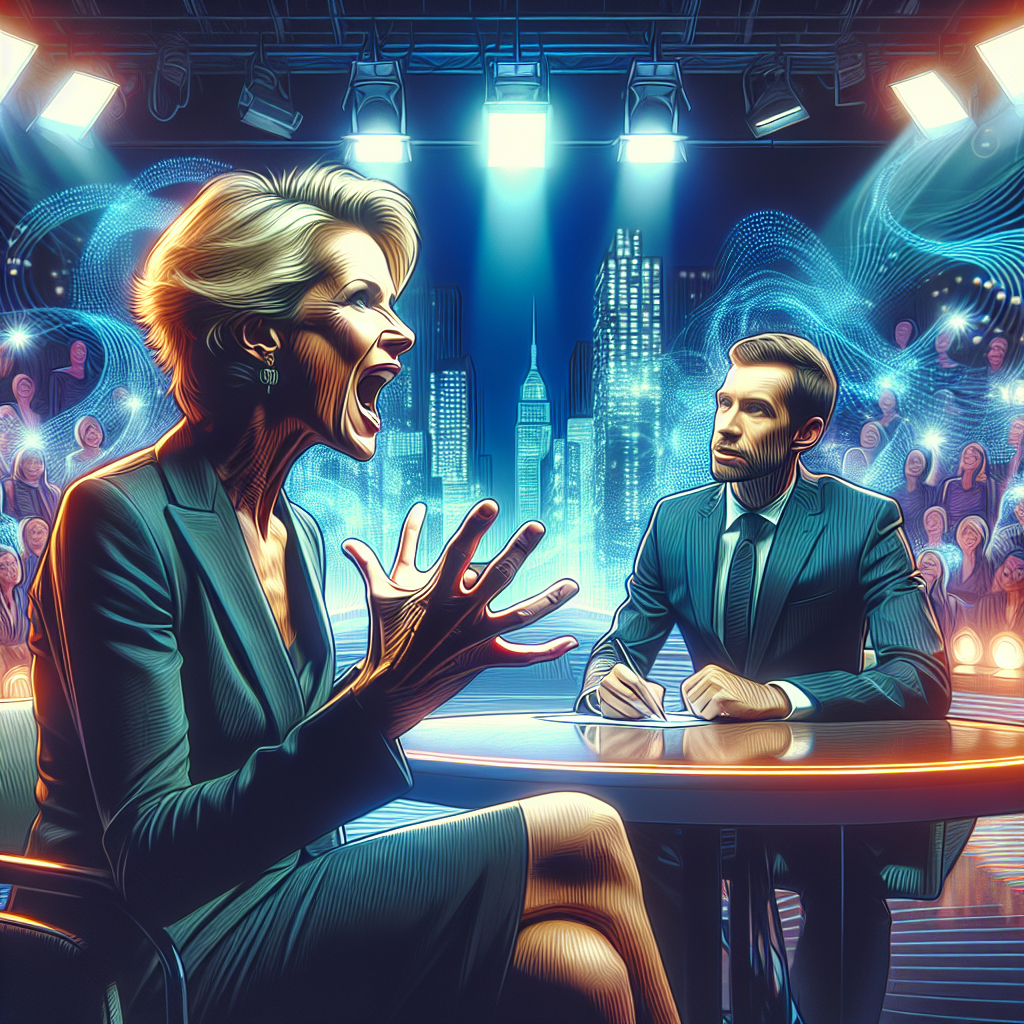
The air is electric, studio lights painting a golden haze. Emma Thompson, acclaimed actress and screenwriter, sits opposite Stephen Colbert on late-night television. The audience holds their breath, waiting for the next clever punchline or wistful recollection. Instead, they get something else—a firestorm aimed squarely at artificial intelligence. “Intense irritation,” Thompson spits, her voice barely leashed, eyes sharp enough to split silicon. In that small moment, her raw candor cuts through the glow of entertainment and crystallizes a deeper anxiety: What happens when the machines stop listening to us, and start rewriting who we are?
The Conversation That Sparked a Movement
It’s not every day a celebrity drops the facade and turns the lens on the technologies shaping our future. But when Emma Thompson declared to Colbert that she felt “intense irritation” toward AI—specifically toward the way tech is now poised to absorb and reshape human creativity—her words reverberated far beyond the cheers and snickers of the studio[1]. “These bots, these algorithms—they want to take what makes my writing mine and blur it, automate it, strip it of meaning. I won’t have it.”
Her confession wasn’t just an isolated celebrity quip. It became, overnight, a rallying cry—amplified across headlines, feeds, and water-cooler debates about who really owns imagination in the digital age.
The Rising Storm: Why This Matters
Peel back the glamour and you’ll find a problem that’s anything but new. Creative professionals, authors, screenwriters, and journalists are confronting a reality where AI models—trained on mountains of human-made content—learn not just how to mimic tone and structure, but to counterfeit entire styles. In Thompson’s case, the notion that a machine could “rewrite her work” is both a literal and symbolic affront. If AI can learn to replicate her prose, her wit, even her stumbles—what becomes of the very things that made her stories immortal?
This is not just a battle over content. It’s a war for cultural identity.
How the Machines Work (And Why It’s Spooky)
Picture this: powerful language models (think of them as giant text-predicting engines) scan the world’s writing—novels, plays, jokes, scripts—absorbing millions of data points. They’re taught to understand context, to capture emotion, to sound “human.” Once trained, they can churn out poems or screenplays in a fraction of a second. To the average reader, the product might seem uncanny.
But to the craftsperson—the Emma Thompsons of the world—it’s immediately clear what’s missing: a soul, a heartbeat, those tiny flaws and flashes of insight that signal a human hand at work.
“AI wants to democratize creativity,” says Dr. Anisha Kapoor, a language systems expert at MIT (for the sake of illustration). “But we risk flattening the unique voices that drive our shared imagination. If every artist can be mechanized, does individuality vanish?”
The Writer in the Crowd: A Family’s Personal Reckoning
Meet Laura Kim, a fictional screenwriter in Los Angeles. She spends years honing dialogue that sings, characters who cry and fail and recover. Her daughter, 14, uses an AI tool to finish a homework story—something Laura instantly recognizes contains echoes of her own signature lines. They laugh, but at dinner, a chill creeps in. What if the next big hit isn’t “written” by anyone at all? What if original ideas become extinct, swept away in a rising tide of algorithmic art? For families like Laura’s, this isn’t just theoretical—it’s the erosion of dreams, the shifting foundation of legacy.
Power Plays: How Governments and Industries Responded
Thompson’s viral moment pushed policymakers into action. Industry forums brimmed with debate—some calling for strict copyright protections, others warning about choking off innovation. Hollywood unions redrafted contracts, demanding “human-first credits.” The European Union proposed AI labeling laws—requiring that every auto-generated script or song carry a machine-made disclaimer, like a warning label for digital GMOs.
Analysts argue we’re witnessing a “Great Undoing”: a recalibration of what counts as authentic, authored, and real.
Ripples and Reverberations
Within months, AI companies scrambled to regain public trust. New ethical guidelines emerged, pledging transparency and the right for creators to opt out of training datasets. Universities began offering “algorithmic literacy” courses, equipping a new generation to spot the tells of synthetic prose. But trust was bruised. The public, once dazzled by seamless AI poetry, now looked for fingerprints—was this actor, this story, this joke, the work of a human mind?
What’s Next: Could It Happen Again?
With AI rapidly evolving, the struggle is far from over. Creators continue to push for safeguards; technologists race to refine models so they amplify rather than erase human ingenuity. Some ask: Will Thompson’s irritation be remembered as the spark that forced tech to pause—or will it be a fleeting flare, lost in the march of progress?
So where do we draw the line between inspiration and imitation?
If AI can mimic genius, does it matter who the genius was… or who gets credited next?
FAQ
Q: Why did Emma Thompson criticize AI in her interview?
Emma Thompson voiced “intense irritation” because she believes AI’s ability to imitate her writing endangers creative ownership and the unique spark artists bring to their work[1].
Q: How does AI copy creative writing?
Modern AI uses large datasets—millions of books, scripts, and articles—to learn and generate text that mimics real authors, sometimes closely resembling distinctive styles.
Q: Can artists prevent AI from using their work?
Some governments and industries are developing opt-out systems and ethical guidelines, but technical and legal challenges remain.
Q: How are communities reacting to AI in creative fields?
Artists, unions, and legal bodies are pushing for stronger copyright protections and transparency in AI-generated content.
Q: What’s at stake if AI keeps advancing in creative roles?
The public faces questions about what counts as “real” creativity, and whether originality or the human touch can truly survive in an age of machine-made art.