
Picture this: You’re in the heart of your favorite national park, the kind of place where your phone signal disappears and city noise becomes a faint memory. You look up at the stars—an endless stretch of dark velvet and glitter—and then, with a single tap, your video call connects crystal clear. No hunting for “one bar,” no crouching behind a tree, just instant, borderless internet.
This isn’t a scene from the future. It’s the story SpaceX wants to tell—one where satellites, not buried cables, become our digital lifeline.
The Bold Ultimatum
SpaceX, ever the disruptor, is asking states to make a dramatic choice: Abandon plans to lay miles of fiber optic cable—those tiny glass strands that beam the internet at the speed of light beneath our feet—and instead, channel all of that public funding straight to Starlink, their internet delivered from space.
They call fiber “wasteful and unnecessary taxpayer spending,” tossing down the gauntlet to traditional infrastructure with characteristic bravado. For anyone watching the tech drama unfold, it’s like seeing a chess grandmaster push all their pieces to the front, daring everyone else to respond.
Fiber vs. Satellite: An Epic Showdown
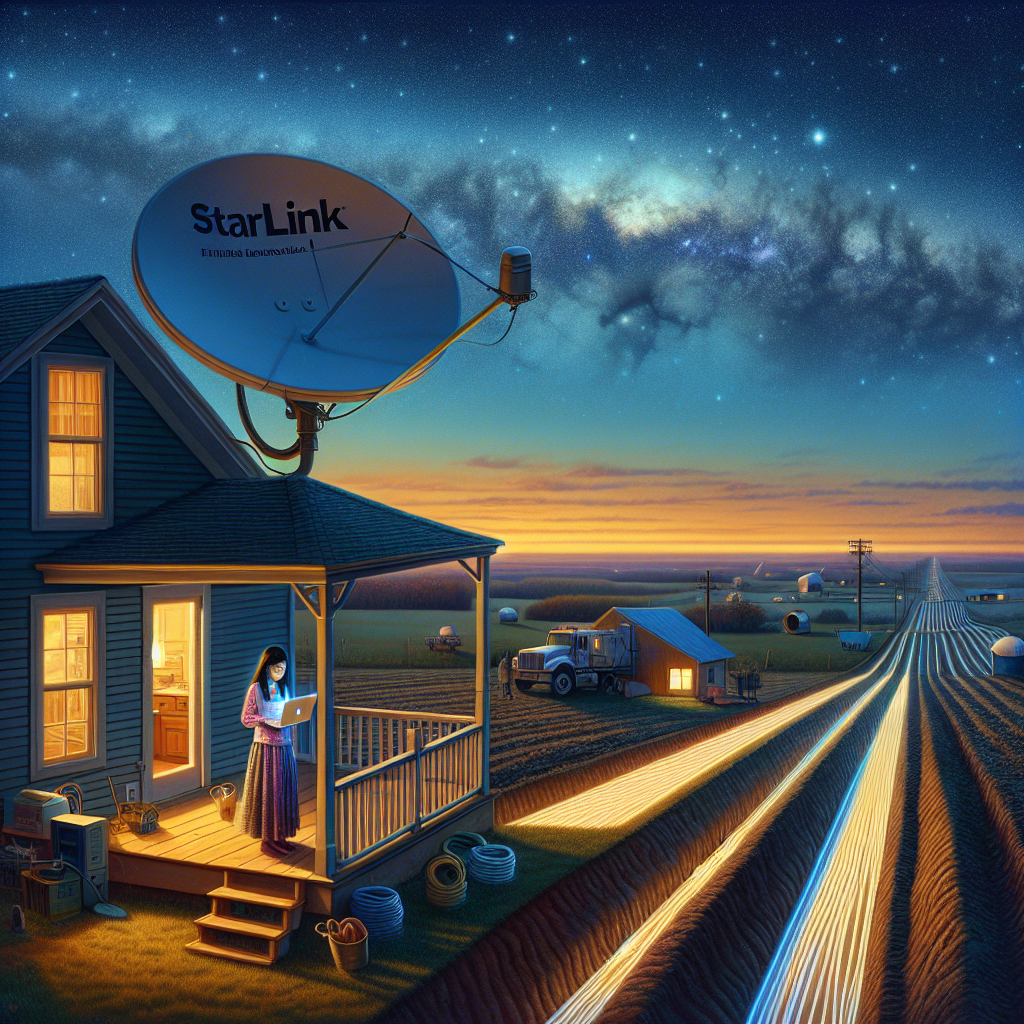
Let’s break it down without the jargon. Fiber is like building a superhighway underground. It’s fast, reliable, and crazy expensive to install—digging up streets, threading cables, re-paving roads. Starlink’s approach is a cosmic shortcut: thousands of satellites orbiting high above, beaming internet directly to a little dish on your rooftop.
Imagine you’re a local mayor in Rural Ridge, USA. You’re handed a check from the government and a choice:
- Scenario 1: Spend months bringing heavy machinery, digging trenches from farm to farmhouse, and waiting (and waiting) for those sweet, sweet fiber lines to get lit up.
- Scenario 2: Unbox a Starlink dish, plug it in, point it at the sky, and bam—high-speed internet tomorrow.
The sales pitch writes itself. But is it really so simple?
Inside the Great Digital Gamble
Let’s meet Emma, a high school junior living in a small town where the nearest city glows faint and distant at night. For years, her family’s only option was patchy, slow internet—video calls cut out during homework, and streaming her favorite series was a nightly battle. News whispers that the town would finally get fiber… someday. The digging began, then paused, then stopped. Budget overages, permitting headaches, and mud season brought everything to a halt.
Now, the city council debates: Should they cut their losses and leap into the Starlink era, as SpaceX urges? Or press on, trusting that the ground beneath them may eventually lead to a brighter, faster connection?
Emma’s story is real for millions. The stakes are not just about Netflix or video games—they’re about job opportunities, education, and the basic right to connect. This is why SpaceX’s all-in approach strikes a nerve. Faster deployment and wider reach sound appealing, especially in places where roads run out and fields roll forever. But the decision isn’t that clear-cut.
The Questions Beneath the Stars
Fiber, for all its headaches, is a known quantity. Once it’s there, it just works, rain or shine. Satellites can suffer from stormy weather or struggle when a lot of people in one area log on at once. There’s also the unwritten rule in tech: every shortcut has a cost somewhere down the line.
What SpaceX is betting on is the hunger for immediate relief—the promise that states can skip years of bureaucracy and dig straight to the future. Critics, meanwhile, counter that putting all our digital eggs in one orbital basket could be risky. What happens if the satellites fail, or prices spike when there’s no competition left?
What Happens Next?
As you read this, elected officials gather in meetings big and small, across city halls and state capitals. They weigh promises and pitfalls, calculators in hand and constituents’ emails in their inboxes. The grant money, the urgency to connect every home, and the vision of a country with no dead zones—it all hangs in the balance.
Emma refreshes her device, waiting for whichever solution finally keeps its promise.
So, what do you think? Are you Team Ground (reliable, if slow) or Team Sky (fast, bold, but still a leap of faith)?
If you had the reins, would you invest in the proven path beneath our feet—or shoot for the stars?
Drop your thoughts below. Let’s see which side of the digital divide wins in the comments.