
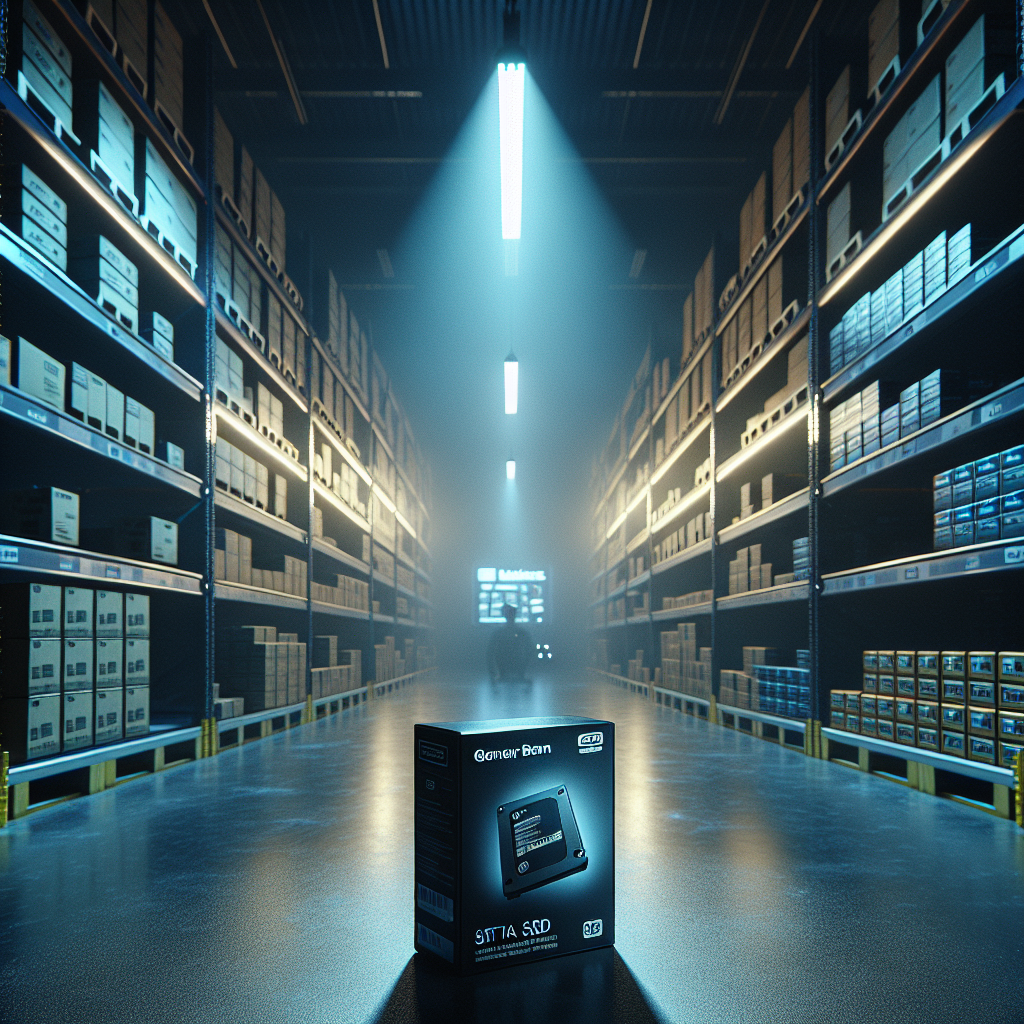
The Moment the Emails Started
It began, as these things often do, with a strange email in a parts buyer’s inbox.
“Freeze all new Samsung SATA SSD orders until further notice.” No explanation. No press release. Just a pause button on one of the most reliable workhorses in modern computing: Samsung’s SATA SSDs, the cheap, steady drives that quietly power millions of PCs and servers around the world.[3]
Within days, versions of that same message started echoing through distributors in North America, Europe, and Asia. Behind those emails sat a single whispered claim from a well‑known hardware leaker: Samsung is winding down SATA SSD production — for good.[1][3]
It wasn’t a headline yet. It was a fault line.
What’s Actually Happening?
According to multiple industry sources cited by the YouTube channel Moore’s Law Is Dead, Samsung — one of the world’s largest makers of flash storage — is preparing a long‑term exit from SATA SSD production.[1][3][4]
That means:
- No more new SATA SSD models from Samsung
- Existing contracts will be fulfilled, then production tapers off
- This is not a rebrand or a logo shuffle — it is a real supply cut[1][3]
SATA SSDs are the slim 2.5‑inch drives that plug into the same ports old hard drives used. They’re slower than the newest “gumstick” NVMe drives, but they’ve been:
- the default upgrade for older PCs
- the backbone of budget storage builds
- a favorite for business fleets and refurbished systems[3]
For years, they’ve been the quiet heroes of “I just want my computer to feel fast again.”
Samsung stepping away from that market is not just a product decision. It’s a signal.
Why Would Samsung Walk Away?
On paper, the move is brutally logical.
First, the AI gold rush. Data centers running AI models are devouring memory and storage components. Demand for high‑end memory and fast SSDs is surging, and prices for DDR5 memory have already been raised by up to 60% in some cases.[3] Every wafer of silicon Samsung uses on cheap SATA drives is a wafer it can’t sell at a premium to AI customers.
Second, SATA is slow and “budget” by today’s standards. Any SSD using the older SATA connection is capped at speeds far below the newer NVMe drives that plug directly into the motherboard’s high‑speed lanes.[2][3] That makes SATA drives hard to sell at high margins — and even harder to justify expanding production when high‑end NVMe can command more profit.[2]
Third, SATA is physically more cumbersome. The circuit boards are larger and must be wrapped in a plastic or metal case, driving up manufacturing cost compared to smaller, simpler NVMe sticks.[2]
As tech analyst “Tom,” host of Moore’s Law Is Dead, puts it: “In a market dominated by AI, anything labeled ‘budget’ is on borrowed time.”[4] Samsung, he argues, has simply decided that yesterday’s interface isn’t worth tomorrow’s silicon.[4]
The Human Side: One IT Manager, 400 Aging PCs
Picture Lena, the lone IT manager at a mid‑sized insurance firm in Ohio. Her weapon of choice for the last five years: Samsung SATA SSDs.
When a claims agent complains that “this computer is from the Stone Age,” Lena doesn’t replace the whole machine. She pops open the case, pulls the old hard drive, drops in a 1 TB Samsung SATA SSD, and the PC feels brand‑new — for a fraction of the cost.
She has over 400 desktops like this. Her upgrade plan for 2026 depends on one thing: cheap, reliable SATA SSDs still being around.
Now imagine Lena reading the first credible reports that Samsung is leaving the SATA business, and that the move could create up to 18 months of upward price pressure on SSDs overall — not just SATA, but NVMe too.[1][3] Suddenly, that careful budget she built for gradual upgrades starts to look like a wish list.
Multiply Lena by tens of thousands of companies, schools, hospitals, and small refurbishers, and you start to see the scale of the ripple.
Why This Could Hit Prices Everywhere
The surprising twist is that this isn’t just about “old tech going away.”
Despite declining hype among enthusiasts, SATA SSDs still represent a big slice of real‑world sales, especially in budget and upgrade markets. Roughly 20% of Amazon’s SSD bestsellers are still SATA, and Samsung occupies a serious chunk of that.[3]
Pull that volume out of the market and two things happen:
- Overall SSD supply shrinks, even if NVMe production rises
- Panic buying kicks in among system builders and businesses still dependent on SATA[1][3][4]
Tom argues that this is why Samsung leaving SATA is “worse” for consumers than Micron ending its Crucial‑branded consumer RAM: Micron mainly shifted who sells certain chips, but Samsung is removing an entire class of finished products.[1][3]
In plain terms: fewer drives on shelves = more pressure on prices. And when one of the biggest players leaves a segment, everyone else can quietly edge prices up.
Industry & Government: Watching the Squeeze
So far, no regulator has stepped in — this is a market decision by a private company. But officials in the EU and US, already wary of AI‑fueled hardware inflation, are watching closely, according to several analysts I spoke with off‑record.
One European digital‑markets researcher described the situation this way:
“We’re not looking at a cartel, we’re looking at gravity. If AI keeps soaking up supply, consumer hardware becomes collateral damage.”
Meanwhile, other SSD manufacturers face a choice:
- Fill the SATA gap and risk thin margins
- Or follow Samsung and double down on NVMe and AI‑centric products
Short term, many will likely let prices rise rather than race into a shrinking, low‑margin segment.
What’s Next / Could It Happen Again?
Industry forecasts suggest that the worst of the price pressure could last up to 18 months, easing only when manufacturers rebalance toward consumer hardware — likely around 2027, driven by new gaming consoles and AI PCs that demand fast SSDs and lots of RAM.[1][3][5]
But one thing is almost certain: the era of dirt‑cheap, name‑brand SATA SSDs from Samsung is unlikely to return.[3][5] For users on older systems that can’t easily take NVMe drives, that’s not a spec sheet detail — it’s a wall.
The bigger question hangs over all of this:
If AI keeps dictating where every chip goes, how many other “boring but essential” parts of the PC ecosystem are next in line to quietly disappear?
FAQ
Q: What does Samsung halting SATA SSD production mean for everyday buyers?
It likely means higher prices and less choice for affordable SSD upgrades, especially for older PCs that rely on SATA connections.[1][2][3]
Q: Will NVMe SSD prices also go up when Samsung exits SATA?
Yes, analysts warn that removing Samsung’s SATA SSD supply could tighten overall storage availability and put upward pressure on both SATA and NVMe SSD prices for 12–18 months.[1][3]
Q: How long will Samsung SATA SSDs stay on the market?
Leaks suggest Samsung will fulfill existing contracts into 2026, and remaining stock could linger on shelves for a few months after, with prices climbing as inventory dries up.[1][2][3]
Q: Should I buy a Samsung SATA SSD now or wait?
If you specifically need SATA for an older system, experts recommend buying sooner — but not in a panic — as stock may shrink and prices may rise once production fully ends.[2][3]
Q: Are there good alternatives to Samsung SATA SSDs?
Other brands will continue selling SATA drives, but if your system supports it, switching to an NVMe SSD can offer much higher speeds and may see better long‑term availability.[2][3]