
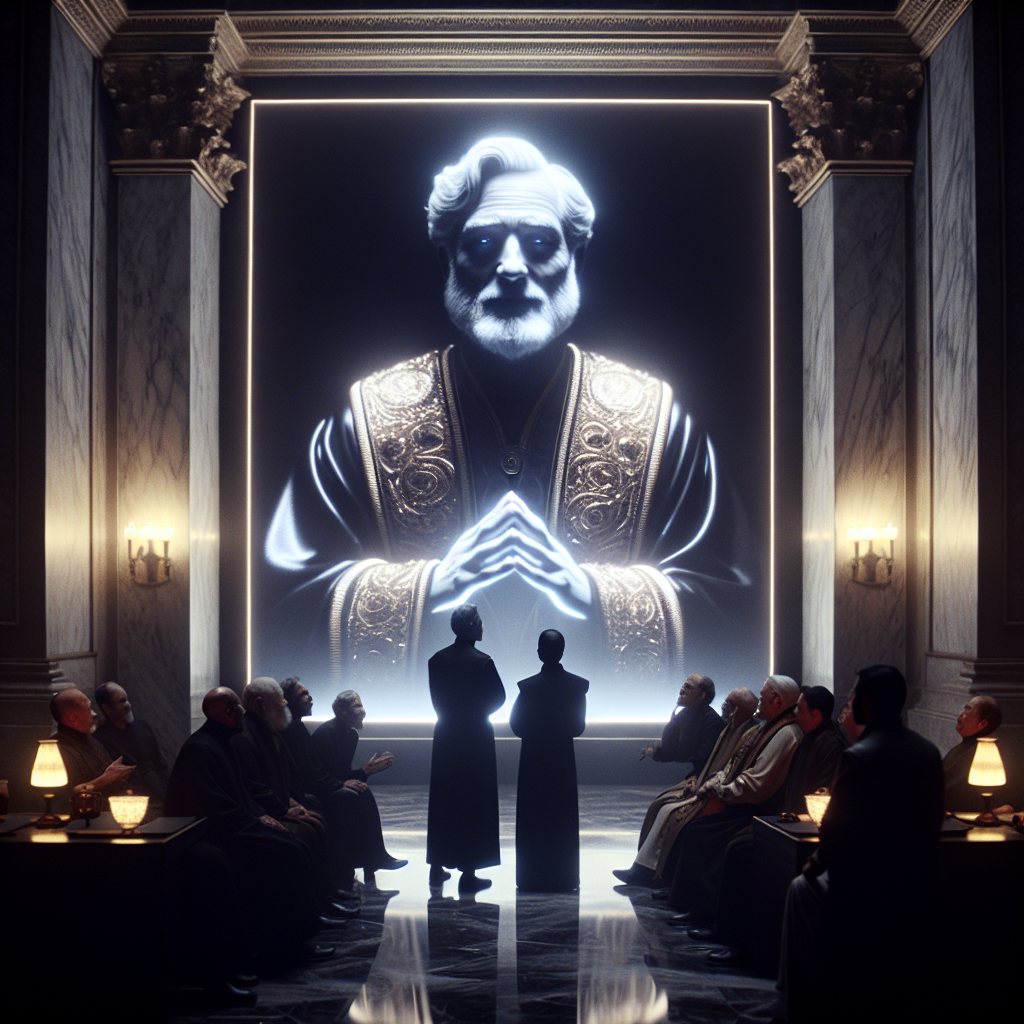
Rome, 2025. Midnight. The marble corridors of the Apostolic Palace are cloaked in hushed urgency. A digital screen glows with proposals: a lifelike AI Pope, “Leo” reborn in bits and bytes, available to billions with a click. The promise: eternal guidance, delivered on demand, transcending time and translation. And then, a decision echoing far beyond the Vatican’s walls—Pope Leo XIV refuses to authorize an AI version of himself[3][4].
The Digital Dilemma: What’s at Stake?
In an age of hyper-realistic avatars and AI-powered gurus, the idea seemed inevitable. “If we can re-create pop icons and politicians, why not the Pope?” asked technologists, eager to digitize spiritual authority. For some, the allure of AI priests was obvious: erasing barriers, offering instant comfort, multiplying moral wisdom at scale.
But Pope Leo XIV’s rejection wasn’t a knee-jerk reaction. The first American-born pontiff, widely regarded for his openness to innovation, declared the matter a defining issue for humanity. “AI must not play God,” his advisors echoed. The Vatican would not let artificial voices shape the soul of faith[2].
How Would an AI Pope Actually Work?
Picture this: an AI system trained on centuries of Papal wisdom, thousands of speeches, homilies, and encyclicals. The avatar responds to questions about hope, suffering, forgiveness—drawing from the Church’s deepest teachings.
Technically, these digital Popes would leverage generative AI, machines designed to process vast knowledge and generate original responses, sounding eerily like Leo himself. Attack vectors? Synthetic voices could be misused, manipulated, or “reprogrammed” to issue advice counter to Church doctrine. “What protects against deepfakes in spiritual leadership?” asked security analyst Martina Moretti. “That risk is not theoretical—it’s immediate.”
Why Pope Leo Stepped In
The official verdict came after months of debate. Leo was “horrified” by the prospect of replacing genuine human encounters with programmed ones[4]. He called AI “an exceptional product of human genius”—but warned that it “must remain a tool”[1].
“Authentic encounter matters,” he announced to the Second Annual Rome Conference on Artificial Intelligence. Children and young people, Leo said, are especially vulnerable. Their ability “to develop God-given gifts and respond freely” could not be entrusted to algorithms, no matter how sophisticated[1].
The Human Angle
Imagine Maria, a young mother in Naples, who—late one night—longs for solace after losing her job. She taps her phone: Would a digital Pope comfort her? Could AI’s empathy match the warmth of a real priest’s hands, rough and reassuring?
“Faith is not just words,” she says. “It’s presence. I need to believe someone sees me—not just a screen.”
Global Response: Shockwaves in Tech and Faith
Leo’s stance ignited firestorms in Silicon Valley. “We thought the Vatican was ready for AI clergy,” said Xavier Trent, lead engineer at NovaMind, the startup behind several religious bots. “This rejection sets a powerful precedent.”
Governments watched closely. Italy’s data protection authority praised the Pope’s “ethics first” approach. In the U.S., religious leaders debated: Should AI ever speak for faith? The European Union’s AI Act committee cited Leo’s move as evidence of the urgent need for human judgment in governance.
For some, it was a wake-up call to safeguard institutions against “AI impersonation attacks.” For others, it sparked conversations about boundaries in machine-mediated empathy.
Industry Insight
Professor Lucien Weber, technologist and ethics advisor, framed it simply: “AI can emulate doctrine, but it cannot practice faith.” He believes Leo XIV’s stand might shape global standards for synthetic personas in leadership. “What happens when we allow algorithms to shepherd souls?”
Ripple Effects: Communities and Change
Catholic communities felt relief—and unease. Parishioners wondered if virtual sacraments would soon follow. Tech workers speculated how far “synthetic identity” would go. Even secular advocates saw the Vatican’s decision as a bellwether for human dignity in an AI era.
What’s Next / Could It Happen Again?
As AI advances, the temptation persists: automate the sacred, scale the profound. The Vatican’s clear boundaries may slow a wave of virtual clergy, but innovative minds will keep pushing. Will other faiths digitize their leaders? Could citizens one day choose between human and synthetic mentors?
The ethical debate rages, with new fronts opening daily. Yet one question remains:
When the world’s spiritual guides turn digital—who holds the soul?
FAQ
What did Pope Leo XIV say about an AI version of himself?
He publicly refused authorization for a digital Papal avatar[3][4], stressing that AI must not replace real human presence or meaningful encounters[1].
Why is AI in religious leadership controversial?
AI-powered avatars raise concerns about authenticity, doctrinal fidelity, and vulnerability to manipulation or deepfakes, making the risks as much ethical as technological[4].
Could governments regulate AI spiritual leaders?
Some authorities, like Italy’s data agency, applauded Pope Leo’s caution. Evidence is mounting for greater oversight and laws to prevent synthetic impersonation[2].
Is AI involvement in faith growing?
Yes. Tech firms have developed religious bots, but the Vatican’s rejection could slow global adoption. The debate now centers on dignity, truth, and community[5].
Will communities prefer digital or real clergy?
Most still value human empathy and connection, but some might turn to AI for accessibility. The impact on faith and identity is still unfolding[1].
Can an AI Pope ever be authorized in the future?
While unlikely under current leadership, future developments in ethics and technology could revive the conversation. Ongoing regulation and debate are expected[2][4].