
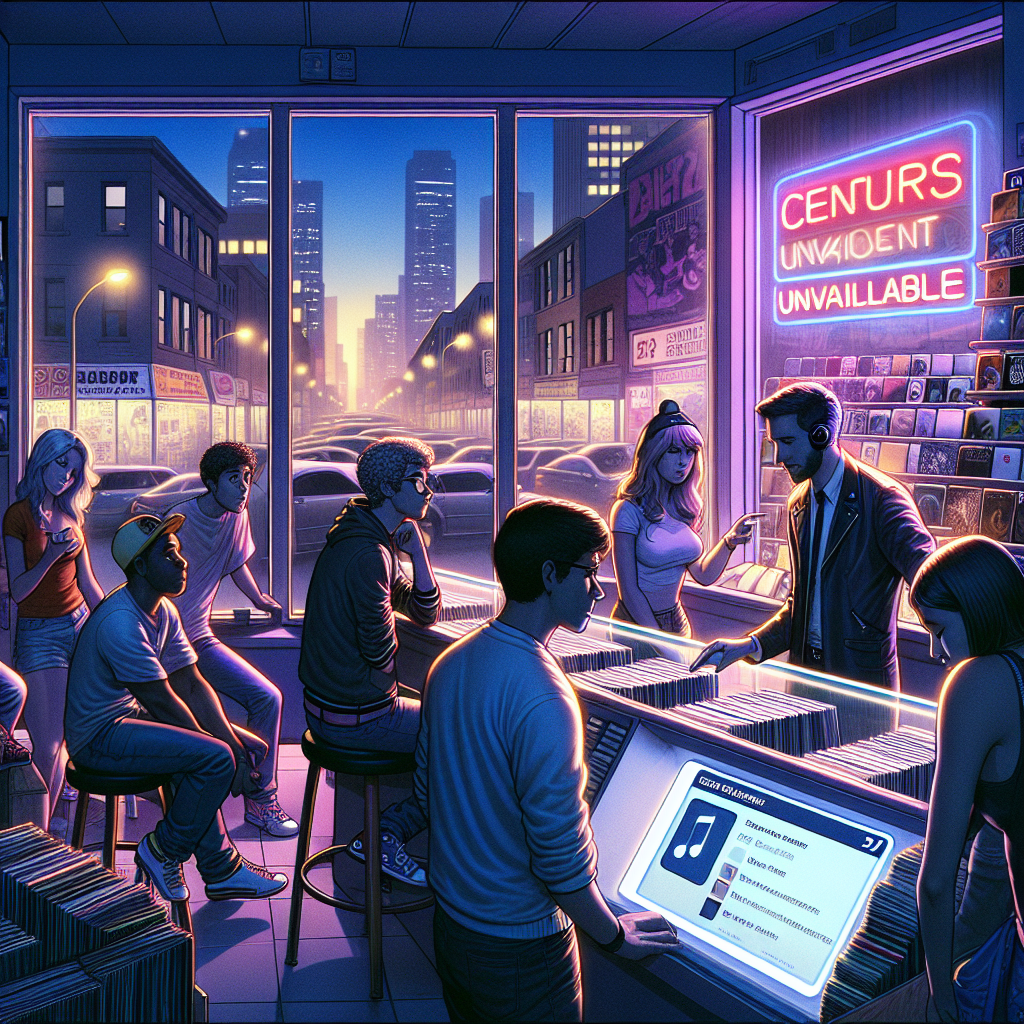
Opening Scene: Silence in a Tel Aviv Record Shop
On a bright September afternoon, the familiar hum of music beneath fluorescent lights suddenly cut to silence. A clerk at a downtown Tel Aviv record shop stared at the streaming playlist—gone were the hypnotic beats of Massive Attack, the punk thunder of Amyl and the Sniffers, the fragile ballads of Japanese Breakfast. Instead, a simple message blinked on the screen: “Content unavailable in your region.” The city’s backdrop of café chatter and car horns was unchanged, but a small revolution in the global soundscape had just begun.
What’s Happening? A Protest Echoes Across the Digital Divide
This is the front line of the “No Music for Genocide” campaign—a bold, coordinated effort by over 400 musicians and record labels to digitally boycott Israel’s streaming platforms in response to the war in Gaza[2][3][1]. The movement, drawing inspiration from historical cultural boycotts of apartheid-era South Africa, aims to use music as leverage. Songs once taken for granted have been yanked from Israeli Spotify, Apple Music, and other streaming services, as artists—including Fontaines D.C., Rina Sawayama, Black Country New Road, and trip-hop titans Massive Attack—join a roster stretching from indie darlings to global icons[3][1].
Why Are Artists Doing This? The Fight Against “Art-Washing”
At the heart of this movement is a powerful conviction: music, while powerless to halt bombs or mend nations, can shift public opinion and refuse complicity in what campaigners describe as “crimes against humanity”[1][3]. In a statement, the campaign’s organizers declared, “Culture can’t stop bombs on its own, but it can help reject political repression, shift public opinion toward justice, and refuse the art-washing and normalization of any company or nation that commits crimes against humanity.”[1][3] For these artists, “art-washing” means using culture to mask or legitimize controversial state actions, and pulling out is meant to spotlight this tactic while pressuring both the Israeli government and global tech giants.
How Does It Work? The Mechanics of a Digital Blackout
The playbook is surprisingly simple yet deeply disruptive: artists and rights-holders formally request their labels and streaming partners to remove or geo-block their music in Israel. Technically, this is like flipping a digital switch—suddenly, entire catalogs disappear, making once-ubiquitous tracks findable everywhere except Israel[3][1]. Unlike traditional boycotts that hit exports or ticket sales, this one attacks the virtual infrastructure of music consumption, where algorithms and cloud storage dictate what millions hear.
The Emotional Stakes: One Listener’s Story
Consider Avi, a 24-year-old college student in Jerusalem. For years, an evening walk meant Massive Attack in his headphones—the soundtrack to heartbreaks, friendships, and dreams. “It’s strange, almost disorienting,” Avi says, hearing his favorite playlist truncated by politics. “Music always felt above this, like something universal. Now even what I listen to is shaped by war.” His voice cracks: “I don’t know if I support the boycott, but I understand it. It makes me think—am I, in some way, part of this story too?”
Voices and Reactions: Artists, Streaming Titans, and the Public
Massive Attack, one of the most vocal participants, framed their exit as both a moral and economic protest, condemning the channeling of fan dollars into “lethal, dystopian technologies”[1]. Other artists, joining under the Boycott, Divestment, and Sanctions (BDS) movement umbrella, echo this urgency: a refusal to let their art fill the silence left by state violence[2][3].
Corporate responses are as tense as the headlines. Spotify, facing accusations of indirect complicity, issued a statement asserting separation from military-linked companies and clarifying, “Spotify and Helsing are two totally separate companies… Helsing is not involved in Gaza”[1]. Helsing, an AI and drone defense firm partly funded by Spotify’s CEO Daniel Ek, maintained its technology is used only in Europe to deter Russian aggression—a claim skeptics challenge in online debates[1].
Meanwhile, Israeli listeners express frustration, calling the boycott “misguided” or “symbolic.” Activists counter that “symbolic” acts have precedent, referencing the cultural embargoes that once pressured South Africa’s apartheid regime[2][1]. Government officials issue familiar denouncements, but a sense of unease trickles through the country’s creative and tech industries, which prize interchange with international culture.
The Global Context: Music as a Political Weapon
This digital boycott joins a wider movement: over 4,000 filmmakers signed an open letter vowing not to work with Israeli institutions they deem complicit, while dockworkers in Morocco and Spain blocked arms shipments to Israel[3][1]. The campaign’s architects describe it as “one step toward honouring Palestinian demands to isolate and delegitimize Israel as it kills without consequence on the world stage”[2]. Analysts note increasing momentum for such cultural protests—with social media amplifying every note of dissent, streaming platforms have become the new battlegrounds.
What’s Next: Could This Happen Again?
Already, organizers promise the campaign is “just one step” in a growing worldwide movement[2][3]. With artists more empowered than ever to control the reach of their work and digital platforms wielding global influence, music may remain at the center of future geopolitical conflict. Some warn that such tactics could backfire—alienating civilians, while increasingly entangling art and activism. Others see it as the inevitable evolution of cultural protest in the digital age.
As the silent playlists in Tel Aviv bear witness to a world divided, one question lingers:
When every beat can be an act of protest, will the next wave of boycotts be waged not on city streets, but on the download screens and streaming charts of a hyperconnected world?
FAQ
-
What is the “No Music for Genocide” campaign?
The “No Music for Genocide” movement is a digital boycott by over 400 musicians and record labels who removed their music from Israeli streaming platforms to protest the war in Gaza and pressure for change using cultural influence[3][2][1]. -
Why are songs being removed from Israeli music streaming platforms?
Artists are geo-blocking their catalogs from Israel in solidarity with the Palestinian cause, aiming to isolate Israeli culture and mirror earlier boycotts used against South Africa’s apartheid regime[2][3]. -
How does a music boycott on streaming services work?
Musicians and labels request digital platforms to remove or block access to their music in specific territories, using copyright and licensing tools to enforce the blackout instantly and remotely[1][3]. -
Has this type of boycott ever worked before?
Cultural boycotts have credited as helping end South African apartheid, but analysts are divided on whether digital boycotts have the same power today, as music access can shape public opinion yet risk alienating fans[1][2][3]. -
What role do music companies and tech firms play in these boycotts?
Streaming giants and labels must balance global legal, ethical, and market pressures—Spotify, for example, claims separation from controversial military tech firms, trying to avoid reputational fallout while upholding artist choices[1].