
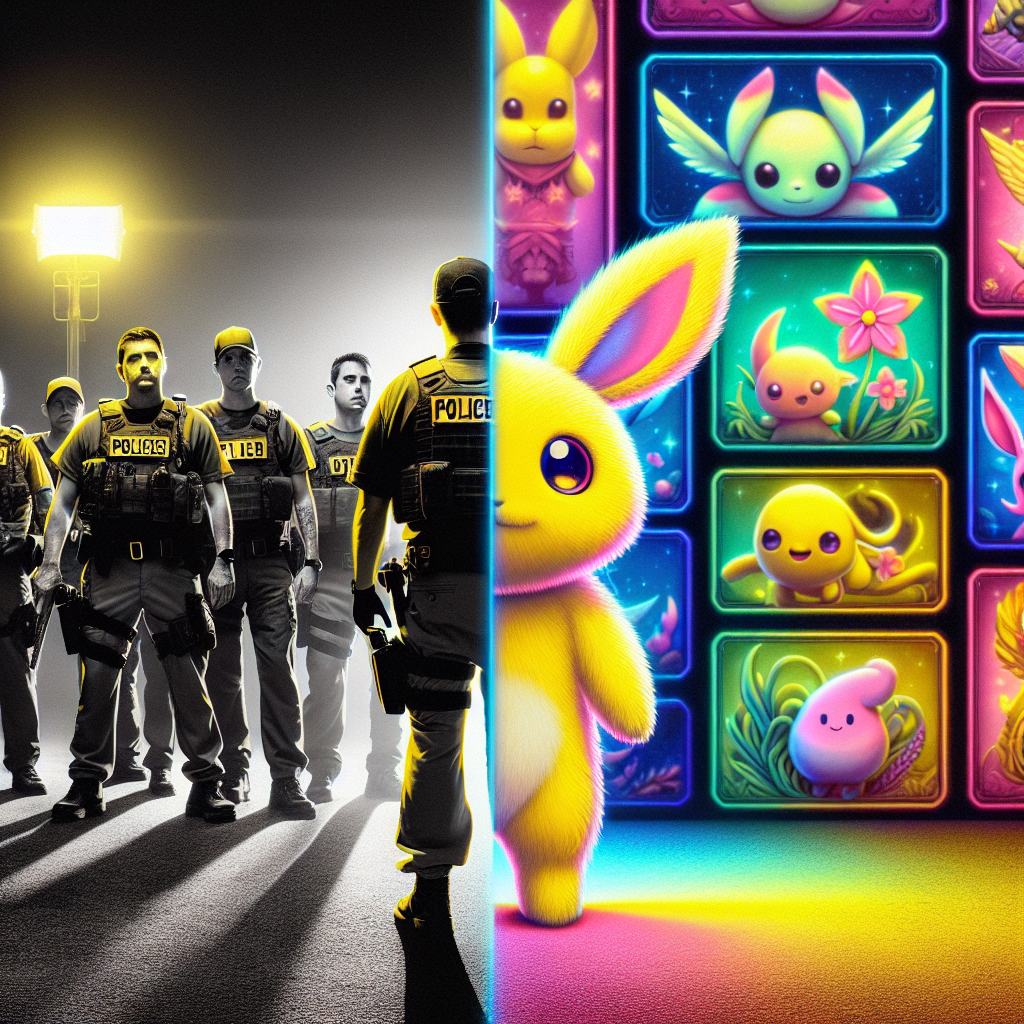
The Sun-Drenched Raid
Early Monday, a restless nation awoke to a reality stranger than fiction. On a government Twitter feed, a one-minute video burst onto screens across America—a montage of heavily armed officers, blown-open doors, and dazed families, all set to the unmistakable theme song of Pokémon. As the final frame cut to black, several “mock Pokémon cards” appeared, not of beloved creatures, but of suspects the Department of Homeland Security (DHS) said it had caught and deported—described as the “worst of the worst.” The tagline demanded: “Gotta Catch ’Em All!”[1]
The digital world paused and blinked. Nintendo’s characters, cherished by generations for capturing childlike wonder, now cast as sidekicks in one of the most polarizing government crackdowns of recent memory. Within hours, #PokémonPropaganda trended globally—and a furious debate exploded. Was this government outreach, a meme gone wrong, or something far more unsettling?
The Meme Warfare of Modern Governance
For most Americans, Pokémon conjures nostalgia: a fantasy world where kindness, competition, and curiosity reign. Homeland Security’s video was an audacious remix—juxtaposing police raids and animated Pikachu with a brash, unmistakable message: illegal migrants are the enemy, and “catching” them is just as fun as nabbing a Charizard.
Legal experts, immigrant advocates, and internet culture analysts quickly weighed in. “This is a new example of what we call ‘cute authoritarianism,’” said Dr. Emily Munroe, professor of digital society at Stanford, referencing the government’s “disarming” use of playful imagery to market controversial policies. “It’s calculated, it’s viral—and it’s profoundly unsettling.”[1]
The backlash was immediate and relentless. Top lawyers tagged Nintendo, questioning the legality of appropriating the franchise’s characters for enforcement propaganda. Nintendo, famed for its relentless brand protection, stayed silent—a silence some interpreted as strategic. Meanwhile, the DHS doubled down, offering little comment beyond boilerplate denials of any mistreatment during raids, and calling Pikachu the “Border Patrol’s newest recruit.”[1]
How the Raid and Video Were Made
Behind the controversy lay a meticulously planned raid. According to sources familiar with DHS media strategy, video crews accompanied agents for “maximum impact.” Doors were blown from their hinges, families—some U.S. citizens—were pulled from homes in a blinding daze for the cameras[1]. The footage was cut, spliced with Pokémon animations, set to a remix of a classic ‘90s rock anthem, and launched without fanfare.
“The intention was to humanize the officers—show the public that this is just another kind of ‘hunt,’ as accessible as a Saturday morning cartoon,” explained an anonymous DHS media consultant, speaking under condition of anonymity.
Was this a misfire or a chilling new norm in “memetic governance”? Some experts contend that by cloaking violence in memes, agencies reshape how citizens process state power. “It’s less about transparency, more about controlling the narrative,” said Dr. Munroe. “When propaganda looks like fun, it’s that much more potent.”
Through the Eyes of a Child: Joey’s Story
For the Rodriguez family in South Texas, the video was more personal. Ten-year-old Joey adored Pokémon—the trading cards brightened hospital waiting rooms and playground afternoons. Then, on the day of the raid, Joey’s uncle—an undocumented worker but a father, a friend—was swept away. When Joey saw Pikachu dancing across the DHS Twitter feed, confusion morphed into sorrow. Why was his hero helping the people who just took his uncle? At school the next day, classmates joked about “Pokémon ICE raids.” The wound, deeper than any news cycle, would not soon heal.
Industry and Social Ripples
Nintendo’s silence, government’s stubbornness, and social media’s outrage culminated in a new flashpoint. Civil liberties groups demanded investigations into government overreach and the psychological costs of “gamifying” enforcement operations. Immigration lawyers fielded frantic calls from families bewildered about their rights, others from children seeking assurance that Pikachu “wasn’t really on the side of the bad guys.”[1]
Analysts noted this was hardly an isolated event. The Trump White House had previously used viral trends to mock deportees; rap tracks, memes, and cartoon GIFs have become regular tools in policy messaging. The underlying message: the border is not a tragedy, but a battleground—and now, a game.
What’s Next: The Battle for the Soul of Public Discourse
Could it happen again? Already, digital strategists predict a new wave of “meme-ified” government communications—each one more daring and surreal than the last. As agencies race to master online virality, critics ask: where is the line between clever outreach and psychops “lite”?
And yet, the backlash worked. By day’s end, the video had become a rallying cry for reform—galvanizing disparate groups: immigration advocates, copyright lawyers, parents, and even nostalgic millennials, who remembered a time when Pikachu belonged only to children and dreamers.
The debate over that one, strange video outlasted the outrage cycle. It’s a question every society must face: When does the game stop being a game?
Would you trust your childhood icons to deliver a government’s message—or should some worlds remain sacred?
FAQ
What happened between the DHS and Pokémon in 2025?
In September 2025, the U.S. Department of Homeland Security (DHS) released a video using Pokémon imagery and music to promote recent immigration raids, prompting public outrage, legal questions, and a global debate on the gamification of government propaganda[1].
Did Nintendo approve the DHS’s use of Pokémon characters?
As of the incident, Nintendo had not publicly commented on the unauthorized use of its intellectual property in the DHS video[1].
Why did this video cause such a strong reaction?
Viewers criticized the video for trivializing serious law enforcement actions with children’s entertainment, raising ethical, legal, and psychological concerns[1].
How have public and industry leaders responded?
Civil liberties groups and legal experts demanded investigations, while many online called out both the DHS and Nintendo. The DHS itself refused to apologize, framing the video as public outreach[1].
Could similar propaganda campaigns emerge in the future?
Experts warn this sets a precedent for the use of popular culture in government messaging, increasing the risk of public confusion and desensitization to official force[1].