
A Night Like No Other
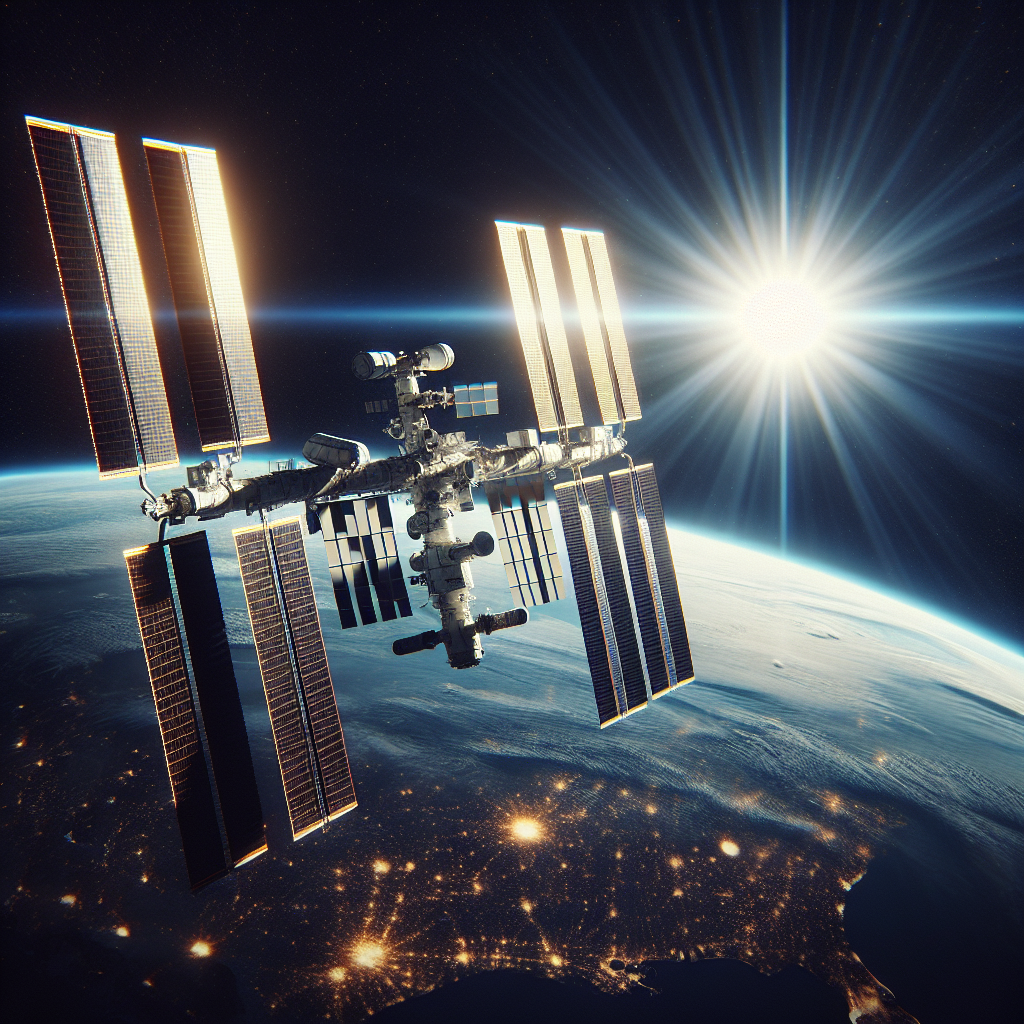
Picture a silent midnight over Cape Canaveral. Far above the sleeping world, a gleam moves across the velvet sky: the International Space Station, humanity’s outpost in orbit, glides past in one of its final journeys. Twenty-five years of exploration flash by in a few heartbeats, the station barely distinguishable from a wandering star. On the ground, a young child stands in her backyard, eyes wide, waving at astronauts she’ll never meet — but whose work shapes her future.
The End of a Legacy
As NASA and its international partners reach a pivotal crossroads, the countdown is on for the Station’s controlled descent, scheduled for the end of 2030[4][5][3]. This isn’t just the end of a mission, but the closure of an era marked by unprecedented collaboration between nations, the birth of commercial spaceflight, and breakthroughs that changed life on Earth.
Why say goodbye? The simple answer: time. The ISS, assembled piece by piece in space beginning in 1998, was built to last, but even titanium fatigues. Years of relentless cycles — docking impacts, spacewalks, thermal shock — have etched their wear on the station’s massive truss structures and shimmering solar arrays. Despite heroic upkeep, the ISS’s aging core, battered and heat-blasted, is approaching its technical limit[3][6].
NASA faces a complex reality. Disassembling and returning the station — the size of a football field — is logistically formidable and astronomically expensive. Instead, the agency will deploy a new U.S. Deorbit Vehicle, designed to guide the station in a controlled descent, ensuring it crashes into a remote ocean expanse far from civilization[3][4].
The Science That Changed Everything
It’s easy to forget the ISS wasn’t designed for spectacle; it was a living laboratory. Over 250 crew members from 20 nations have called it home, delivering thousands of experiments, from medical advancements to materials that now power our smartphones[5][1]. NASA’s Robyn Gatens, who spent her career on ISS projects, calls this the station’s “golden era” — a final surge of scientific achievement before the curtain falls[5].
A New Space Race: Commercial Dawn
As the ISS fades, a new chapter sparkles just beyond the horizon. Commercial companies — Axiom Space, Sierra Space, and more — are racing to launch their own orbiting platforms. These stations promise faster innovation, private research labs, and even hotel suites amid the stars[5][2].
NASA, meanwhile, is shifting focus. Instead of operating space stations directly, it plans to buy services from these emerging platforms, freeing resources for deeper ventures — lunar bases, Mars outposts — changing the shape of American space exploration forever[3][5].
Families, Workers, and Ripples on Earth
To understand the ISS’s human impact, imagine Andrew: an electrical engineer whose daughter dreams of joining the next generation of astronauts. For families like his, the Station isn’t just metal and rivets — it’s a symbol. Andrew’s work troubleshooting the ISS’s systems influenced everything from smart grids to hospital tech. The station’s transition means change: new jobs, new challenges, the bittersweet end of a personal era.
Companies who’ve built their legacy on ISS partnerships must pivot. Universities, research labs, and government agencies race to secure spots on future commercial platforms. The shift means new business models, new risks, and a wave of regulatory innovation as space becomes ever-more accessible.
International Reactions: Worldwide Shifts
Five space agencies — NASA, Roscosmos (Russia), ESA (Europe), JAXA (Japan), and CSA (Canada) — have steered the ISS together, a high-orbit symbol of peace in turbulent decades[3]. Its planned retirement has inspired both nostalgia and hope. Nations now invest in their own projects: China’s Tiangong station spins up solo missions, India eyes lunar ambitions, while Europe and Japan seek fresh partnerships.
Globally, the station’s wind-down sparks concern: Is commercial space ready? Will scientific access for all nations remain? Governments scramble to shape new treaties and standards, hoping to preserve the station’s spirit of collaboration while staking claims in this rapidly evolving frontier.
What’s Next / Could It Happen Again?
As the ISS falls to Earth in a spectacular blaze, we stand at a crossroads — not the end, but the transformation of orbital science. The next decade will be decided by bold entrepreneurs, evolving international agreements, and the dreams of a new generation[5]. Commercial stations could remake everything — but will safety, global cooperation, and scientific equity keep pace?
Will any future space station ever inspire such wonder — or unite our divided world atop a single, orbiting dream?
FAQ
What is happening to the International Space Station in 2030?
NASA and its partners plan to retire and deorbit the ISS by 2030 using a specialized U.S. Deorbit Vehicle[3][4].
Why is the ISS being retired instead of kept in orbit?
Aging hardware, complex maintenance needs, and new commercial orbital platforms have driven the decision to retire the aging station[3][5].
What comes after the ISS?
Commercial companies like Axiom Space plan to build private space stations for research, industry, and tourism in low-Earth orbit[5].
How will the ISS be brought back to Earth?
The station will be guided in a controlled descent into a remote ocean area using a custom spacecraft for safety[3][4].
What will happen to ISS research?
Experiments will transition to commercial stations, continuing microgravity science in new facilities[5][3].
Who is impacted by the retirement of the ISS?
Astronauts, engineers, international agencies, commercial partners, and the public — many stand to be affected personally and professionally.