
The Moment That Changed Everything
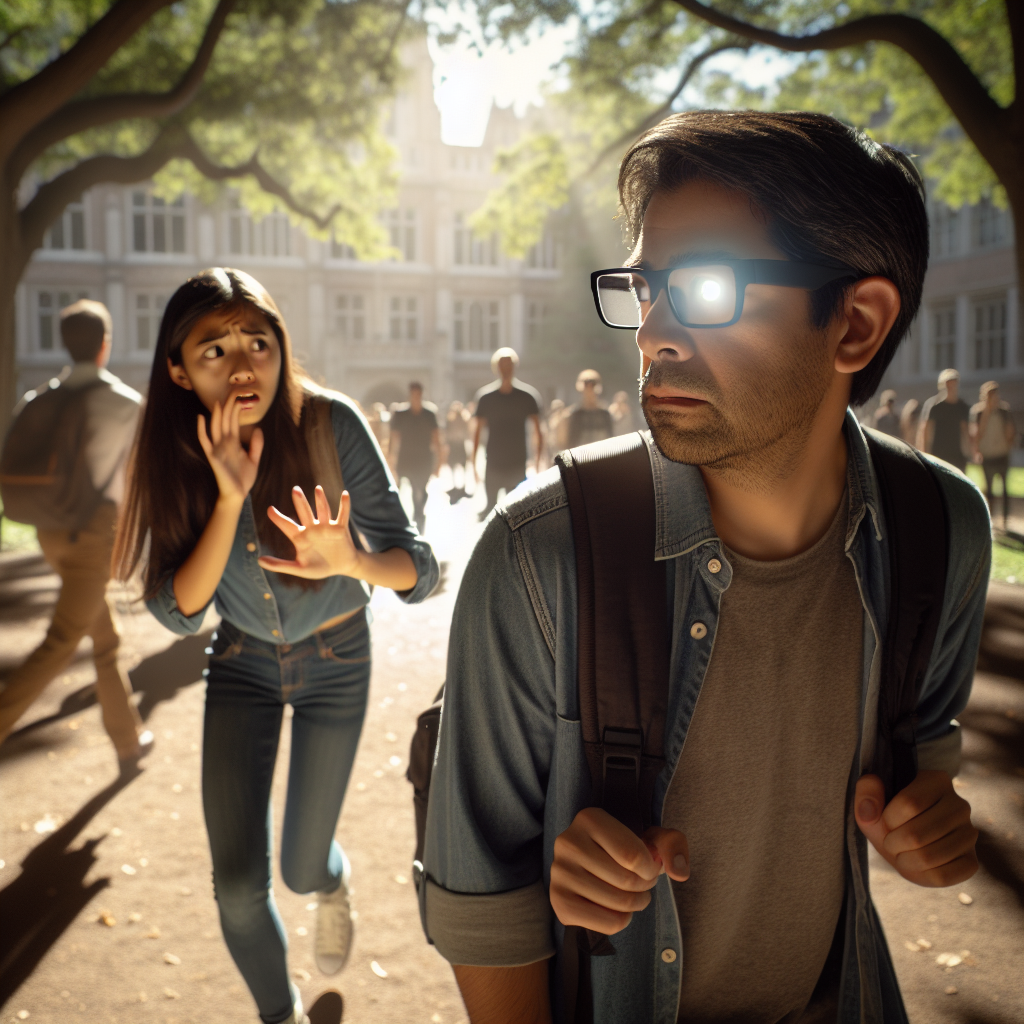
It started quietly, like most pivotal moments do. On a crisp afternoon at the University of San Francisco, students wandered through the shaded quad, clustered in impromptu circles. Then, a man appeared. He wore what looked like ordinary Ray-Ban sunglasses—but behind those mirrored lenses was something more. With a casual tilt of his head, he began asking young women intrusive questions. They recoiled, discomfort blooming in real time. None of them knew the most disturbing detail: they were likely being recorded, their reactions destined for anonymous social media feeds[1][2][3].
The warning swept the campus in waves. Emails from campus security detailed the incident, spotlighting the sunglasses: Meta’s Ray-Ban Smart Glasses, a sleek marriage of style and technology, capable of capturing audio and video with a single subtle button press or a whispered voice command[1][2][3]. In the hustle of student life, no one had noticed the tiny blinking LED indicator—easily concealed, easily ignored.
Wearable Tech: The Invisible Line
Meta’s venture into wearables was crafted for spontaneity and sharing—the promise: “See what I see, instantly.” But these smart glasses, as authorities and privacy advocates warn, are blurring consent in dangerous new ways. The glasses appear indistinguishable from classic Ray-Bans; beneath their familiar curves, a hidden camera records everything from first-person perspective, creating digital records that last far longer than awkward conversation[1][2].
For students—laughing in the quad, chatting in hallways—the threat is invisible. Traditional social norms offer little defense against a wearable that turns everyday encounters into digital memorabilia. “What Meta failed to anticipate was how something so small can erode basic expectations of privacy,” explained Dr. Lisa Grant, a technology ethics analyst. “When you can’t tell if you’re being filmed, every moment feels vulnerable.”
How It Happens: From Encounter to Upload
The process is frictionless:
- A button press or voice command activates the camera.
- A short video or audio clip is captured.
- Upload happens instantly—Instagram, TikTok, and beyond[2][3].
Meta’s safeguards, like a discreet LED, are optically ineffective in busy public spaces. By design, it’s too easy for a casual moment to become viral content. Critics observe that the glasses forge a “gray area” between innocent lifelogging and calculated surveillance[2].
And the potential doesn’t end at video. Some users have even combined smart glasses with off-the-shelf facial recognition apps, reportedly matching faces on campus with public social media profiles—an experiment that raises the stakes from awkward to chilling[2][4].
The Victims: A Human Story
Picture this: Erika, a sophomore juggling books and her phone, is stopped by a man who seems unusually intense. He asks crude questions—too personal, too fast. She shrugs him off and hurries away, but hours later, her friends forward a video clip. It’s Erika, mid-encounter, posted to an anonymous Instagram account, racking up hundreds of likes and derogatory comments[3]. Erika never saw a camera. All she saw were sunglasses.
The user behind the account reveals nothing about himself; the faces of those he films are public, their awkwardness captured and distributed in real time. Erika’s discomfort echoes across the campus—and beyond.
How Authorities and Platforms Responded
The aftermath pushed university officials into rapid action. Alerts were broadcast, urging students to report suspicious behavior involving smart glasses. Public Safety offices pleaded with social media platforms to take down the offending videos[3]. Meanwhile, experts called for stronger policies from Meta: larger indicators, audible recording warnings, stricter controls on sharing, and default privacy protections for high-risk spaces[2].
Yet, as campus officials scrambled, the platforms—Instagram, TikTok—remained mostly silent. Some videos lingered online. Frustration grew. The incident exposed the power (and inertia) of social media giants, whose algorithms prioritize engagement over ethics. “Without meaningful tech reforms, these risks don’t go away,” noted privacy advocate Rachel Lin. “We need systemic fixes, not just case-by-case takedowns.”
The Ripple Effect: Communities on Edge
Across the country, universities convened urgent meetings on wearable technology and privacy. Parents wondered: Is my child safe at school? Bars and gyms remembered why they once banned Google Glass a decade ago[2][3]. But Meta’s product, more stylish and subtle, is harder to detect.
Legislators debated new regulations for always-on cameras. Student groups demanded action. Meanwhile, some manufacturers began exploring new safety features—audible cues, unmissable lights, audit trails to log every video. As public outcry mounted, the tech industry faced a sobering truth: every leap forward in convenience carries a hidden cost.
What’s Next / Could It Happen Again?
The scandal at USF is almost certainly an early warning. As wearable cameras proliferate and blur the old lines between public and private, campuses and communities must decide—not just how to react, but how to adapt. The debate is urgent: Will smart glasses become a mundane part of daily life, or will social backlash force a reckoning—and new rules for the next wave of tech[1][2][3]?
So when the next “ordinary” pair of sunglasses crosses your path, here’s the real question: Who’s really watching whom?
FAQ
Are Meta Ray-Ban smart glasses secretly recording people in public?
Reports, especially from universities, warn that Meta Ray-Ban smart glasses allow nearly invisible recording that can be uploaded instantly, making covert filming—and viral sharing—alarmingly easy[2][3].
Do Meta’s Ray-Ban glasses make it easy to film and harass others without consent?
Yes. Small indicator lights and subtle designs mean most bystanders do not realize they’re being recorded, which has led to documented harassment cases and online videos of unsuspecting victims[1][2][3].
What privacy safeguards exist for Meta Ray-Ban smart glasses?
Meta provides a front-facing LED indicator and user guidelines, but critics say these protections are inadequate for busy public spaces. Calls for audible alerts and clearer on-device warnings are widespread[2].
How can schools and workplaces manage smart glasses?
Institutions are creating policies, warning students and employees, and working with tech leaders to develop reporting systems and tighter controls. Some places ban smart glasses outright to limit privacy risks[1][2].
What are the risks of facial recognition and smart glasses?
When paired with facial recognition apps, smart glasses can identify and dox strangers in real time, raising concerns about stalking, targeted harassment, and loss of anonymity[2][4].
Has Meta responded to campus harassment complaints?
Meta emphasizes community standards and urges consent, but pressure is growing for stronger tech safeguards and rapid platform responses to unauthorized content sharing[2].