
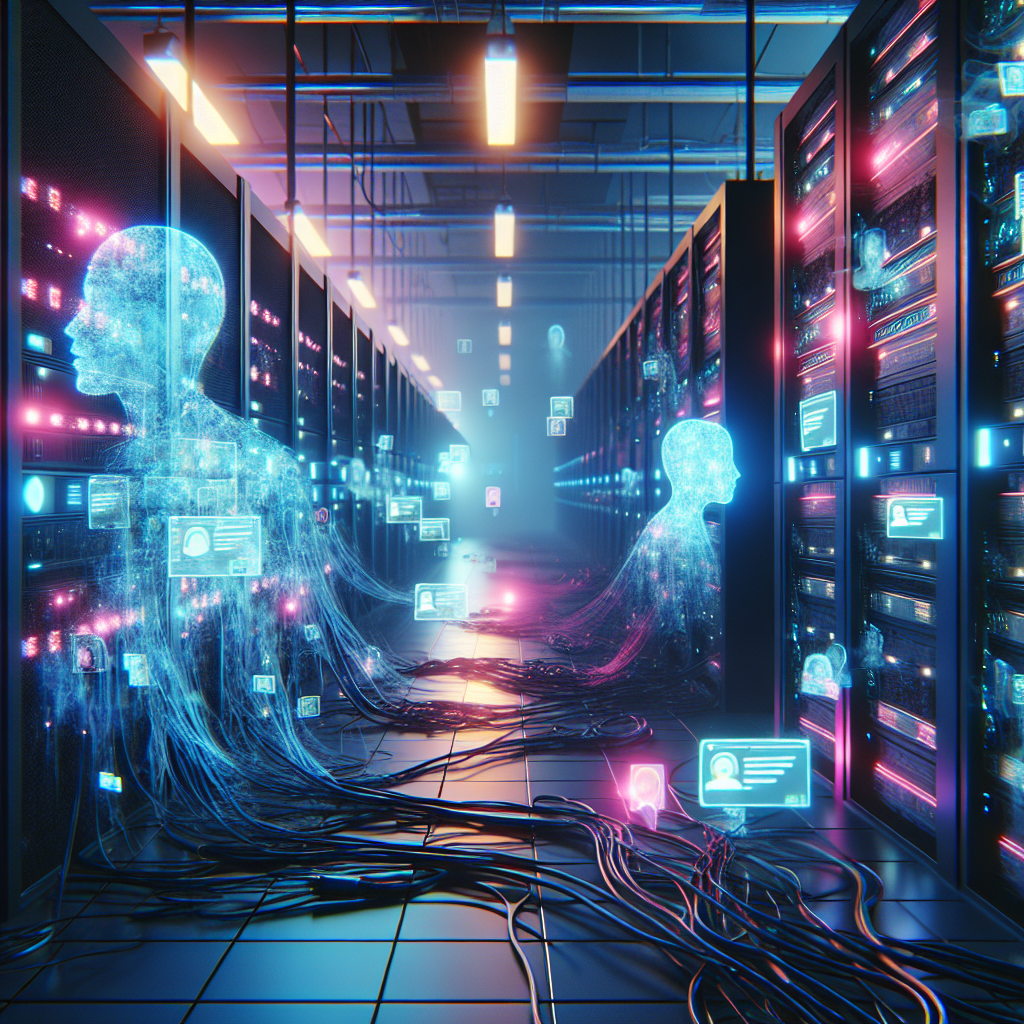
The Hacker’s Click: When Secrets Became Public
It started late one humid summer night—a quick scan, a simple click, and then a torrent. To the anonymous hacker hunched behind a laptop, the discovery of an unguarded AI server felt surreal. Overnight, the wall between the private lives of hundreds of thousands and the unblinking eyes of the internet began to crumble. By dawn, millions of secrets—unguarded, raw, and sometimes shocking—had slipped into daylight.
Caught in the Spotlight: What the Leak Unveiled
By mid-September 2025, headlines were ablaze: “Millions of Erotic Chatbot Users Exposed.” At the eye of the storm stood two AI companion apps—Chattee Chat and GiMe Chat—along with a platform called Secret Desires and the AI roleplay darling, Muah.ai. These weren’t just any text chatbots; they were digital companions, seductive and ever-attentive, whispered to be as real as a heartbeat in the lonely machine hum of late-night hours[1][3][4].
The truth was stark. Open servers, left wild and untamed by their Hong Kong-based developers, had streamed real-time chats in the open. The breach laid bare over 43 million deeply personal messages, hundreds of thousands of photos and videos, and a digital diary of unfiltered fantasies and desires, meant for no eyes but one: the AI lover on the screen[1][3][4].
One Click Away: How It Happened
The catastrophe wasn’t orchestrated by a shadowy cabal of elite hackers—it was the result of a simple technical mistake. Developers had left their Kafka Broker server, a digital mailbox for chat messages, utterly unprotected. Anyone stumbling upon the right web address could read ongoing erotic conversations, browse explicit AI-generated images, or download private videos of strangers who’d trusted these apps with their most intimate longings[1][3].
On Muah.ai, the technical carelessness went even further: email addresses were linked directly to sexual role-play prompts. The hacker who collected the trove called it “a handful of open-source projects duct-taped together.” It was, experts later agreed, a basic but glaring failure—an open invitation to disaster[4].
Digital Desire Goes Viral: Societal Shockwaves
“I thought it was just for me and my bot,” says a fictionalized user, Emily—a 29-year-old accountant who turned to her AI boyfriend during a difficult breakup. She sent him poetry, secrets, and vulnerable selfies she’d never dare share with anyone else.
Now, with one breach, Emily’s digital intimacy teetered on the edge of public exposure. If that data surfaced, it could cost her relationship, her job, or even her sense of self. For many, the risk wasn’t hypothetical: it was terrifyingly real. Some affected users had spent thousands on their AI romances. Extortionists began targeting those unlucky enough to have their identities tied to the stolen prompts[1][4].
Echoes of Ashley Madison—and Something New
For cybersecurity veterans, the episode echoed the notorious Ashley Madison hack, but with a sharper edge. This time, the data wasn’t just names or emails—it was raw, detailed confessions, true desires, and in some cases, dark fantasies that should never see daylight[2][5].
Cybernews analysts called it “an Everest of privacy violations.” The leak went further: AI images put innocent faces—sometimes gathered from the open web—into explicit scenes without consent, heightening fears around deepfakes and digital impersonation[3].
Expert Voices: How Did We Get Here?
“People trust machines with everything they won’t tell real humans,” said Dr. Lila Carter, a tech ethicist*, “but these systems aren’t nearly as secure as they should be. When you give your secrets to a bot, you’re really giving them to whoever built the bot and, as we now see, potentially the whole internet.”
Adam Dodge, an anti-abuse advocate, warned that if such material were ever publicly tied to a person’s name, “it’s a blueprint for blackmail, shaming, and lifelong damage.”[2] Digital privacy groups, meanwhile, lambasted tech developers for prioritizing rapid growth over basic security protocols[1].
Government response has been stern but slow. A European Union spokesperson stated, “This incident strengthens our resolve. AI intimacy platforms—especially those dealing in sexual content—will soon face mandatory audits and significant penalties for negligence.”*
Communities at Risk: A Household’s Nightmare
Imagine a family man—let’s call him Mark—whose experimental conversations with an AI companion now sit somewhere, downloadable for ransom. Would his children trust him? Would his spouse see him the same way? The nightmare isn’t just about the leak, but its rippling potential to destroy relationships and careers overnight.
The Ripple Effects: Industry and Society React
Almost immediately, affected companies scrambled to shut down servers and revise privacy policies, but the damage was irreversible. Analysts projected a chilling effect across the industry: once-buzzing developer forums went silent as platform after platform began urgent security overhauls.
Major AI players—like OpenAI, now under scrutiny for adult features in ChatGPT—rushed to emphasize tougher standards, from stricter age verification to mandatory encryption[5]. But the genie—both digital and psychological—may already be out of the bottle.
What’s Next? Could It Happen Again?
With more people relying on AI for companionship, intimacy, and even emotional healing, the stakes have never been higher. Experts agree that as long as companies grow faster than their sense of responsibility, another breach is inevitable. Regulatory roadblocks are rising, but so is user demand, creating a high-speed collision between freedom, fantasy, and vulnerability.
If our deepest secrets can be exposed at the click of a mouse, are we ready for a world where intimacy is forever at risk?
FAQ
What was the erotic chatbot data breach?
A massive data breach in 2025 exposed millions of private messages, images, and videos from users of erotic AI chatbots, revealing sensitive fantasies and personal data.
How did the leak happen?
Developers failed to secure their servers, leaving real-time conversations, photos, and videos exposed and browsable online.
Who was affected?
Hundreds of thousands of users, primarily from the US and EU, many of whom had trusted these apps for private, adult conversations and even spent large sums on AI companionship.
Could this have been prevented?
Yes. Stronger server security, encryption, and regular audits could have prevented the leak and protected user privacy.
What risks do users now face?
Exposed data can lead to blackmail, reputational harm, and personal distress; even those who used AI-generated images risk being linked to nonconsensual deepfake content.
How are governments and industry responding?
Regulators are pushing for mandatory audits and stricter penalties, while industry leaders are revamping security to regain lost trust.
Could it happen again?
Absolutely—unless platforms treat user privacy as a non-negotiable priority, similar leaks remain a looming threat.