
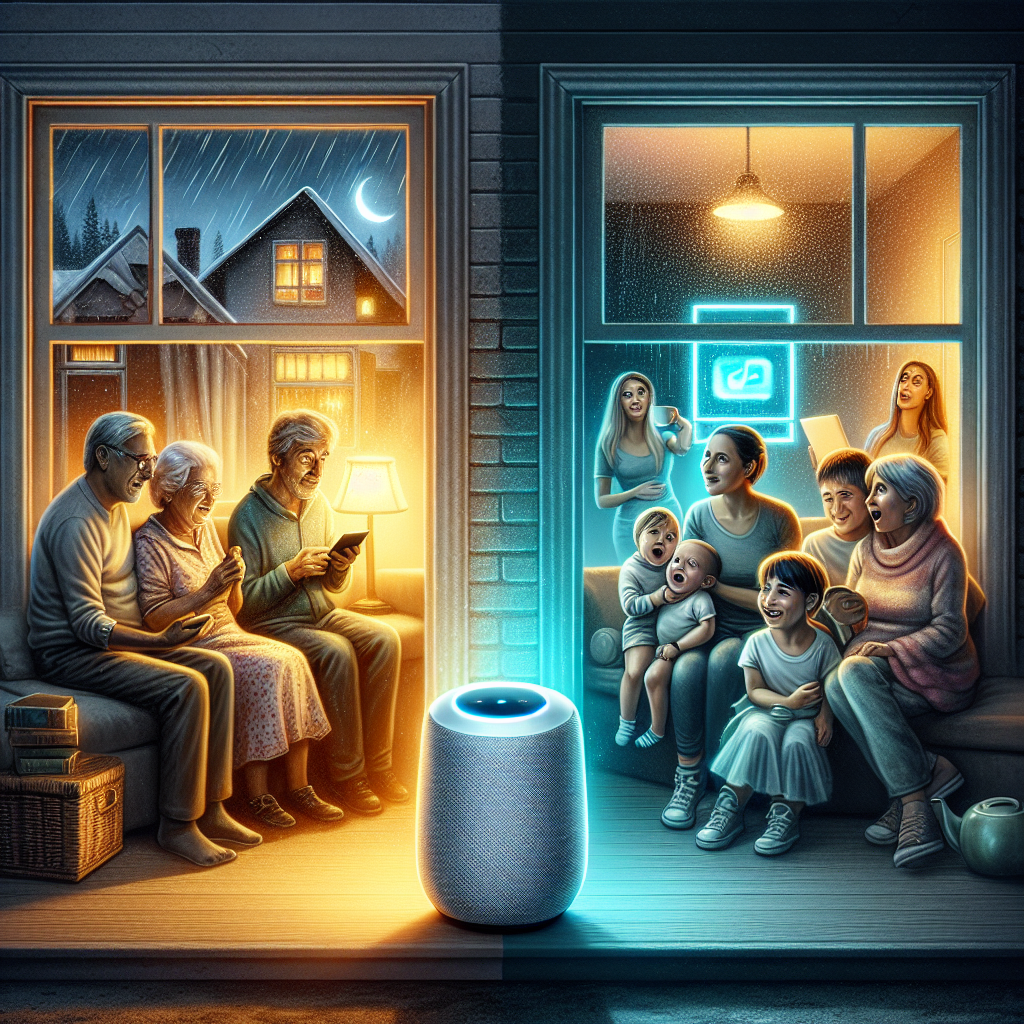
It was just after midnight when Julie’s living room went quiet: her beloved Echo Dot blinked twice, then issued a polite, robotic farewell. A notification flashed on her phone — “Alexa+ is here. Please upgrade to continue enjoying voice services.” For millions in homes like Julie’s, the era of the classic Alexa had ended, not in a bang, but in a silent software sunset.
The Sudden Switch: What Actually Happened
It started with a leak — whispered from Amazon’s server rooms onto Reddit, lighting a thread that would spiral into a full-blown digital firestorm. Dozens of posts, screenshots, chat logs: all suggested Amazon wasn’t simply rolling out a new voice assistant, Alexa+.
They were preparing to turn off a wide swath of Echo and Alexa devices — from the original hockey puck to the Echo Spot, the compact Echo Plus, and the soon-vintage Echo Show displays. The outcry: Would Amazon really cut off millions of loyal users, all at once[1][2]?
According to official statements, Amazon framed the move as progress: Alexa+ would be available as a free feature for Prime members, but would “prioritize compatibility” with newer Echo Show displays and the latest Dots. Older Echos, charming but “technology-limited,” would not just stop receiving features — many would lose critical cloud functions overnight[3].
Why It Matters: Change at Home, Change Everywhere
In kitchens, bedrooms, and living rooms, Alexa had become everything from a caretaker for the elderly to a bedtime DJ for kids. Suddenly, shipping notices, grocery reminders, and even basic home commands were gone from “unsupported” devices.
For Amazon, it was about future-proofing the smart home: Alexa+ draws on advanced generative AI — think supercharged chat and contextual memory — all needing more computing power and always-updated connections to smart devices via Matter and Thread (industry language for universal smart-home compatibility)[3].
For everyday people, it was as if someone took away an old friend and left a shiny new neighbor at the door — but only if they had the budget or inclination to welcome one.
Under the Hood: Alexa+ and the Tech Reset
Alexa+ isn’t just an upgrade. It’s a reinvention. The new system relies on generative AI, which means it can remember your preferences, complete complex tasks, and talk to you almost like a real assistant. It can move music from room to room, help track packages using Ring cameras, or order groceries before you realize you’re out[3].
But, those capabilities are available only on certain hardware. Devices need enough memory and speed to run these new AI routines, and older Echos simply can’t keep up[2]. As a result, Amazon had to pick a side: support the past or build the future.
The Fallout: Families, Workers, and the Loss of Voice
Imagine the Garcia family in Oakland: Maria, a nurse, relied on her Echo (first generation) every morning for quick news, Spanish-English translations, and lighting routines on crazy shifts. One Tuesday, her Echo just stopped responding, asking for an upgrade she couldn’t afford this month.
“I felt like they pulled the plug on a service that had become part of our routine,” Maria said, echoing frustration felt across online forums and coffee shops alike.
Many households faced similar disruption: senior citizens lost accessibility functions, multitasking parents lost kitchen timers — and lower-income users, who bought Echo devices secondhand, discovered their investment was now a paperweight.
The Industry Reacts: Shockwaves Through Silicon Valley and Beyond
Consumer advocates were quick to pounce, calling the move “planned obsolescence.” Tech think-tanks cautioned that Amazon’s server-side control means “your hardware is only as useful as Amazon allows it to be.”
Rival device makers — Google, Apple, Samsung — tried to capitalize, launching targeted trade-in offers and touting “long-term support” as a badge of honor.
Governments in the EU and some US states called for inquiries, asking if companies that dominate in-home ecosystems should be able to remotely “brick” devices families rely on for daily life.
Amazon, meanwhile, stuck to the script: innovation requires hard choices, and the company was “committed to helping customers upgrade, with discounts and transition tools.” They stressed: “Prime members enjoy Alexa+ for free — a better, faster experience for everyone.”[3]
What’s Next? Could It Happen Again?
With Alexa+ rolling out first to higher-end Echo Show models, other voice platforms are watching closely. Is this a one-time reckoning, or the start of regular resets in the age of cloud-powered products? As homes fill with ever-smarter devices, will any of them truly belong to us, or just to the platform behind the curtain?
Are we ready for our most trusted digital companions to have an expiration date — and if so, who gets a say in when it comes?
FAQ
-
What is Alexa+ and why is Amazon replacing older Alexa devices?
Alexa+ is a next-generation, AI-powered voice assistant designed for newer Echo devices. Amazon is phasing out older Echo models that can’t support its advanced features or faster smart-home integrations[3]. -
Will my current Alexa device still work?
If you have a newer Echo Show or Echo Dot model, it will support Alexa+. Older and discontinued Echo devices may lose some or all Alexa features, as full cloud support ends[1][2]. -
Can I upgrade to Alexa+ on my existing device?
Only select recent Echo devices are compatible with Alexa+. Amazon offers upgrade discounts and migration help for customers needing new hardware[1][2]. -
Why are so many Echo models being discontinued?
Older devices lack the hardware for advanced, generative AI functions, future-proof connectivity, and ongoing security or industry-standard smart home support[2][3]. -
Is Alexa+ free for everyone?
Alexa+ is free for Prime members; others may pay a monthly fee. Existing Alexa routines and skills work best on supported hardware[3].