
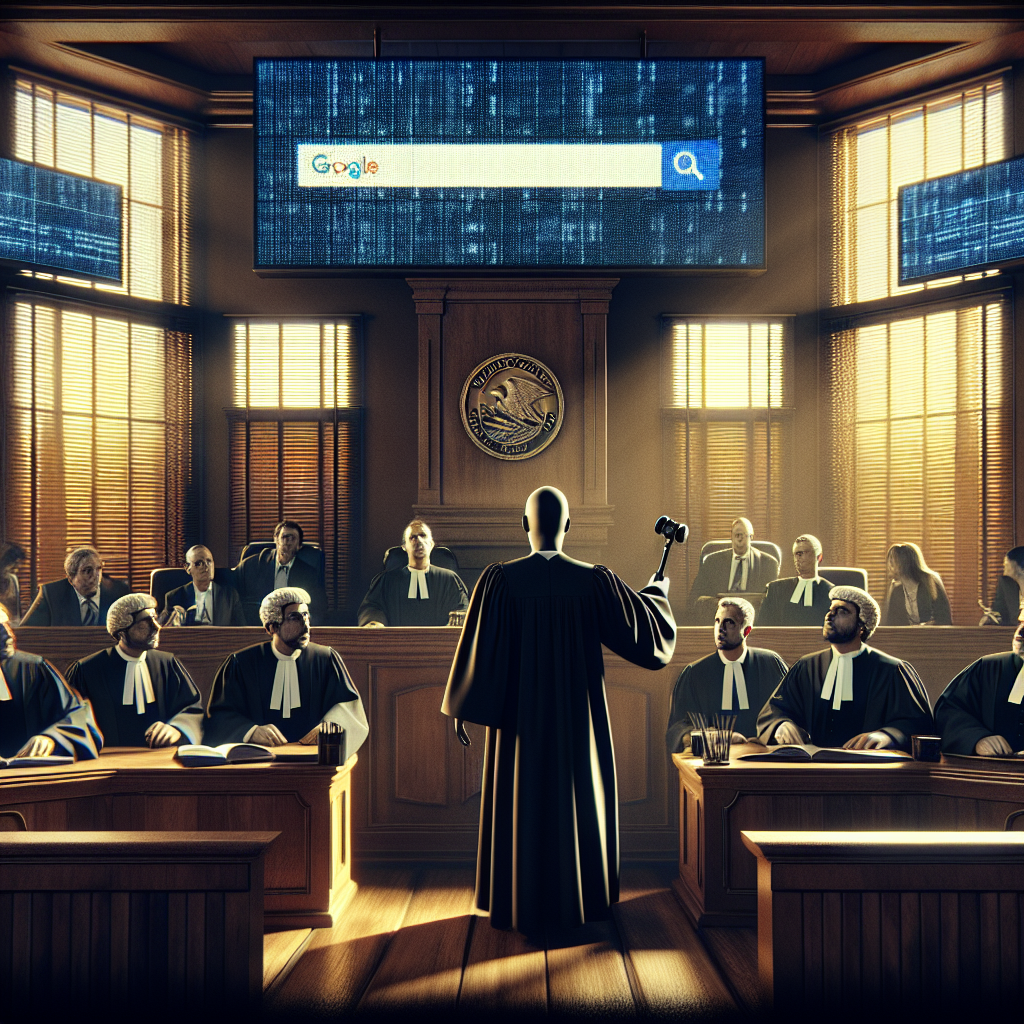
The gavel struck in a quiet Washington, D.C. courtroom, but the aftershocks rippled around the world. On a gray Tuesday, Judge Amit Mehta looked up from his notes and declared: Google, the world’s gatekeeper to the web, had gone too far. The room fell silent. Counsel shifted in their seats. The internet — that vast, invisible network connecting billions of lives — was about to change.
A Ruling Heard ‘Round the World
What had just happened? Judge Mehta, following a marathon five-year legal battle, ruled that Google — the company whose name is synonymous with “search” — had built and abused an illegal monopoly[1]. For years, the Department of Justice had accused Google of stacking the deck: crafting behind-the-scenes deals that made it nearly impossible for rival search engines to get noticed[1][4].
But the judge went further than many expected. Not only did he curb Google’s exclusive deals that kept alternatives off our phones, he also ordered Google to share its precious search data with rivals[1]. That’s like asking Coke to hand Pepsi its secret recipe — for the sake of fair competition.
The Stakes: Why It Matters to Everyone
Why does a legal ruling about Google matter to you, your family, or that local café owner checking Yelp on their phone? The answer is simple: choice. The way you find dinner recipes, local news, job listings, or even emergency information is shaped by a tiny handful of algorithmic gatekeepers.
For years, critics warned that when one company controls the path to information, they shape what billions see… and what billions never see. It’s a power unlike almost anything in the modern economy: influencing elections, businesses, even our collective knowledge about the world.
How Google Built Its Search Fortress
At the heart of the case was a web of contracts, sometimes called “default agreements.” Whenever you unboxed a shiny new phone or opened a browser, there’s a reason Google was front and center. The company paid billions to mobile carriers and device makers like Samsung to ensure no other search engine was preloaded or easy to find[1].
Rival tech companies cried foul, claiming they couldn’t get a fair shot — their apps buried, unable to compete against Google’s convenience and preset dominance.
“Imagine trying to launch a new pizza shop,” remarked analyst Helen Fong, “but the city won’t let you place signs anywhere, and every street leads only to Domino’s. No matter how good your recipe, you’re invisible.”
A Window Into the Courtroom
Behind the legal arguments was a very human drama. Google’s CEO Sundar Pichai worried aloud in court about his trade secrets, hinting that forced data-sharing risked opening Pandora’s box — that rivals could reverse-engineer Google’s “secret sauce”[1].
On the other side sat smaller search startups, some represented by founders who mortgaged their homes to get in the room. “All we’re asking for is a chance,” one entrepreneur said, voice cracking just slightly. “Let people decide who gives the best answer — not whoever buys the most contracts.”
A Day in the Life: The Personal Impact
Let’s meet Anna Ramirez, a high school teacher in Des Moines, Iowa (a composite of many Americans). Anna, grading papers late one night, asks her smart speaker for local news. Every answer comes from Google — the weather, school closures, restaurants, civic events. Anna never wonders if she’s missing something different, or better, just a town away. She doesn’t notice the invisibility cloak dropping over lesser-known voices and alternative perspectives.
That’s what the court said this ruling was about: giving consumers like Anna not just a choice, but real choices.
How Governments and Industry Reacted
The decision split the tech world. In Silicon Valley, executives shivered — if Google’s search empire could be toppled, who was next? Industry insiders whispered about legal upheavals; antitrust lawyers cleared schedules for years ahead.
Google, never one to back down, announced it would appeal—meaning fierce battles in higher courts are certain[1]. Overseas, the European Union, already cracking down on Big Tech, cheered the move, suggesting a possible trend of global regulatory momentum.
For smaller tech companies and ordinary people, it was a moment of hope. Might the internet, at last, open up?
What’s Next / Could It Happen Again?
The story is far from over. Google’s appeal could tie up the ruling for years, and any technical requirements — like sharing search data — will be hotly debated.
But, in the halls of Congress and the glass towers of Silicon Valley, the message is clear: even tech titans are not untouchable. For Google, and any would-be monopolists, the era of unchecked power online may be coming to a close.
Will this be the case that rewrites the rules for digital competition? Or is it just another skirmish in the endless war over who gets to shape the web we live in?
What do YOU think — is breaking up Big Tech the answer, or does it risk breaking the internet itself?
FAQ
What did the judge rule in the Google monopoly case?
The judge found Google maintained an illegal monopoly in online search and ordered it to open up its search data to competitors, while barring the company from exclusive pre-installation deals with device makers[1][4].
Why does this matter for consumers and businesses?
The ruling could increase competition, offering consumers more choices and businesses a fairer shot at visibility, ultimately shaping how we all use the internet.
Is Google required to dismantle or sell parts of its business?
No, the court rejected calls to break up Google or force the sale of Chrome and Android, focusing instead on stopping exclusive deals and requiring data sharing[1][4].
Will this ruling lead to more search engines appearing on devices?
Potentially, yes. Device makers can now preinstall alternatives to Google Search, and rivals could improve their services using shared data, although this depends on the appeals process and enforcement.
Is Google appealing the ruling?
Yes, Google has said it will appeal, which could delay immediate implementation of the new requirements[1].
Keyword
google search antitrust ruling
LSI
- google monopoly decision
- judge mehta google
- antitrust law and big tech
- online search engine competition
- google exclusive contracts
- search data sharing
- anti-competitive practices tech
MetaDescription
A landmark court ruling forces Google to share search data and ends exclusive deals, reshaping how we access the internet. Discover the ruling’s impact and what’s next.