
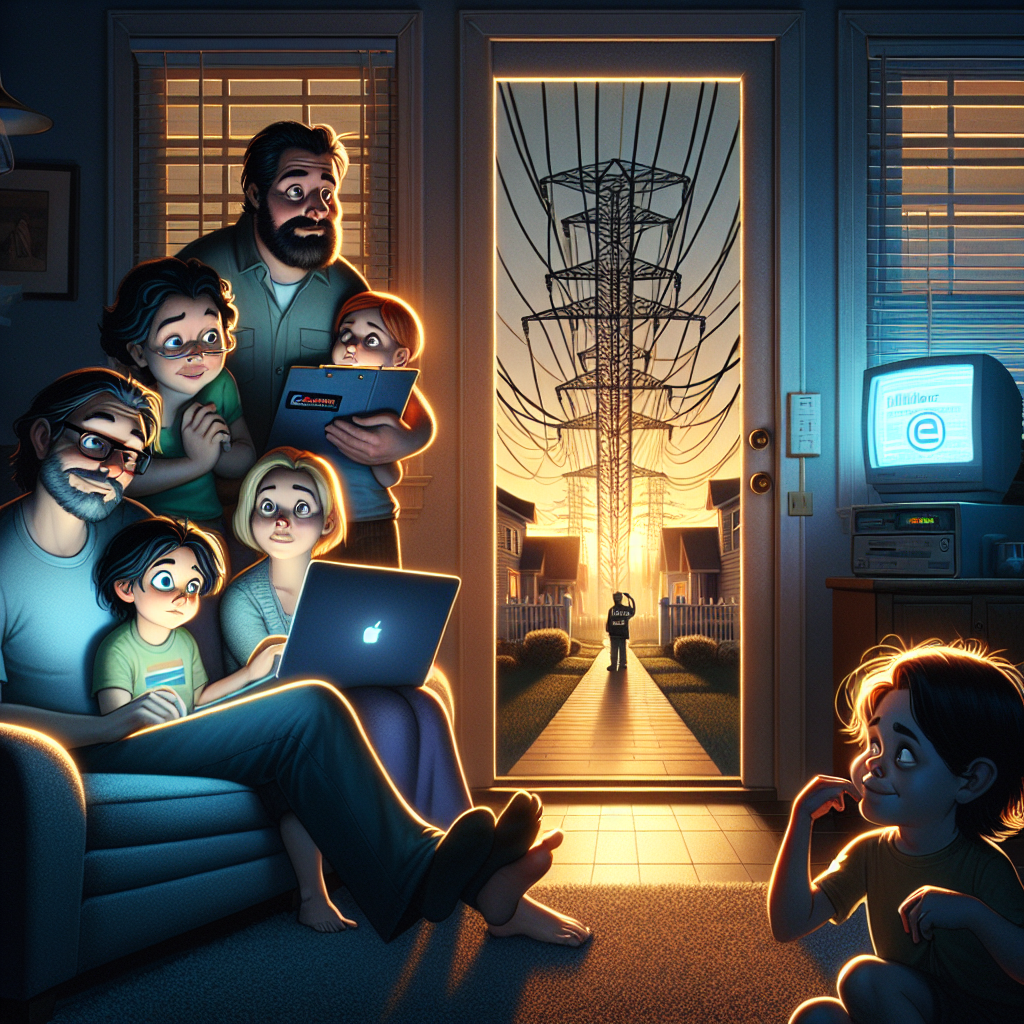
Scene One: A Knock at Dusk
It’s 7:14 p.m. on a chilly spring evening when Sheila Madigan hears the ring at her front door. A wide-smiling man in a company polo, clipboard in hand, promises her the blazing speed and reliability of a “100% fiber optic internet” experience. “No more buffering—all fiber, all the way to the house!” he proclaims, voice warm enough to lull suspicion. Sheila signs up on the spot. Within a week, her old copper wires glow with a new sticker. But as she discovers months later, the fiber never actually arrived. Only the story did.
The New American Broadband Gold Rush
In neighborhoods across the country, from bustling suburbs to the rural main streets, scenes like Sheila’s have played out thousands of times in the last three years. As the government poured billions into expanding broadband and closing the digital divide, a new “Fiber Rush” erupted—drawing in internet service providers eager for contracts, customers, and, for a few, easy profit.
But beneath the promise of a high-speed revolution, something darker stirred. As recently exposed by a viral Reddit post and confirmed in federal investigations, ISPs were systematically misleading customers about the very foundation of their internet service—labeling ordinary or partially upgraded lines as “fiber optic” to secure lucrative signups, win government grants, and eliminate local rivals[1][2].
Behind the Illusion: What Really Happened
Why did so many Americans get fake fiber? The answer is as much about technical loopholes as it is about opportunistic business.
Fiber optic internet—real fiber—means cables made from glass or plastic, using beams of light to carry data at dizzying speeds. But deploying fiber “all the way” to every house is expensive. Instead, some providers left the last crucial steps—“the last mile”—using old copper lines or hybrid systems. Then, they’d slap on the “fiber optic” label anyway, often in fine print (or not at all), claiming the system was “fiber-connected,” even if only at a faraway hub[2][4].
Investigations reveal the game changed as soon as federal dollars got involved. One ISP CEO, Stephen Kromer of Uprise Fiber, netted over $7 million in taxpayer-backed funds for a project that barely broke ground; nearly all of it withdrawn to personal accounts while only minimal work was done[2][6]. In another case, Timothy Chad Henson of Clearfiber, Inc. scored $1.96 million for “fiber builds,” submitting false invoices and pocketing hundreds of thousands[1]. Across the landscape, whistleblowers warned of fraudulent proxy paperwork, omitted details in SEC filings—while watchdogs struggled to keep up[4][8].
When Technology Promises Too Much
Industry analysts like Dr. Angela Lee, senior telecom advisor at the non-profit Civic Internet Watch (fictionalized), describe the deception as “trust engineering gone rogue.” She says:
“Customers don’t climb utility poles to check the wiring. They believe the promise. That trust was hijacked—by branding, by false claims, by paperwork engineered to pass shallow scrutiny.”
The root problem: There’s no easy way for non-experts to distinguish copper from fiber, or hybrid systems from the real deal. The slick marketing, the technical jargon, the local installers—they all felt official.
A Family Caught in the Middle
Picture the Rodriguez family of Clark County—new work-from-home parents, two teenagers and unreliable old DSL. When a local provider offered “gigabit fiber” as part of a federal program, they signed up, delighted that government dollars were closing the tech gap. Six months in, their internet still sputtered when the kids streamed science videos, and Zoom calls dropped. It wasn’t until an FCC inspector arrived for a random audit that the truth emerged: Their street never got fiber, just a renamed, repackaged version of the same old infrastructure[8].
Watchdogs, AGs, and the Slow Wheels of Justice
The fallout has been as kaleidoscopic as the schemes. The IRS, state attorneys general, and the FCC Inspector General scrambled to track disappearing funds, prosecute egregious cases, and reassure the public. Some companies were forced to issue refunds and quietly replaced misleading stickers with disclaimers. A new wave of regulatory oversight rolled in, though critics warn the rules lack real bite[1][2][8].
Meanwhile, whistleblowers (sometimes company insiders) risked retaliation to flag massive fraud in SEC filings, uncovering years-old acquisitions built on shaky legal ground[4]. In Nevada’s high-profile case, authorities vowed prison time for every count—a stark shift from the “blind eye” era of self-regulation[2][6].
But as analyst Lee puts it, “For every swindler caught, there’s fresh incentive for the next round to bend the rules.”
What’s Next — Could It Happen Again?
With billions still flowing to broadband projects, and consumer trust in tatters, regulators face a familiar paradox: speed versus scrutiny. New proposals aim to embed tougher oversight, real-time audits, and clearer labeling standards—so that “fiber” truly means fiber. But technology outpaces law, and as Sheila Madigan discovered, “future-proof” promises are often only as strong as the quietest wire in the box.
What happens when the digital revolution itself becomes the scam? In the rush to connect America, who’s really watching the wires?
FAQ
What is fiber optic internet, and why is it different from regular broadband?
Fiber optic internet uses thin strands of glass or plastic (fiber) to transmit data as light, allowing for much faster and more reliable connections than copper cable or DSL.
How did ISPs trick customers with fake fiber claims?
Some ISPs claimed to offer “fiber” while only upgrading parts of their network, leaving the final links to homes as old copper wires or hybrid connections, yet still marketing the service as full fiber.
Who investigates fiber optic internet fraud?
Cases of fiber optic fraud are typically investigated by agencies like the IRS, state attorneys general, the FCC, and sometimes federal prosecutors, especially if government funding is involved[1][2][8].
What should I check before signing up for fiber internet?
Ask the provider whether fiber goes all the way to your home (called FTTH—Fiber To The Home). Beware of hybrid or “fiber-connected” services that may not deliver promised speeds.
Can I tell if my connection is real fiber?
It’s hard for most consumers, but slow speeds, inconsistent service, or unexplained outages after “fiber” installation can be red flags. Seek third-party reviews or request written proof of the infrastructure used.