
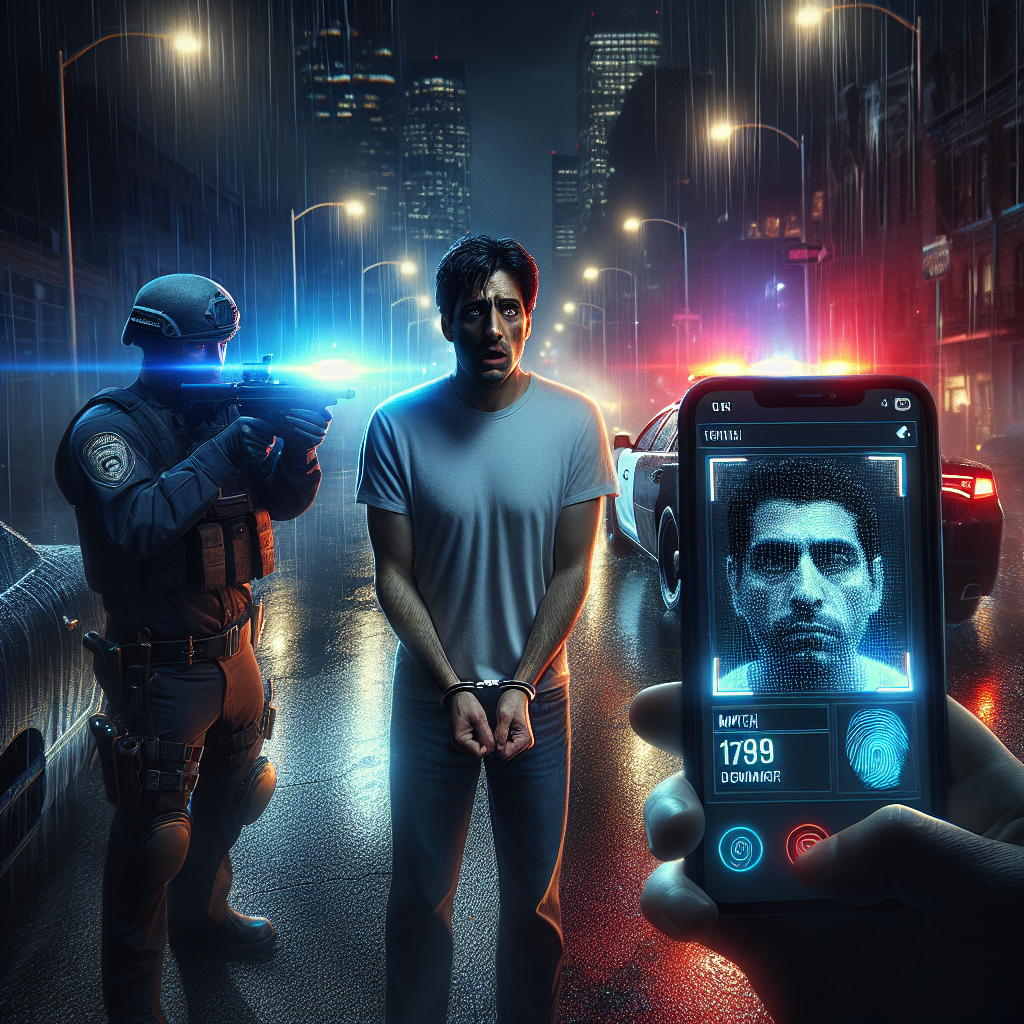
The Traffic Stop That Shattered Trust
Imagine cruising down a sun-baked street in your hometown, radio humming, when blue lights flash in your rearview. You’re Juan Gutiérrez, a proud U.S. citizen born and raised here. But as ICE agents approach, one pulls out a phone, points it at your face, and scans you like a barcode. The app chimes: match found. Suddenly, you’re not just pulled over—you’re a deportation risk.[2] This wasn’t a movie scene. It happened to Gutiérrez, exposing a chilling reality: federal agents wielding smartphone facial recognition on American streets.[1][2]
Inside Mobile Fortify: Your Face Becomes Their Database
Mobile Fortify is no ordinary app. Developed by Customs and Border Protection (CBP) for Immigration and Customs Enforcement (ICE), it’s loaded onto agents’ work phones.[2] Snap a photo, and it instantly searches a massive trove of 200 million images from U.S. government databases—including FBI records and state warrants.[2] Results pop up: name, birthdate, “alien number” if you’re an immigrant, even deportation orders.[2] The photo? It’s your most recent CBP encounter shot, matched against every image they hold.[2]
Agents use it in the field to spot removable immigrants, but internal docs admit it scans U.S. citizens too—like Gutiérrez.[2] No opt-out allowed. Worse, ICE treats a “match” as definitive proof of status, ignoring birth certificates or passports.[1][2] Rep. Bennie G. Thompson slammed it: ICE prioritizes the app over citizenship proof, calling it a “frightening, repugnant, and unconstitutional attack.”[2] Unlike CBP or TSA, which double-check matches with IDs, ICE goes all-in.[1]
A Day in the Life: What If It Was You?
Picture Sarah, a 32-year-old teacher in Chicago, biking home with her teenage son after soccer practice. No ID on her—it’s in her locker. Border Patrol stops them “just to check.” An agent says, “Can you do facial?” Phone hovers inches from her son’s face. Seconds later: “Verify your name.” Heart pounding, Sarah flashes her license, but what if the app glitches? One wrong match, and her kid’s in cuffs, family torn apart. This fictional close call mirrors real social media videos: agents scanning bike riders, drivers claiming citizenship, all on U.S. soil.[2][4] Relatable? Terrifyingly so.
Outrage Erupts: Voices Demand Accountability
The backlash hit like a wave. In November 2025, over 50 civil rights groups fired off a letter to DHS, demanding ICE halt Mobile Fortify immediately. They cited Gutiérrez’s case: a U.S. citizen flagged for deportation via “biometric confirmation.”[1][3] Senators like Adam Schiff and Ed Markey pressed ICE again, spotlighting street-scan videos and privacy horrors. “Cease using this app,” they demanded.[4]
The ACLU’s Nathan Wessler warned: No one should face scans, data grabs, or misidentification risks on public streets.[2] Even DHS stonewalled: “We won’t confirm or deny capabilities.”[2] CBP defended it as a tool for “immigration inspections,” but stressed agents must weigh all evidence—yet reports show otherwise.[2] Social media amplified the fury, with videos racking up views, sparking protests and policy debates. Ripple effects? Tighter scrutiny on biometrics, but ICE keeps scanning.[6]
What’s Next? Could It Happen Again?
This is just the start. With facial recognition exploding—drones, street cams, AI upgrades—guardrails are urgent.[6][7] Rights groups push for bans on street use; lawmakers eye federal limits. But ICE’s expansion hints at more: targeting “dissenters” beyond immigrants?[7] Tech evolves fast; without oversight, your face could be next in the database. Thoughtful reform now prevents a surveillance dystopia.
Will your face be the next false positive?
(Word count: 800)
FAQ
What is ICE facial recognition scanning? ICE’s Mobile Fortify app uses smartphone facial recognition to match faces against 200 million government images for quick immigration status checks.[2]
How does Mobile Fortify facial recognition work? Agents snap a photo; it queries FBI, warrant, and CBP databases, pulling names, alien numbers, and deportation flags—even for U.S. citizens.[1][2]
Can ICE use facial recognition on US citizens? Yes, as in Juan Gutiérrez’s case, where a U.S. citizen was flagged for deportation despite proof.[2]
Is Mobile Fortify biometric scanning accurate? No—errors lead to wrongful flags; ICE treats matches as definitive, ignoring contrary evidence like birth certificates.[1][2]
What are the risks of ICE street facial recognition? Wrongful detentions, privacy invasions, and no opt-out, per civil rights coalitions.[3]
Have lawmakers reacted to ICE Mobile Fortify? Senators Schiff and Markey demanded ICE stop it, citing street videos and civil liberties threats.[4]
Could CBP ICE facial recognition expand? Experts warn of broader surveillance without guardrails.[6]