
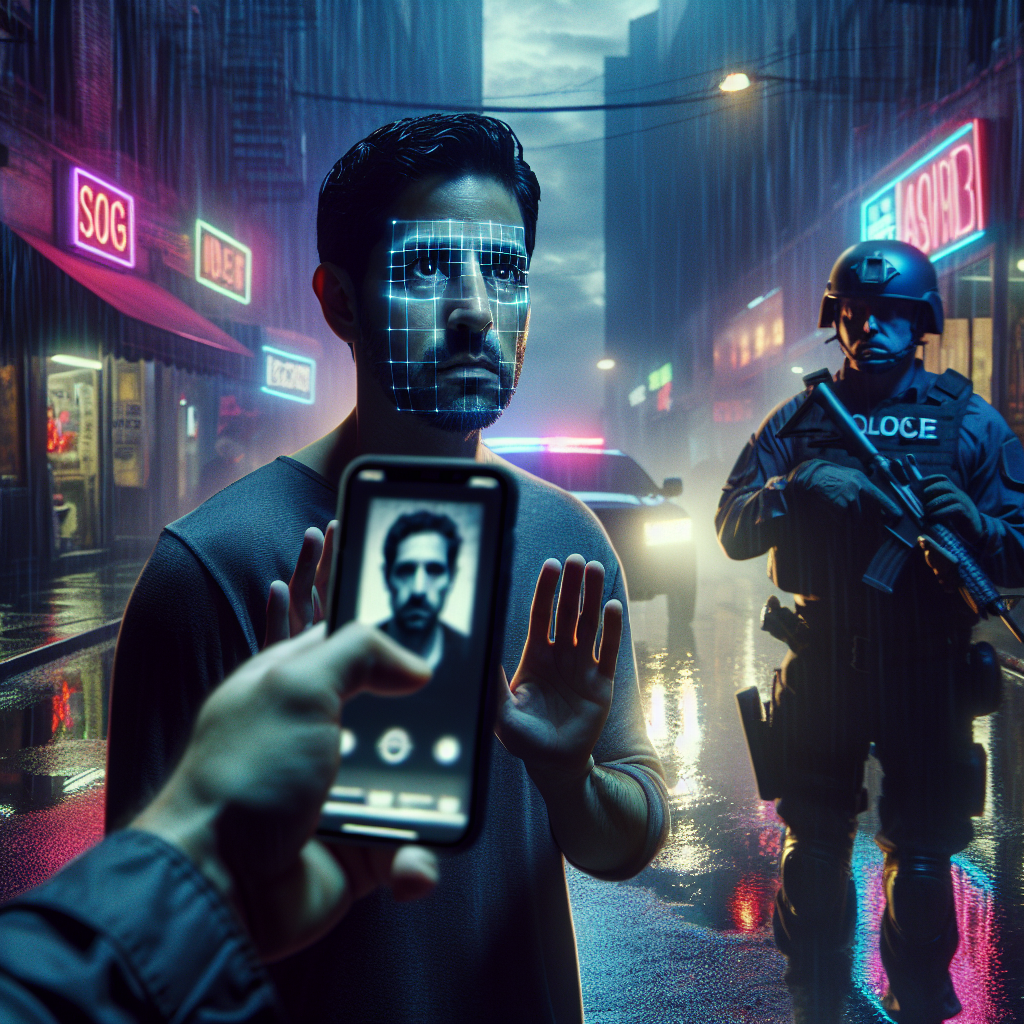
The Moment Fear Froze a Face
Imagine pedaling home on a quiet street when two federal agents block your path. “Can you do facial?” one asks. Your heart races as a phone camera locks onto your face, scanning you like contraband. This wasn’t a border checkpoint—it was an American sidewalk. For José Gutiérrez, a U.S. citizen, that scan flashed his details: name, birthdate, even an “alien number.” The app suggested he could be deported. His story, uncovered by Reveal and 404 Media, exposes a chilling reality: Immigration and Customs Enforcement (ICE) now carries facial recognition in agents’ pockets.[2]
The App That Sees Through Streets
Enter Mobile Fortify, a smartphone app built by Customs and Border Protection (CBP) for ICE field agents. Point your phone, snap a photo—no consent required—and it queries a massive database of 200 million images from FBI records, state warrants, and CBP encounters.[2][1] Results pop up instantly: photos from your last border crossing, immigration status, deportation orders. It’s designed to spot removable immigrants, but internal documents admit it scans U.S. citizens too.[2] Unlike airport kiosks, this turns border tech inward, onto city streets.[2] No opt-out, no appeal—agents can treat a match as “definitive,” overriding birth certificates or passports.[1][2]
A Citizen’s Nightmare Unfolds
Picture Maria, a 32-year-old teacher in Chicago, born in Texas. She’s rushing to pick up her kids when ICE agents pull over her car for a routine check. “Remove your hat,” they say, phones raised. The scan pings a fuzzy old photo from a family trip. It flags her as undocumented. Hands shaking, she shows her driver’s license. They hesitate, but protocol prioritizes the app. Hours later, she’s detained, separated from her family, her life upended by a glitch. This fictional tale mirrors real cases, like Gutiérrez’s and viral videos of agents scanning bikers and drivers claiming citizenship.[2] One man pleads, “I’m American!”—yet the phone decides.[2]
Voices of Alarm: Experts Sound the Siren
Privacy warriors are raging. “ICE’s use of Mobile Fortify is a frightening, repugnant attack on Americans’ rights,” thunders Rep. Bennie G. Thompson, ranking member of the House Homeland Security Committee. He revealed ICE ignores citizenship proof if the app disagrees.[2] The ACLU’s Nathan Wessler demands an end: “We should be free without agents scanning faces, risking misidentifications and wrongful detentions.”[2] A coalition of 50+ civil rights groups penned a November 2025 letter to DHS, citing Gutiérrez’s case as proof of peril—no other U.S. agency treats face scans as final proof.[1][4] Even CBP, the app’s creator, urges verifying with documents; ICE often doesn’t.[1][2]
Ripples of Outrage and Official Silence
Pushback swelled fast. Advocacy groups flooded DHS with demands to halt Mobile Fortify and release privacy reviews.[1][4] Social media erupted with videos of street scans, fueling protests from immigrant communities to tech watchdogs like EFF.[4][2] ICE’s surveillance empire expands—Clearview AI contracts for mugshots from social media, DNA from detainees (even citizens), iris scanners in agents’ kits.[3] Reactions? CBP claims it’s for “immigration inspections” with training, but won’t detail due to “law enforcement sensitivities.” DHS stonewalls: “We don’t confirm methods.”[2] No policy changes yet, but lawsuits loom, echoing post-9/11 biometric overreach.[5]
What’s Next? Could It Happen to You?
Mobile Fortify is just the start. ICE eyes drones and AI to track “dissenters,” blending immigrant hunts with broader surveillance.[7][3] Guardrails? Congress could mandate consent or audits, but with 2025’s political winds, expansion seems likely. Tech evolves—better accuracy or bigger databases?—but without oversight, every face is fair game. Will streets become scan zones?
What if your next traffic stop ends in a biometric blunder—would you trust a phone over your passport?
(Word count: 800)
FAQ
Q: What is ICE facial recognition Mobile Fortify app?
A: A smartphone tool for ICE agents using facial recognition technology to scan faces against 200 million images, checking immigration status and warrants in seconds.[2]
Q: Can ICE facial recognition scan U.S. citizens?
A: Yes, internal docs confirm it targets non-aliens too, risking wrongful detentions via biometric surveillance.[2][1]
Q: How does ICE biometric identification work on streets?
A: Agents snap photos with the ICE mobile app, querying FBI and CBP databases without opt-out, often treating matches as definitive.[1][2]
Q: What are risks of ICE facial scanning technology?
A: Facial recognition errors lead to deportations, family separations; no other agency relies on it solely.[1][4]
Q: Is there ICE surveillance expansion beyond faces?
A: Yes, includes DNA collection, iris scanners, Clearview AI for immigration enforcement tech.[3]