
An Image, a Secret, a Longing
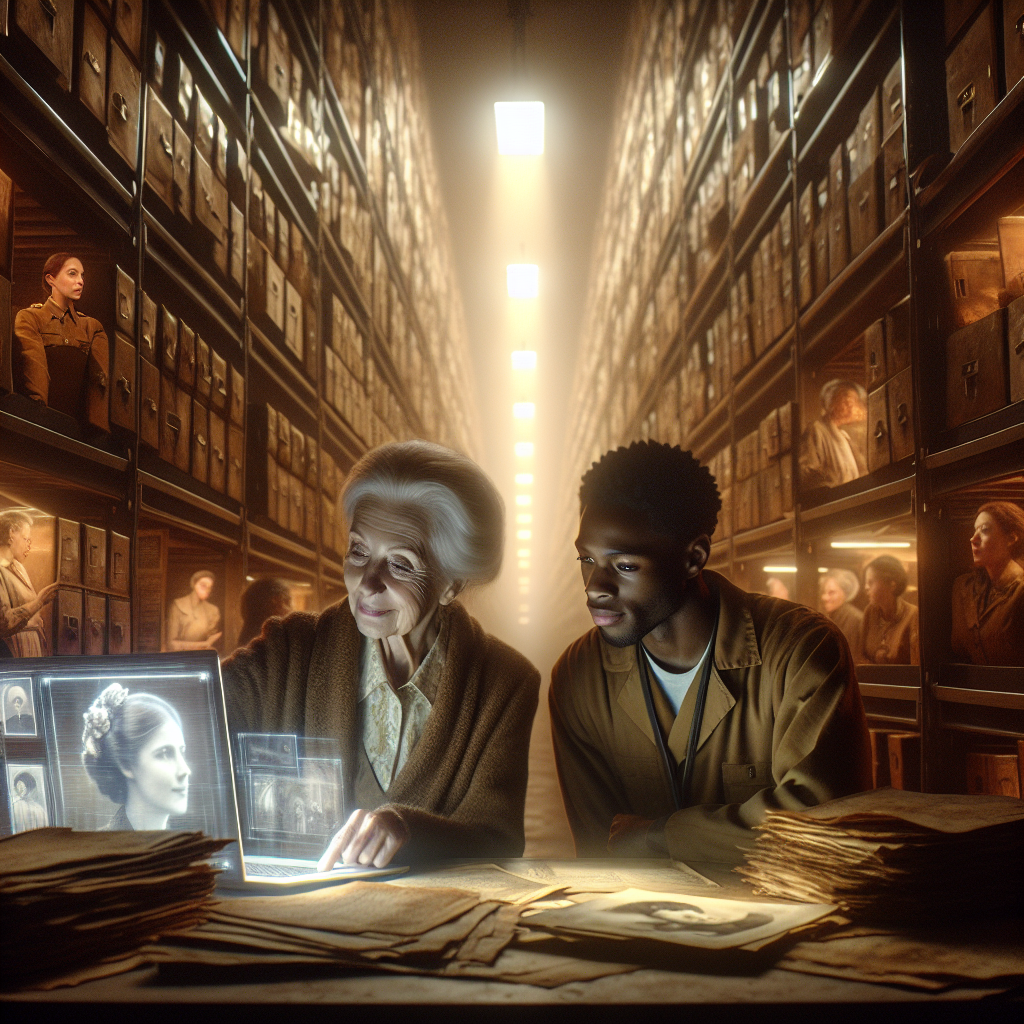
The picture is faded, haunted by decades. A woman’s eyes stare out from a strip of black-and-white film, her expression caught between hope and dread. For decades, she was another nameless face lost to the tides of the Holocaust—a ghost in the crowd. Until a historian, armed not with a magnifier, but with artificial intelligence, uploaded her photograph into a new kind of search engine. Within moments, digital neurons raced through memory, and a name—the echo of a life—blinked onto the screen.
How AI Became a Guardian of Memory
In the heart of a modern-day digital lab, something close to a miracle is unfolding. Engineers and historians, united by a sense of justice, are feeding millions of Holocaust-era photographs and documents into deep learning systems[1][2]. These AI tools, some built by volunteers and descendants of survivors, use facial recognition and text analysis to scan through grainy photos from Nazi archives, Red Cross folders, and public submissions[1][2][4]. Their purpose: to match faces, decipher scribbled names, and return lost identities to history’s ledger.
This isn’t science fiction. Projects like From Numbers to Names, spearheaded by Google engineer Daniel Patt, have already trained neural networks to compare user-uploaded pre-1960s photographs against a database of over 177,000 archived images[1]. The system, lean and relentless, spits out its best matches in seconds. Every new identification—every name—echoes across generations.
Why This Matters: Healing the Gaps of History
The Holocaust left over 11 million dead[1][4]. Most of their stories ended in silence, absorbed into the growing, anonymous crowd of victims. For families, history lost its warmth—records were burned, witnesses perished, and surviving relatives grew old for decades without knowing the fates of their fathers, sisters, children[2]. For these families, one name recovered isn’t a statistic; it’s a blessing, a relief, and sometimes, a reckoning decades overdue.
Yad Vashem, the world’s largest Holocaust remembrance center, now harnesses natural-language processing and AI to search for unknown victims in text, sound, and image—a task too vast for humans alone[4]. The Arolsen Archives, the world’s largest trove of Nazi-era persecution records, fields 20,000 queries each year, cross-referenced and analyzed by AI to speed up the work that once took lifetimes[4].
Inside the AI: How the Search for Faces Works
Behind the softly glowing screens, algorithms break down images into mathematical fingerprints. Each face in a photo—eye lines, jaw curves, cheekbones—is converted into a set of numbers, then compared against tens of thousands housed in museum archives[1]. Human volunteers and historians review possible matches, feeding corrections and feedback back into the system[2]. This human-in-the-loop model teaches the AI to become more accurate with every iteration.
When ambiguity arises—for example, if a photo is blurry or a name’s spelling twisted by time—a confidence score keeps things honest, flagging matches that need a historian’s touch[2]. This is not automation for automation’s sake; it’s a never-ending digital conversation between machine intuition and human memory.
The Ripple: A Family’s Story Illuminated
Imagine Eva Mendel, a retired teacher in Buenos Aires, clutching a worn passport photo of her great-aunt, believed lost to the camps. For decades, her family’s story stopped at a border in 1942. One late night, her granddaughter drags the photo into the AI search tool. Hours later, a grainy camp registration emerges—same face, older, paired with new names. Eva weeps. Part grief, part solace. “She wasn’t erased. Someone knew.”
Reactions, Revelations, and Warnings
Governments and remembrance communities have embraced the AI surge with cautious hope. European Union–backed projects and private partners, like Accenture, have poured resources into digitization and careful curation[2][3]. They envision a world where history’s lost voices rise again, one identification at a time. But not all is triumph. UNESCO, the global watchkeeper of memory, has issued warnings: AI might be manipulated to alter sensitive records or rewrite Holocaust history if unchecked[4]. The guardians of the past, it turns out, must guard AI as closely as they guard their archives.
What’s Next: Could It Happen Again?
The digital resurrection of Nazi-era victims is only the beginning. AI tools trained on Holocaust records are now changing how historians study lost civilizations, art theft, and even war crimes worldwide[3]. Yet for all its promise, this technology walks a knife-edge. As societies race to digitize the world’s traumas, vigilance is crucial: Will we use AI to honor the past, or become prisoners of fabricated histories?
The faces returned by AI are more than data points—they are warnings writ in code, reminders that memory, once lost, must be found over and over again.
So, reader: As AI grows ever sharper, who will you trust to keep your family’s stories safe—from both oblivion and revision?
FAQ
What is the AI that helps identify Nazi victims?
AI technologies like facial recognition and natural-language processing search Holocaust-era photos and documents to match faces and names, offering answers to families and historians searching for Nazi-era victims[1][2][4].
How does AI facial recognition work with old photos?
The AI uses deep learning to map unique features (like eye shape and bone structure), compares these digital “fingerprints” to historical databases, and proposes potential matches. Human experts review and validate these matches for accuracy[1][2].
What are the challenges in using AI for Holocaust records?
Challenges include poor photo quality, language barriers, incomplete records, and the risk of false positives. Human oversight is essential to verify matches and prevent errors or misuse[2][4].
Why is AI important for Holocaust remembrance?
AI speeds up the identification of unknown victims, reconnects families with their lost heritage, and preserves testimonies that might otherwise vanish as survivors disappear[2][4].
Can AI rewrite or falsify Holocaust history?
Yes, there are concerns that AI could be misused to alter digital records or amplify misinformation, which is why strong oversight and responsible data management are urgently needed[4].
Who funds these AI Holocaust projects?
Projects are often supported by government grants (such as the EU), private partners like Accenture, volunteer organizations, and remembrance centers including Yad Vashem and the Arolsen Archives[2][3][4].
How can individuals contribute?
Volunteers can join data tagging projects, contribute personal archives, or verify records—helping AI models become more accurate and preserving history for future generations[2][4].