
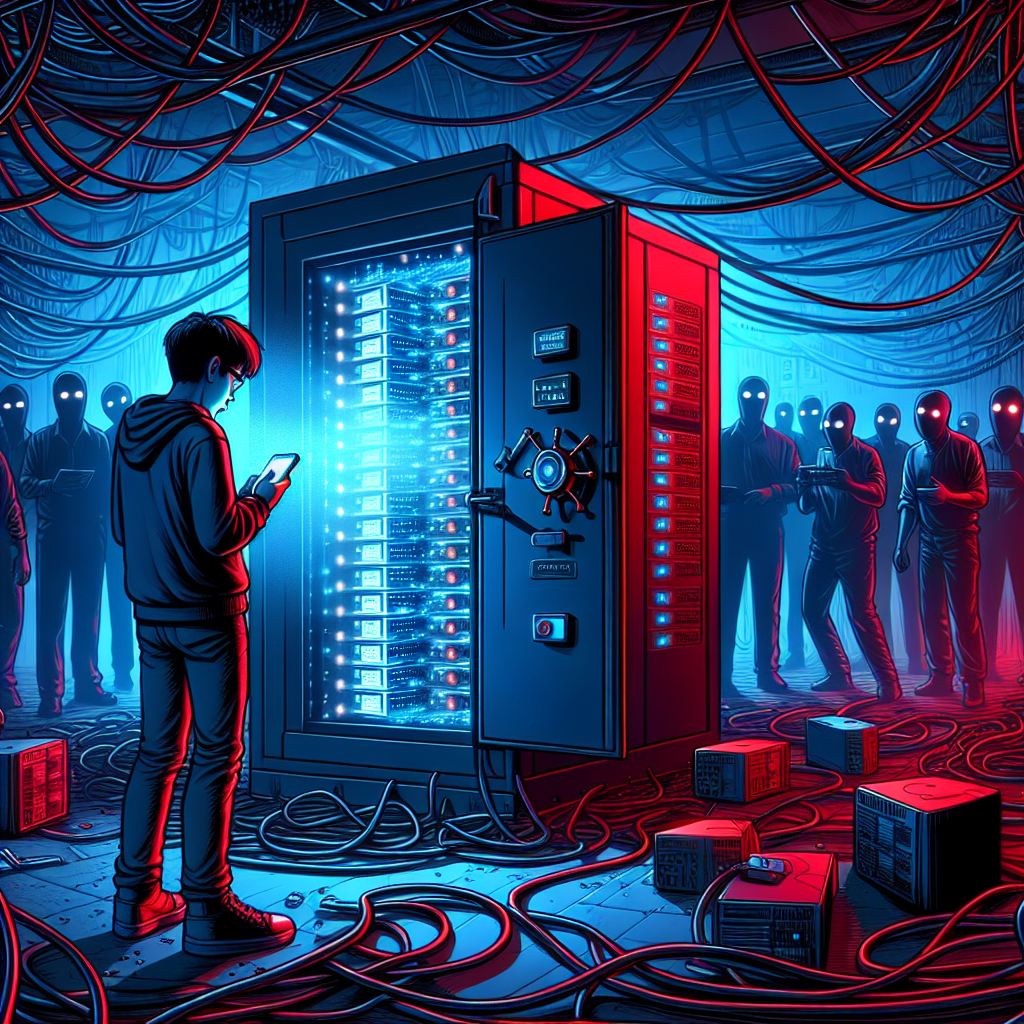
It begins, as it always does, in the quiet hours. A shadow slips into the global village—not through a forced window, but by charming a vulnerable doorman. The targets? Millions of ordinary people who once submitted their government-issued IDs, trusting Discord to verify their age. With one keystroke, the trust snapped. And the story that follows—of a crime so vast, so brazen—is one that should shatter any illusion of digital safety[1].
The Moment Everything Changed
Imagine, for a moment, you’re Ryan, a 21-year-old college student and Discord superuser. In your freshman year, you uploaded a copy of your driver’s license, just trying to prove your age and unlock some premium features. You’ve long forgotten about it. Then, late one night, an email arrives: Your photo ID—and those of over two million others—has just been dragged into the digital black market[1][2].
Ryan’s story isn’t unique, but the scale is unprecedented. This wasn’t a leak; it was a cinematic heist, the kind you’d expect from a Jason Bourne plot. Threat actors—self-styled “Scattered Lapsus$ Hunters”—boasted online about their 1.5 terabyte haul: passport photos, driver’s licenses, billing data, and more. These weren’t beginners. They were a criminal supergroup, stitching together expertise from three notorious gangs—Scattered Spider, LAPSUS$, and ShinyHunters—each with a dark résumé of social engineering and data theft[1][4].
How the Heist Unfolded
Here’s the twist: Discord’s own systems weren’t breached. The attackers didn’t crack its code. Instead, they went after Zendesk, a customer support tool used by Discord to manage user complaints and appeals. Zendesk is supposed to be the backstage crew, not the headliner. But on September 20, 2025, the spotlight flipped. Hackers tricked their way in, bypassing the most sophisticated cybersecurity with the oldest tool in the book: social engineering. In other words, they didn’t hack the computer. They fooled the humans running it[1][4].
Once inside, the cybercriminals pulled a digital smash-and-grab. They stole not just names and emails, but the holy grail of identity fraud: government-issued ID images, plus billing info, support chats, and even internal corporate files. Discord—like many companies—had outsourced the job of checking your age to a third party, without realizing that outsourcing trust also outsources risk[4].
The Aftermath: Silence, Chaos, and Credibility Eroded
Discord’s first response? “A small number” of IDs were exposed. But the cyber cartel wasn’t having it. They mocked Discord online, posting folder trees packed with millions of ID images—far beyond the company’s initial admission[1]. Public trust is hard-earned; shattered with two words. The company later updated its stance, admitting 70,000 users were directly affected[2]. Meanwhile, independent cybersecurity investigators uncovered a reality more disturbing: 2,185,151 photos. Over 2 million digital lives, suddenly in the hands of criminals[1].
The attackers—smug from the shadows—promised more leaks unless Discord paid up. They didn’t just steal data; they weaponized public embarrassment—a tactic typical of the LAPSUS$ playbook, known for extortion via humiliation[1][4].
Who Was Behind the Curtain?
Meet the Scattered Lapsus$ Hunters. This is not your garden-variety hacker. They’re a hybrid crime machine, built for scale and spectacle, combining Scattered Spider’s talent for social engineering, LAPSUS$’s flair for public extortion, and ShinyHunters’ expertise in data trafficking. Their targets? Not just Discord, but dozens of household brands—Air France-KLM, Louis Vuitton, Cisco, even Qantas. Imagine a world where your favorite apps and airlines are all being watched by the same digital mobsters[1].
The Human Toll
For Ryan, the impact is slow but irreversible. He’s now a possible mark for phishing, identity theft, or worse. But he’s not alone. Millions now have to wonder: Who’s using their face, their ID, in some shadowy marketplace? The breach exposes the raw nerve of the digital age: every time you prove you’re real, you risk becoming someone else’s asset—their scam, their fraud, their fiction[1][2].
Industry and Government React
The response has been predictable, and predictably sluggish. Discord spun up internal investigations, fired their support vendor, and emailed users directly—but not fast enough for critics. Industry analysts aren’t surprised; this is the third colossal breach in a year tied to outsourced customer service platforms. Governments stayed quiet but are watching closely—how do you regulate a problem that’s both everywhere and nowhere?[3][4]
Some experts are already calling for a new era: “Assume every company you trust is only as secure as their least-secure partner.” This means not just stronger contracts, but real-time security audits and breach insurance for every vendor. But who pays for that? End-users, always.
What’s Next—Could It Happen Again?
Here’s the grim math. As long as companies rely on third parties and criminal syndicates can exploit human weakness, another Discord is inevitable. The Scattered Lapsus$ Hunters didn’t invent this playbook—they just perfected it. If anything, the next breach could be bigger, bolder, and more brazen.
But there’s a sliver of hope. Some privacy advocates are pushing for a radical idea: stop collecting digital IDs unless absolutely necessary. Others want companies to shred sensitive data as soon as it’s verified. Technology alone can’t fix this. It requires a fundamental rethink—of trust, of transparency, of who owns and controls your digital identity.
Provocative Question
With every photo you upload to “prove” your identity, you surrender a piece of yourself. After this breach, will you still trust Silicon Valley with your face, your name, your life?
FAQ
What is the Discord ID breach?
The Discord ID breach is a major cybersecurity incident in which hackers stole 2.1 million government-issued ID images from Discord users via a compromised third-party customer support tool (Zendesk), along with names, emails, billing info, and support chats[1][2][4].
How did the Discord ID breach happen?
Attackers gained access by exploiting a third-party vendor (Zendesk), using social engineering rather than direct hacking. Once inside, they stole sensitive data including photo IDs and personal details[1][4].
Who was behind the Discord ID heist?
A cybercrime group called Scattered Lapsus$ Hunters—a coalition known for high-profile attacks on large companies—claimed responsibility. They are known for aggressive extortion and data leaks[1][4].
How many Discord users were affected by the ID breach?
Discord initially reported 70,000 affected users but independent researchers found evidence of over 2.1 million government ID images stolen[1][2].
What should you do if you were affected by the Discord ID breach?
Discord is directly contacting affected users. Be vigilant for phishing attempts, monitor your credit, and consider identity theft protection services. Only trust official Discord communications (noreply@discord.com)[4].
Could this type of Discord ID breach happen again?
Yes. As long as companies rely on third-party vendors with weaker security, similar breaches are likely. The scale and sophistication of cybercrime groups are increasing, making such incidents a growing risk for all digital services[1][4].