
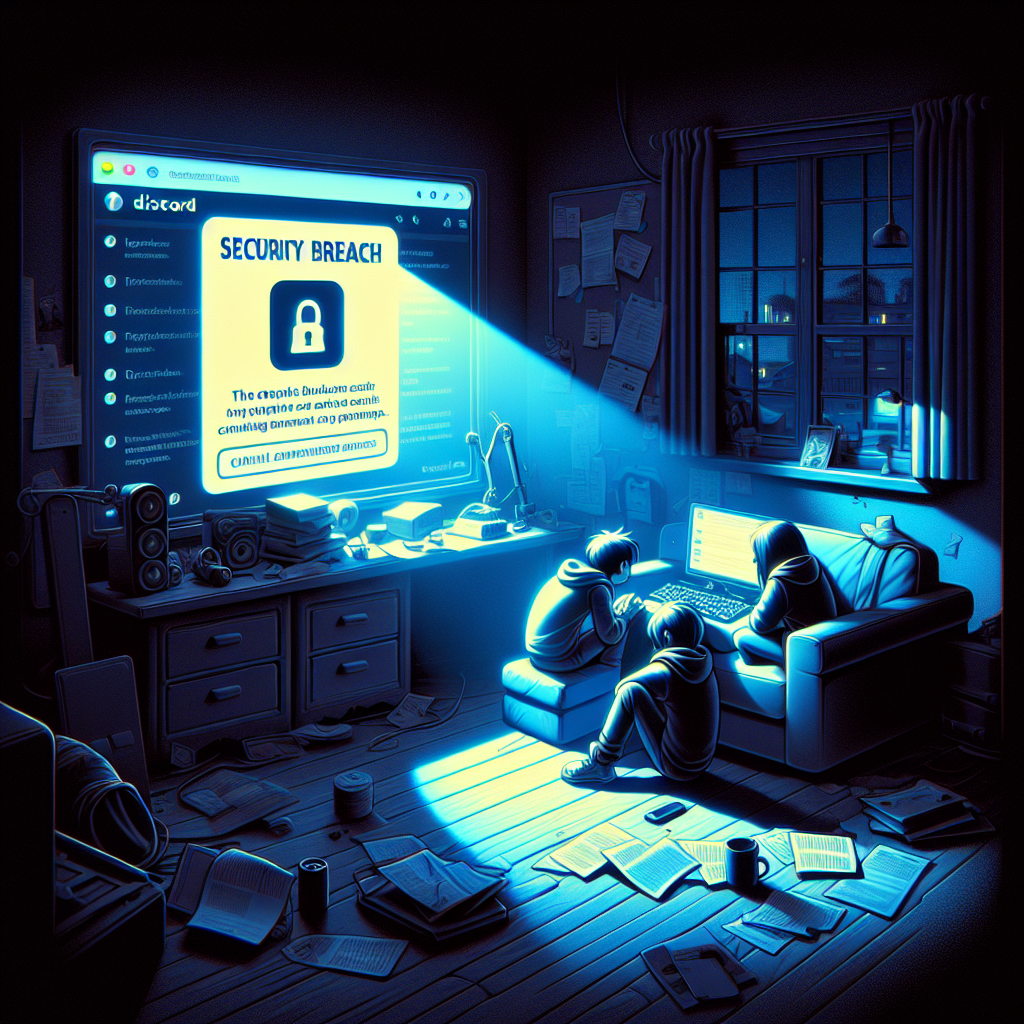
Opening Scene: The Midnight Breach
Picture the blue glow of millions of gaming monitors blinking through the night. As kids, creators, and communities exchanged secrets and memes, a silent breach unfolded in the digital dark. In just 58 hours, thieves moved invisibly across Discord’s support systems, prying open vaults meant to hold our most personal truths: photos of passports, snapshots of driver’s licenses, quiet admissions in frantic support chats.
By the time the sun rose over October 3, 2025, at least 70,000 government IDs and reams of private support conversations had slipped beyond the moderators’ grasp[1]. A new kind of nightmare—silent, sudden, and deeply personal—was waking up the online world.
The Scope of the Breach: More Than Just Gamers
The attack began quietly. A single compromised support agent’s account gave hackers—identifying themselves as “Scattered LAPSUS$ Hunters”—the keys to part of Discord’s support network[1]. The claim: a $5 million ransom for data, later dropped to $3.5 million, and a bold boast that 1.5 terabytes—potentially data from 5.5 million users—had been siphoned away. Discord, for its part, pegs the confirmed number at 70,000 ID images and supporting data, and says it will not pay.
But the confusion didn’t end with numbers. The third-party support contractor, 5CA, denied responsibility for the breach, sparking a blame game in which even the basics—how many were hit, and whose systems failed—remain hotly debated[1].
Why Discord Wanted Your ID
Wasn’t Discord supposed to be a haven for anonymity, a guarded world of aliases and avatars? Increasingly, lawmakers in the UK and Australia are demanding social platforms do more to protect children—ushering in sweeping age verification laws meant to shield young users from adult content. Platforms must ask for proof: a passport, a selfie, an official record.
Discord rolled out ID checks using AI scans and appeals that sometimes required fully uploading government files—images intended to be ephemeral, but now caught in the crossfire[1]. When users argued a mistaken ban, they sent scans of their most sensitive documents, hoping for a second chance. Instead, those scans were exactly what hackers found.
Inside the Attack: A Flaw in the Armor
This was not a headline-grabbing “Mission Impossible”-style hack with lasers and vaults. It was a modern heist—low-tech, high-reward. Attackers targeted the support desk, a soft underbelly of many giant tech firms[3]. Support agents hold deep access but are often shielded by weaker security. By hijacking one ordinary worker’s credentials, the criminals unlocked troves of user data routed through appeals and support: names, emails, usernames, chat logs, IP addresses—even peeked at how Discord’s own training materials work[1][3].
Like a thief who finds the master key lying around, the hackers didn’t need to break down doors—they just walked in.
The Human Fallout: One Night With Mia
Imagine Mia, age 15, appeals a ban on her Discord account. She uploads her passport to prove she’s old enough to chat with her friends. Weeks later, Mia’s parents get a credit card denial; her details have been surfaced in a data dump on the dark web. Their family, like thousands of others, is left bewildered and helpless—victims of regulations designed to protect, not expose.
Industry Response: Who Do You Trust?
As headlines screamed of millions at risk, Discord launched an email alert campaign. Notices went out from noreply@discord.com, warning users to watch for suspicious activity and outlining minimal details on what was taken[1]. Security experts rushed to offer guidance: review your data, delete what you can, reduce what you share, demand platforms be transparent about why they ask for personal files[1][3].
Privacy advocates pointed out a bitter irony: the very laws meant to keep children safe had handed hackers the tools to steal their identities. Tech analyst Dr. Rhea Banerjee told us, “Each government-issued ID in this breach represents a door that can’t be closed. You can change a password, but you can’t swap out your birthdate or biometric scan.”
Governments & Communities: The Shock and the Shift
Reaction was swift but splintered. Regulators called for audits into third-party support contractors. Lawmakers demanded still-stricter regulations—while cybersecurity experts warned that compliance alone could never guarantee safety when poorly protected support desks remain overlooked targets[1][3].
Communities, meanwhile, erupted in uncertainty. Parents debated whether to let their teens keep using Discord at all. Streamers and moderators panicked over which of their private disputes and appeals might be among those leaked.
What’s Next: Could It Happen Again?
No silver bullet has emerged. Experts warn that service desks across tech—those digital help counters for some of the world’s biggest brands—remain ripe for similar targeting. As platforms double down on data collection under government mandate, and as hackers probe ever-wider attack surfaces, the next breach is not a question of “if,” but when[3].
Are we building digital fortresses—or quietly handing the keys to strangers at the gate?
FAQ
-
What happened in the Discord hack?
Hackers accessed Discord’s support desk, stealing thousands of government ID images and personal data from users appealing age verification bans. -
Is Discord safe to use now?
Discord says they’ve contacted affected users and improved support system security, but experts warn that similar vulnerabilities might exist on other platforms. -
How did the hackers get in?
By compromising a single support agent’s account, they accessed data meant to verify users’ ages—exposing troves of sensitive information[1][3]. -
What should I do if my ID was part of the breach?
Review your accounts for suspicious activity, use strong unique passwords, and consider ongoing credit monitoring if your financial data was also linked. -
Why did Discord collect government IDs anyway?
New laws in the UK and beyond now require platforms to verify the age of users, especially to block minors from adult content[1]. -
Who’s most at risk after this breach?
Anyone whose ID was exposed is more vulnerable to identity theft and fraud, especially minors and those who shared complete documents. -
What’s the long-term concern?
As age verification systems spread, more personal data will be stored—and potentially breached—across the internet.