
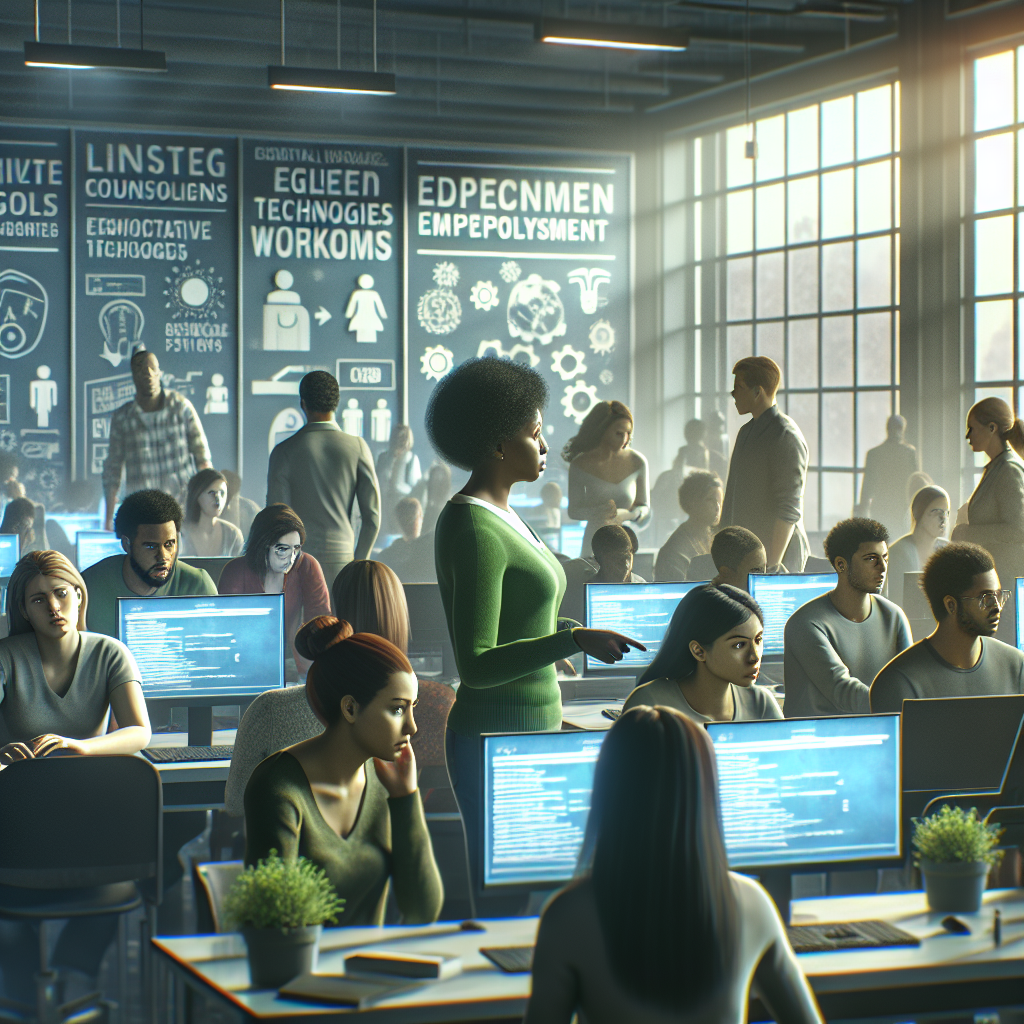
The morning hum of a suburban Goodwill donation center is broken not by the clatter of thrifted toasters but by the ring of desperate phone calls. Inside, rows of computers shine beneath fluorescent bulbs, each one manned by a face far younger than Goodwill’s staff remembers from years past. Their eyes, restless but hopeful. Their resumes, alas, shockingly thin. This is not just a job search—it’s the front line of a digital reckoning sweeping through a generation.
The Unexpected Influx
In late 2025, Steve Preston, CEO of Goodwill Industries, found himself on the edge of an urgent, unprecedented trend. Gen Z—the so-called “digital native” generation—was flooding job centers in numbers not seen in decades[2][3]. These weren’t just high school grads looking for summer gigs. They were college students, young adults with and without degrees, all grappling with the unthinkable: Artificial Intelligence was eating their future.
“Large organizations are beginning to make significant layoffs based on a move to AI,” Preston revealed. “It’s hitting low-wage and entry-level roles the hardest.” Call centers, once a guaranteed landing spot for young adults, were digitizing. Sales and support jobs vanished overnight. The entry-level job, a rite of passage, was quietly on the endangered species list[2].
Why it Matters: Automated Anxiety
If you’re not scanning a self-checkout, arguing with a bot, or ignoring endless robocalls already, you will be soon. The march of automation—machine intelligence that can process information, answer questions, or even drive cars—isn’t just replacing routine labor. It’s redrawing the very map of adolescence.
What’s striking, Preston noted, is that “it’s really hitting college students right now. It’s really hitting young adults without college degrees.” The digital revolution, once promised as Gen Z’s superpower, is threatening to undercut their first steps into the workforce[2].
How the System Works: The Digital Divide Reversed
You’d think, with TikTok skills and multi-app mastery, Gen Z would be ready. But navigating Snapchat stories is not the same as navigating Salesforce dashboards. “We often find that if somebody’s on their phone all day … it’s not the same as having the digital skills workplaces need,” Preston explained.
It’s not just coding or quantum computing. Today’s critical skills include using workplace staples like Excel, Google Docs, and, increasingly, collaborating with AI tools like ChatGPT or Gemini[2]. A new rift is opening—not between young and old, but between digital social skills and digital workplace capabilities.
On the Ground: Jaden’s Story
Jaden Turner, 21, sits in a Goodwill training seminar, notebook in hand, shoulders tensed with uncertainty. Six months ago, she left college to help her mom after a layoff at a local factory. “I thought at least I could get a job at the call center—like my cousin did last year. But now, that’s all run by computers.”
Goodwill’s counselor points her towards a different path: a quick-turn course in solar panel installation, part of a “clean tech” skills bootcamp. “We’re seeing the world change before our eyes,” the counselor says, “and the best thing you can do is get ahead of it.”
Industry and Policy: Racing to Adapt
Communities, far from surrendering, are fighting back. Goodwill—through its network of 650 job centers—has pivoted faster than most. Where rows of job ads once papered the walls, now there are coding bootcamps, virtual AI tool workshops, and sessions on green energy maintenance[1][2].
“Instead of getting drowned out by the tech wave, we want young people to ride it,” Preston urges[2]. Employers are working directly with organizations like Goodwill to predict the digital skills of tomorrow rather than yesterday.
State workforce boards, meanwhile, are scrambling to expand retraining grants and incentivize businesses to hire and upskill first-time workers. Lawmakers in several states are considering “AI impact assessments,” requiring companies to study and disclose how automation might displace human work before deploying new systems.
The Ripple Effect
The shift doesn’t only affect Gen Z. Families reeling from job losses, municipalities seeing a rise in youth unemployment, and a nervous private sector all brace for aftershocks. Academic experts warn that if the trend isn’t checked, an entire generation could lose its first rungs on the economic ladder—a critical milestone for lifelong earning and development.
“Digital skills are really critical,” Preston repeats. “But we consistently find that people we assume have those skills, do not.”[2] In the new economy, knowing how to “Google” is as insufficient as knowing how to tie your shoes at a marathon.
What’s Next / Could It Happen Again?
The automation wave has only begun. AI is still in its toddler years, growing smarter and more capable by the month. As it matures, so do the threats—and the opportunities. Goodwill and likeminded organizations scramble to predict the next workforce earthquakes, retool their offerings, and ensure they don’t just put out fires, but build firebreaks for the future.
The real question: If Gen Z is feeling this squeeze now, is anyone safe from the next AI upheaval?
FAQ
Q: Why is the Goodwill CEO concerned about unemployed Gen Zers and automation?
A: Steve Preston warns that new AI systems are causing mass layoffs in entry-level and low-wage roles, a trend already impacting Gen Z job seekers[2][3].
Q: What are the critical digital skills Gen Z needs today?
A: Beyond social media, employers want workplace-specific skills—like proficiency with Excel, Google Docs, and even AI tools such as ChatGPT and Gemini[2].
Q: How is Goodwill helping young workers adapt to automation?
A: Goodwill is rapidly expanding tech training in areas like clean energy, project-based tech skills, and practical digital literacy, alongside traditional job search support[1][2].
Q: What are some growing fields that don’t require four-year degrees?
A: Clean tech jobs—such as solar panel installation and EV charging station maintenance—are highlighted as prime growth areas for young workers without advanced degrees[2].
Q: Could this tech unemployment crisis spread further?
A: Experts say yes. If unchecked, more roles are vulnerable as automation becomes cheaper and more capable, underscoring the urgency of adaptive workforce training and new policy[2].