
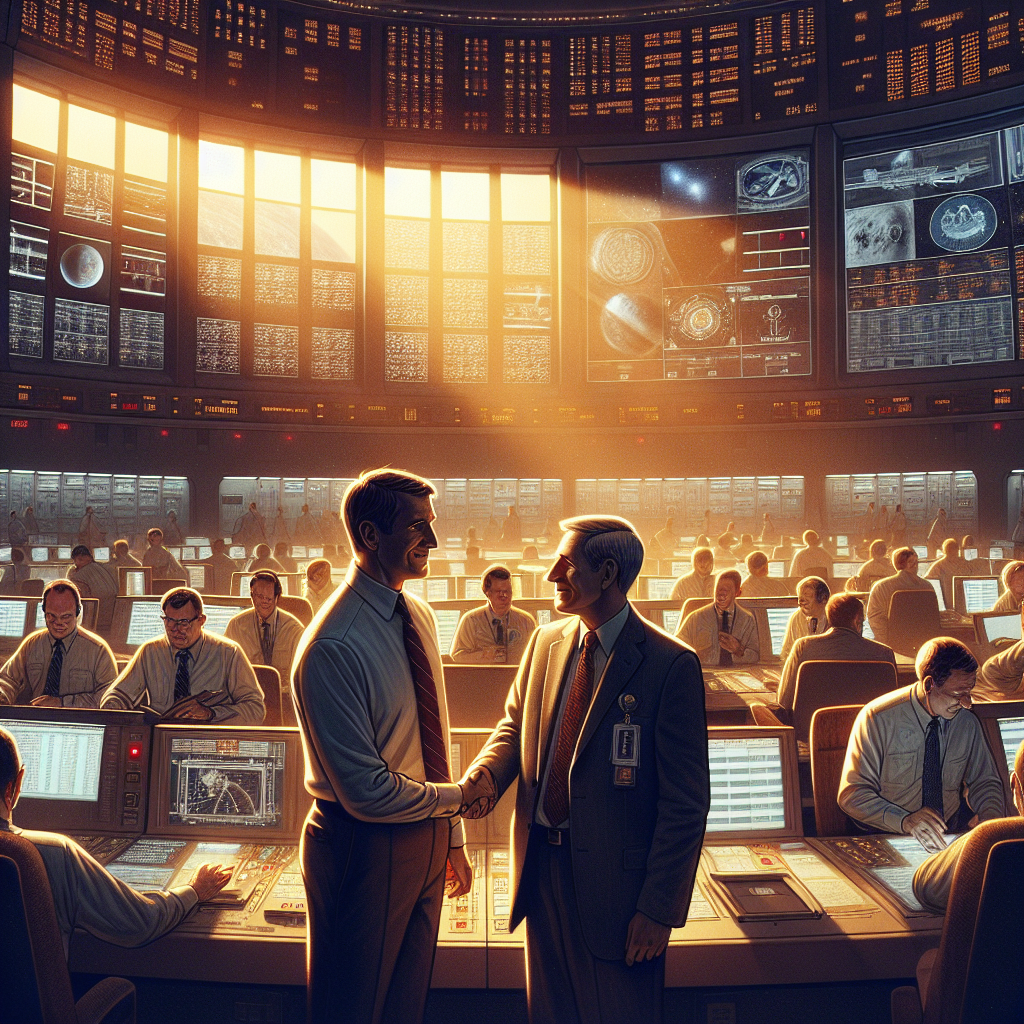
The Handshake in the Houston Dawn
It’s January 20, 2021, in Houston, Texas. The dawn breaks over NASA’s Johnson Space Center as the world quietly spins into a new era. Jim Bridenstine, the youthful, driven NASA Administrator, packs up his office, a final handshake echoing through mission control as a symbolic changing of the guard. For Bridenstine—once a Navy Reserve pilot and Oklahoma congressman[1][3]—this moment isn’t just a career pivot. It’s the threshold of an intensifying global race for influence in the stars.
Even as space exploration feels abstract to most Americans, to insiders, today marks a profound shift. The United States, guided by Bridenstine’s tenure, isn’t simply launching rockets. It’s fighting to secure its place as the prime architect of humanity’s cosmic future amid rising contenders.
Why NASA’s Transition Matters
Why does Jim Bridenstine’s departure feel so momentous? Under his watch, NASA captured public imagination: Mars rovers, lunar ambitions, and collaborative missions like the UAE’s Mars Hope probe—all made tangible by his knack for uniting international partners and the domestic tech sector[1][4]. Yet as the Biden administration swore in, Bridenstine stepped down, “to ensure that, politically, NASA has the best chance of thriving under new leadership.”[3]
The stakes are high. America’s leadership in space translates to next-generation satellites, military defense, asteroid mining, and digital communications for billions. Bridenstine’s exit signals not just a changing face but a moment where the U.S. risks either a quantum leap or falling dangerously behind.
How the New Space Race Unfolds
Space isn’t just about astronauts anymore. It’s an orbiting chessboard, where global superpowers and nimble startups battle for dominance. During Bridenstine’s tenure, he constantly championed innovation in small and mid-market companies—those “disruptors” that could outmaneuver aerospace giants with agile tech and fresh ideas[2][3].
He also forged partnerships that went far beyond science fiction. The Emirates Mars Mission, for example, wasn’t just a technological leap for the UAE—it spotlighted NASA’s ability to build bridges, blend global expertise, and share game-changing data. American universities collaborated, NASA’s Deep Space Network carried communications, and the world watched a new model of planetary exploration take shape[4].
But with every handshake and contract signed, new vulnerabilities appeared. The “attack vector” in this context isn’t a cyber threat, but a strategic risk: could the U.S. maintain its lead amid shifting budgets, emerging rivals, and the unpredictable wildcards of private industry?
Expert Voices: The Cosmic Chess Match
Tech analyst Dr. Serena Mahoney notes, “Leadership transitions can open windows for competitors. Whether it’s China’s moon base agenda or Europe’s jump in space mining, the No. 1 goal for America is sustaining momentum and vision—even when the faces change.”
A senior government advisor adds, “The real story isn’t who heads NASA next but how quickly ideas—like lunar habitats or asteroid defense—move from concept to reality. The next few years will decide who truly owns the future of space.”
Space Race in Real Life: Ava’s Story
Ava Jackson, a fictional Tulsa engineer and mother, felt the shockwaves of Bridenstine’s resignation in her daily work. She’d spent years adapting new NASA tech for local aerospace suppliers. “It felt like someone unplugged our mission control. We all wondered if our projects would survive the shuffle—if America would still be the best bet for discovery.” For Ava, NASA wasn’t just about rockets—it was about security, hope, and her community’s future.
The Ripple Effects: Innovation, Competition, Uncertainty
Governments quickly responded: Congress debated new budgets, while industry leaders pressed for consistent policies to keep U.S. innovation competitive. The private sector, sensing opportunity, expanded R&D on propulsion and communication systems—while allies like the UAE doubled down on partnerships, hoping NASA’s collaborative style would endure[4].
Communities near NASA facilities rallied, determined to prove that America’s legacy wasn’t defined by who sat in the administrator’s chair, but by the relentless pursuit of knowledge and progress.
What’s Next / Could It Happen Again?
As Bill Nelson, a former astronaut and Senator, steps in as NASA’s new administrator,[1] the country holds its breath. The battle for space dominance intensifies as rival nations and private disruptors accelerate their agendas. Experts warn: every transition risks “mission drift”—the loss of focus just as competitors seize the initiative.
Could it happen again? Absolutely. In the race to control the cosmos, only sustained vision, investment, and global trust will keep America ahead. Will the U.S. adapt, innovate, and stay united—no matter who leads? Or will the stars see a new flag atop the next frontier?
So, readers:
Who should lead humanity’s journey to the stars—the government, private innovators, or a new global alliance?
FAQ
What did Jim Bridenstine do after leaving NASA?
Bridenstine joined Acorn Growth Companies, supporting aerospace, defense, and innovation investments[2][3].
Why does changing NASA’s administrator matter for space exploration?
Leadership shifts can affect priorities, funding, and America’s ability to outpace rivals in technology and partnerships.
How are private sector companies influencing space exploration?
Mid-market innovators, supported by leaders like Bridenstine, are developing new propulsion, satellite, and mission technologies[2][3].
What government reactions followed Bridenstine’s resignation?
Congress discussed new funding, while industry groups called for stable, visionary policy to keep the U.S. at the forefront.
What is the future of America’s role in space?
It depends on steady leadership, bold innovation, and strategic partnerships—especially as new players enter the race.