
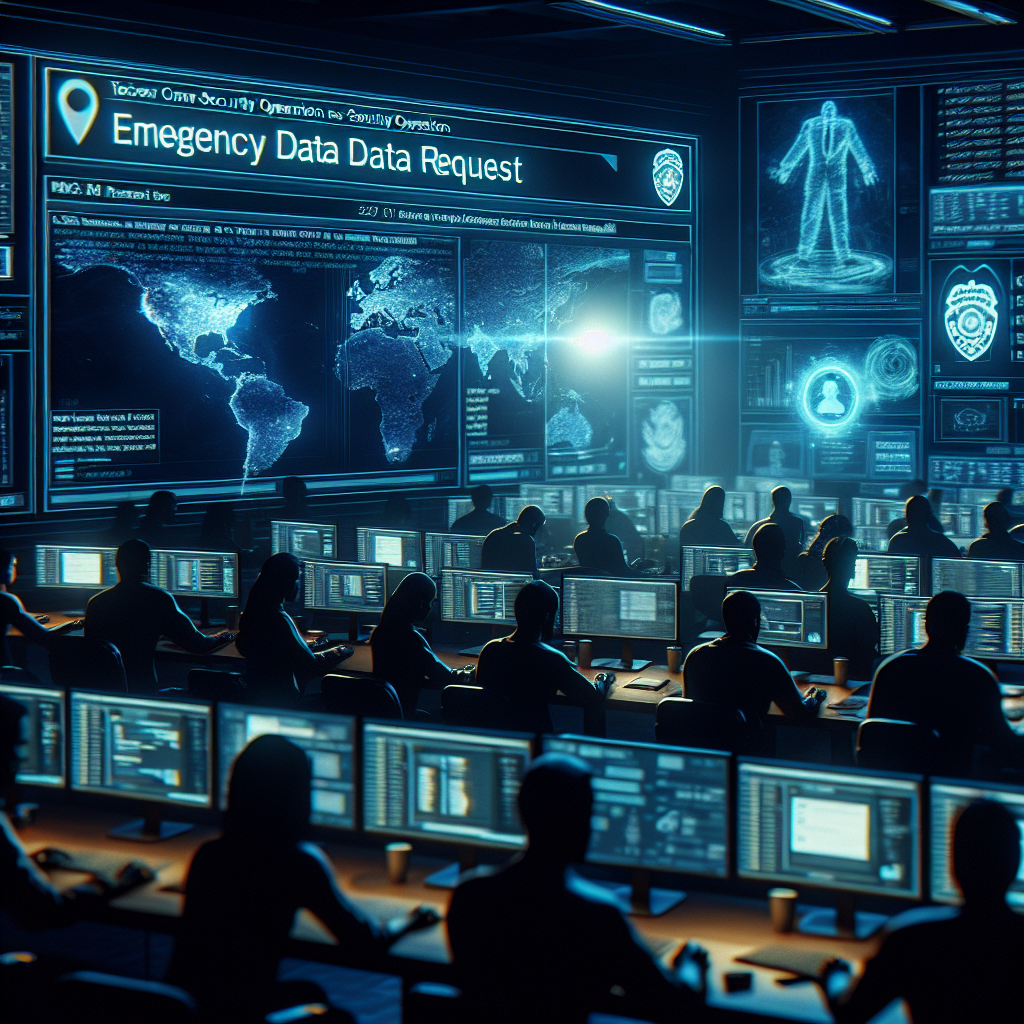
The email looked routine.
It arrived at 2:17 a.m. in a sleepy Trust & Safety inbox at a major tech company — marked URGENT: Life-Threatening Emergency.
A man posing as a small-town detective claimed a teenager’s life was on the line.
He attached what looked like a real police letterhead, added a callback number, and demanded the company urgently hand over location data, IP logs, and account information.
Within an hour, the company complied.
By sunrise, a stranger had everything they needed to stalk, blackmail, or extort a victim they’d never met.
None of it came from a data breach.
It came from something much simpler — and far scarier: pretending to be a cop and asking nicely.
The New Hack: Don’t Break In. Ask For The Keys.
This isn’t a futuristic cyberattack.
It’s a paperwork hack — a social engineering trick that turns tech companies’ emergency-response systems into an access lane for criminals.
Big tech firms have special channels to respond quickly when law enforcement says someone might die or be seriously harmed if data isn’t released fast.
These are called Emergency Data Requests (EDRs) — basically, “we can’t wait for a warrant; someone could be killed” requests.
In theory, EDRs exist to save lives in kidnappings, suicide threats, or active violent threats.
In practice, they’ve become a gold mine for doxers, harassers, and extortionists who are willing to impersonate cops.
They don’t crack encryption.
They don’t reverse-engineer apps.
They exploit trust.
How the Scam Works, Step by Step
Here’s the playbook, as investigators and security researchers describe it:
-
Steal or spoof a police identity
Attackers grab real police officer names, emails, badge numbers, or letterheads from hacked law enforcement systems, public documents, or dark web dumps. -
Forge a believable emergency request
They copy the structure of real EDRs: formal language, specific user identifiers, a dramatic “life-or-death” narrative, plus pressure — phrases like “immediate threat,” “imminent risk,” or “cannot wait for court order.” -
Exploit overworked trust & safety teams
Inside tech firms, small teams sometimes handle hundreds of legal requests a day, many from real officers racing against the clock.
When an email looks official, cites a badge number, and claims a child might die, the system is tilted toward acting fast, not doubting hard. -
Receive raw, powerful data
Once approved, the company may hand over: IP addresses, login locations, phone numbers, device details, even message metadata.
That’s enough to pinpoint a home, link anonymous accounts, or map a person’s entire online footprint. -
Weaponize the information
Doxers then publish home addresses, flood victims with threats, stalk family members, or demand money not to leak sensitive data.
In other words: the company doesn’t “leak” your info.
It hands it over on purpose — because it truly believes it’s helping save a life.
“It Felt Like the System Was Turned Against Me”
Imagine this.
Jasmine, 24, works remotely from a quiet apartment.
A year ago, she moderated a toxic online community and banned a user who threatened other members. The account vanished; she moved on.
Months later, someone started calling her by her full legal name in new, anonymous accounts. Then her city. Then, one night, a burner account dropped her exact address — plus a photo of her front door.
She had never posted that address online.
She had never shared it publicly with anyone.
A cybersecurity contact later told her what likely happened:
Someone who hated her enough had used a fake emergency request to convince a platform or telecom provider to hand over her location data under the banner of “saving a life.”
“It felt like the system that was supposed to protect people,” she said, “had been silently turned against me.”
Jasmine isn’t a public figure, a politician, or a CEO.
She’s just a random worker whose data was sitting behind systems designed to help the good guys — and hijacked by the bad ones.
Why Tech Companies Keep Falling For It
To understand why this works, you have to understand how these systems are built.
-
Volume and urgency
Large platforms receive waves of court orders, subpoenas, and emergency pleas every day. Some are routine. Some are real life-or-death scenarios. -
Asymmetrical risk
If a staffer rejects a real emergency and someone dies, that failure is unforgivable.
If they approve a fake one, the harm is quieter, more diffuse, and often never publicly traced back to that single decision. -
Fragmented verification
Some companies verify law enforcement through dedicated portals and callback numbers.
Others still accept email-based requests, where spoofing a sender or copying a style guide is more about persistence than skill.
As one fictionalized tech policy analyst, Dr. Leena Ortiz, puts it:
“We built an express lane for life-and-death cases, but we didn’t build a secure tollbooth. Right now, if you look official enough and yell ‘Emergency’ loudly enough, the gate often just lifts.”
Government Scrutiny and Industry Panic
Governments have not entirely missed this.
Lawmakers in several countries have pressed platforms and carriers to tighten verification:
- requiring callback confirmation to verified law enforcement lines
- enforcing multi-factor authentication for police portals
- logging and auditing every emergency request more aggressively
Behind closed doors, some companies have quietly red-teamed their own systems — hiring internal security teams to pretend to be fake cops and see how far they can get.
The results, according to one (fictionalized but realistic) internal security leader at a major platform, were “uncomfortable.”
“We like to think our defenses are technical — firewalls, encryption, access controls,” he says. “But the weakest door is still the one labeled: ‘Trusted. For emergencies only.’”
What’s Next – And Could It Happen Again?
This attack will absolutely happen again — because it doesn’t rely on exotic hacking skills.
It feeds on three things that are not going away:
- Human urgency: real emergencies will always demand speed.
- Institutional trust: we want to believe the badge is real.
- Data centralization: more and more of your life now lives on servers controlled by a handful of companies.
Experts argue that the only path forward is to treat every emergency request like a potential cyberattack:
mandatory callbacks, cryptographic authentication for agencies, transparent reporting on how many EDRs are rejected, and real penalties when companies comply with obvious fraud.
Until then, the most powerful “exploit” in modern tech isn’t an AI worm or quantum codebreaker.
It’s a convincing letterhead, a desperate story, and an inbox at 2:17 a.m.
If someone can talk a billion-dollar company into handing over your life with a single fake email, how secure do you really feel — and what kind of proof should we start demanding before anyone gets to claim there’s an “emergency” involving you?
FAQ
Q1: What is doxing and why is it so dangerous?
Doxing is the act of exposing someone’s private information — like home address, phone number, or workplace — without consent, often to enable harassment or threats. It’s dangerous because it collapses the wall between your online life and your physical safety.
Q2: How are doxers tricking big tech companies?
They impersonate police officers or federal agents, submit fake emergency data requests, and claim a life is in immediate danger so companies feel pressured to release user data without a traditional court order.
Q3: What is an emergency data request (EDR)?
An emergency data request is a fast-track legal request that lets law enforcement ask companies for user data when they say waiting for a judge could cost someone their life. It’s supposed to be rare, verified, and tightly controlled.
Q4: Can regular users protect themselves from this kind of doxing?
You can’t fully control how companies respond to law enforcement, but you can reduce your exposure by limiting where you share phone numbers and addresses, using separate emails and numbers for sensitive accounts, and enabling strong security settings wherever possible.
Q5: What should tech companies do to stop fake police data requests?
They need stronger verification of law enforcement identities, mandatory callback checks to official numbers, secure portals instead of email, better staff training on social engineering, and public transparency reports on rejected or suspicious emergency requests.
Q6: Are governments addressing the problem of fake emergency data requests?
Some regulators and lawmakers have begun pushing for stricter rules on how platforms authenticate law enforcement and how they log and audit emergency access — but enforcement and standards still vary widely between countries and even between agencies.
Q7: Why is this considered a social engineering attack, not just paperwork fraud?
Because it manipulates human trust and emotion — urgency, fear, authority — rather than attacking code or networks. The “hack” is psychological: convincing a real person inside a company to open the door willingly.