
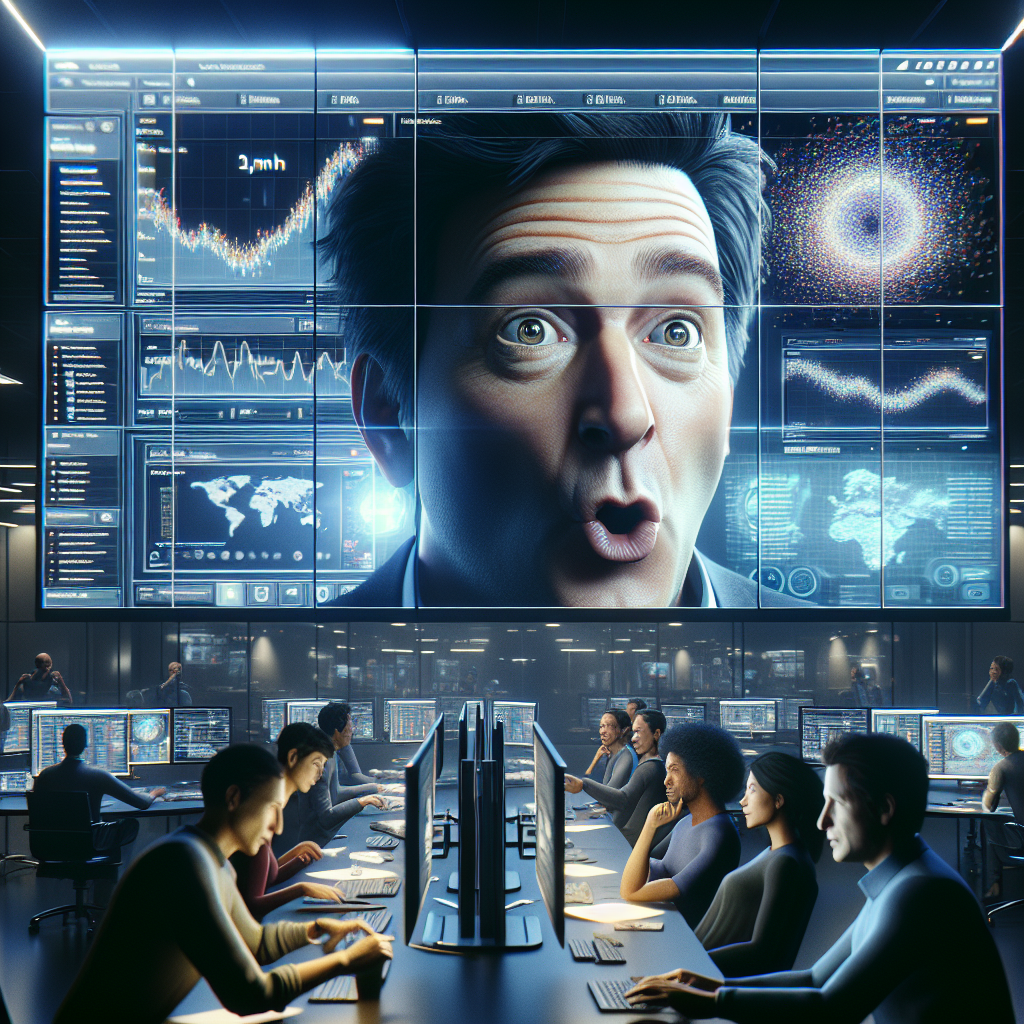
The Moment That Froze Late Night
Headlights blinked against Los Angeles glass as anxious studio executives refreshed their phones, fingers trembling on touchscreens, eyes glued to waves of angry hashtags. Just days earlier, Jimmy Kimmel—a household name, a digital icon—had delivered a monologue that would rock America’s living rooms and set the internet on fire. His comments on the assassination of conservative activist Charlie Kirk—intended as a somber acknowledgment—exploded into a flashpoint: suddenly, “Kimmel Suspended” was the top trend, and late-night TV became the frontline in a culture war broadcasting live, in real-time, to millions[1].
Disney, owner of ABC and Kimmel’s platform, pressed pause—indefinitely. But what happened next wasn’t a tale of quiet reconsideration. Instead, it was the story of how digital outrage, technological megaphones, and the machinery of modern media collided to pull Jimmy Kimmel back from the edge—and everyone watched.
How One Comment Lit a Fuse
As news of Kirk’s assassination rippled through social feeds, clips of Kimmel’s somber—some called it insensitive—remarks detonated across Twitter, Reddit, and Facebook. Within hours, AI-powered trend trackers flagged “#BoycottKimmel” as surging. Affiliate broadcasters NextStar and Sinclair announced they would not carry the show unless Disney “stepped in and took these steps,” amplifying the crisis[1].
Disney, monitoring sentiment shifts with sophisticated analytics dashboards, issued a sudden directive: suspend Jimmy Kimmel Live! indefinitely. The official line? To avoid “further inflaming a tense situation at an emotional moment for our country,” and because some of Kimmel’s comments were “ill-timed and thus insensitive”[1].
But in a media landscape where information moves at the speed of light and every decision is scrutinized by millions, a vacuum only creates more noise.
The Backlash Engine Revs Up
As news outlets hesitated, Reddit erupted. Users dissected every angle—Free speech? Corporate overreach? Political pressure?—and memes ricocheted across timelines. A post on r/technology crystallized the debate: Was this just the unstoppable logic of brand management in the algorithm age, or a worrisome new form of digital censorship?
In the meme-rich tide of online reactions, a question materialized, echoing from YouTube to TikTok: Who controls the conversation—networks, advertisers, viewers, or the unpredictable pulse of the collective?
Technology, Power, and Speech: Unpacking the Mechanism
At the core was the attack vector of the digital era: crowd-amplification. Social media offered platforms to organize, mobilize, and weaponize user sentiment. AI-powered content moderation systems assessed threat levels—not just for hate speech or violence, but for real-time corporate risk. The instant broadcasters revolted, Disney’s crisis algorithms flagged maximum reputational exposure: input a controversy, output a suspension.
But unlike in past decades, the backlash wasn’t a one-way street. Public pressure mounted just as swiftly against Disney for what came to be seen as silencing—generating calls to defend free speech and First Amendment rights[1]. Even talk show hosts—Whoopi Goldberg declaring “No one silences us” on air—fanned the flames by critiquing the company directly on national screens[1].
Inside the Eye of a Digital Storm: An American Family Watches
Picture this: the Fernandez family in Ohio. Their living room is a cozy sea of snack bowls and glowing screens. The older kids debate whether Kimmel deserved discipline. Grandma clutches her phone, reciting threads from Facebook groups worried about speech. Dad wonders aloud if his own job—where a clumsy comment could go viral in hours—is just as precarious. The moment isn’t just about TV; it’s about everyone navigating a reality where technology tears down old walls between public and private, performer and audience, intent and impact.
The Tech, The Industry, The Fallout
Behind the scenes, Disney’s decision was more than PR. Experts say AI sentiment analysis and real-time social listening now have the power to sway billion-dollar calls. “Our risk calculus twenty years ago was slower—days, not minutes,” says fictitious media strategist Angela Park. “Now AI tells execs in real time when outrage is peaking—and by the time the dashboard blinks, the story’s gotten away from you.”
Faced with multi-front backlash—affiliate stations refusing to air, activists crying censorship, and viewers fractured along ideological lines—Disney hosted what insiders called “72 hours of intensive crisis diplomacy.” Thoughtful conversations with Kimmel reportedly led to a new approach: let him return, but with caution[1].
The Ripple Effect: From Boardrooms to Congress
Communities weighed in, some organizing boycotts, others defending Kimmel’s right to speak. On Capitol Hill, lawmakers demanded hearings on the power of media giants and the algorithms that increasingly shape national discourse. Twitter hashtags became organizing calls for everything from advertiser blacklists to First Amendment rallies.
In Hollywood, the move sent shockwaves. Studios rushed to audit their own content risk protocols. Startups emerged overnight, pitching AI “outrage optimization” tools to help CEOs predict—and pre-empt—digital flashpoints.
What’s Next / Could It Happen Again?
As Kimmel returns to screens, every network is on notice. The line between expression and consequence has never been thinner, nor more automated. With AI-driven outrage metrics and social platforms that double as both amplifier and battleground, the next digital wildfire could be just a single sentence away.
Will society learn to balance free speech and accountability, or are we just seeing the beginning of algorithm-powered censorship? How do you want the next controversy decided: by humans, by companies, or by the machine?
FAQ
Q: Why was Jimmy Kimmel suspended by Disney in 2025?
A: Disney suspended Kimmel after comments viewed as insensitive regarding the assassination of conservative activist Charlie Kirk, fearing further inflaming national tensions[1].
Q: What technological factors led to his suspension and reinstatement?
A: AI-powered sentiment analysis, real-time social listening, and coordinated online backlash (from both sides) pressured Disney into suspending—and quickly reinstating—Kimmel[1].
Q: How did media and communities respond to Disney’s decision?
A: Broadcasters threatened to pull the show, advocacy groups launched free speech campaigns, and talk show hosts publicly defended expression[1].
Q: Could this type of digital backlash change future media decisions?
A: Yes. Experts believe AI and public sentiment analytics now significantly influence how networks handle controversial moments, speeding up decision-making—sometimes at the expense of nuance.
Q: What’s the broader impact for free speech and technology?
A: The case highlights tensions between corporate responsibility, free speech, and the power of digital outrage fueled by new technology, making every moment a potential flashpoint for automated controversy.