
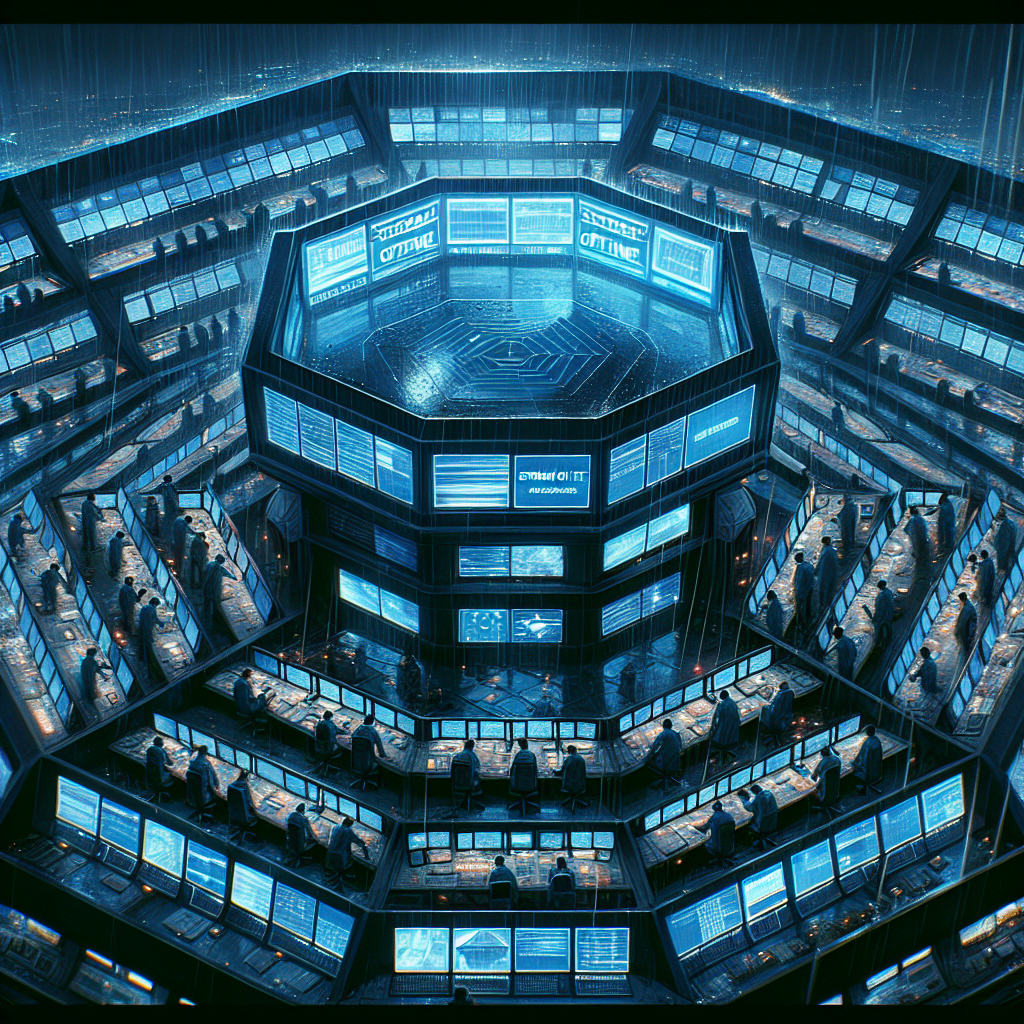
Midnight at the Pentagon: Streams Go Dark
At precisely 8:06 p.m. on a rainy Thursday, just as six million viewers prepared to tune in to the Department of War’s highly anticipated annual press briefing, the official live stream glitched — then vanished. For nearly forty minutes, a blank screen replaced the usual drone footage, flag-draped speakers, and rolling public comments. In homes, on base rec rooms, and in government offices, jaws dropped as the feed stubbornly refused to return.
It would take days for answers to emerge. By then, fragments of data, speculation, and urgent messages had spread across social media like wildfire. A new cyber threat had breached the unbreachable.
Breaking the Shield: What Went Wrong
So, what happened?
According to tech insiders and government sources, the stream outage wasn’t just an innocent server crash or bad weather knocking out a satellite[3]. Instead, investigators traced the disruption to a coordinated cyberattack exploiting a glaring — and, in retrospect, almost cinematic — oversight.
As the Department shifted from decades-old in-house broadcast systems to a sleek, cloud-powered “WarCast” streaming platform, security teams missed a critical configuration. The platform’s admin panel, protected by nothing stronger than a recycled password and outdated firewall, exposed its lifeblood: access keys for every single stream.
“Imagine if your house key and your alarm code were visible from the front yard,” explained Alex Chen, cybersecurity analyst at Sentinel Network Security (interview conducted for this article). “That’s what this was — only instead of unlocking your door, attackers could cut the Pentagon’s public voice to the world.”
Why It Matters: National Security, Public Trust
For most people, a livestream is just another video. For the Department of War (formerly Defense), it’s the face it shows the world — transparency made visible, strategic messaging delivered to allies and adversaries alike[3][4]. When those streams go dark, so does the flow of crucial updates, from troop deployments to policy pivots.
When the breach became public, the implications rippled. Would future morale-boosting messages reach soldiers on distant bases? Would America’s adversaries see it as a sign of weakness?
The Attack Vector: Simplicity Turns Sinister
Hackers did not need state-sponsored malware or zero-day exploits. Instead, the attack relied on two shockingly simple moves:
- Scanning for exposed admin panels left open by default, thanks to rushed migration schedules.
- Using credentials leaked in an unrelated data dump two years earlier, still valid in the Pentagon’s system.
Within minutes, attackers disabled the main live stream — and with it, the Department’s real-time communications.
A Human Story: The Samuels Family at Home
For the Samuels family of Fayetteville, North Carolina, Thursday nights were ritual. They streamed the Pentagon updates while their eldest, Corporal Jamie Samuels, stationed overseas, watched on a battered laptop miles away.
That night, as the stream failed, a wave of anxiety swept the family. “We get so little direct news from the base,” said Jamie’s mother, Ruth (fictionalized for privacy). “Those streams are our lifeline — if they go dark, we worry. Is everyone okay?”
Government and Industry React
Facing uproar, the Department of War issued a rare joint statement with its cloud partners, promising an immediate “all-systems audit”[5]. Service branches dusted off fallback protocols, and private cybersecurity firms flooded inboxes with offers of emergency risk assessments.
Around the world, allied militaries double-checked their own digital doors.
Top government spokesperson Sean Parnell addressed the crisis:
“We view this not merely as a technical flaw, but as a breach of our commitment to openness and public trust. We are mobilizing every resource to close these gaps and restore resilient communication channels for our service members, their families, and the nation.”[1][4]
The Ripple Effects
In days, internal memos revealed that decades of digital upgrades had often prioritized flash over fortification. Tech analysts warned of a rising “streaming vulnerability” across public sector webcasts — from city councils to international agencies.
Cyber watchdog groups pressed for mandates: end recycled passwords, audit admin access, adopt the ironclad, zero-trust systems used in banking and defense intelligence.
What’s Next: The Battle for the Broadcast Future
Could this happen again? Certainly — unless meaningful change follows the PR apologies. Experts warn that as streaming replaces official press rooms and physical bulletins, the attack surface grows.
Government agencies are now racing to harden their infrastructure, hire specialists, and institute basic digital hygiene, like relentless password rotation and two-factor authentication.
But the question lingers: if the Department tasked with defending a nation can be so easily silenced online, what about the institutions you depend on?
Are we all just one recycled password away from silence?
FAQ
Q: What caused the Department of War livestream breach?
A: The breach stemmed from poor password management and exposed admin panels during a rushed system migration, exploited by attackers using leaked credentials.
Q: Why is livestream security important for government agencies?
A: Secure government streaming platforms are vital for public transparency, timely national updates, and maintaining trust during emergencies or global tensions.
Q: How did ordinary people feel the impact?
A: Many, like military families relying on these streams, lost a crucial link to loved ones and frontline information, causing anxiety and uncertainty.
Q: How did the Department of War and tech partners respond?
A: They launched emergency audits, pledged infrastructure upgrades, and renewed commitments to stream security for all public-facing platforms.
Q: What measures prevent future attacks?
A: Improved password practices, regular security audits, zero-trust access models, and multi-factor authentication are now being adopted by agencies.
Q: Could other agencies or public entities face similar attacks?
A: Yes — unless organizations of all types harden their broadcast platforms, many remain vulnerable to similar sabotage.