
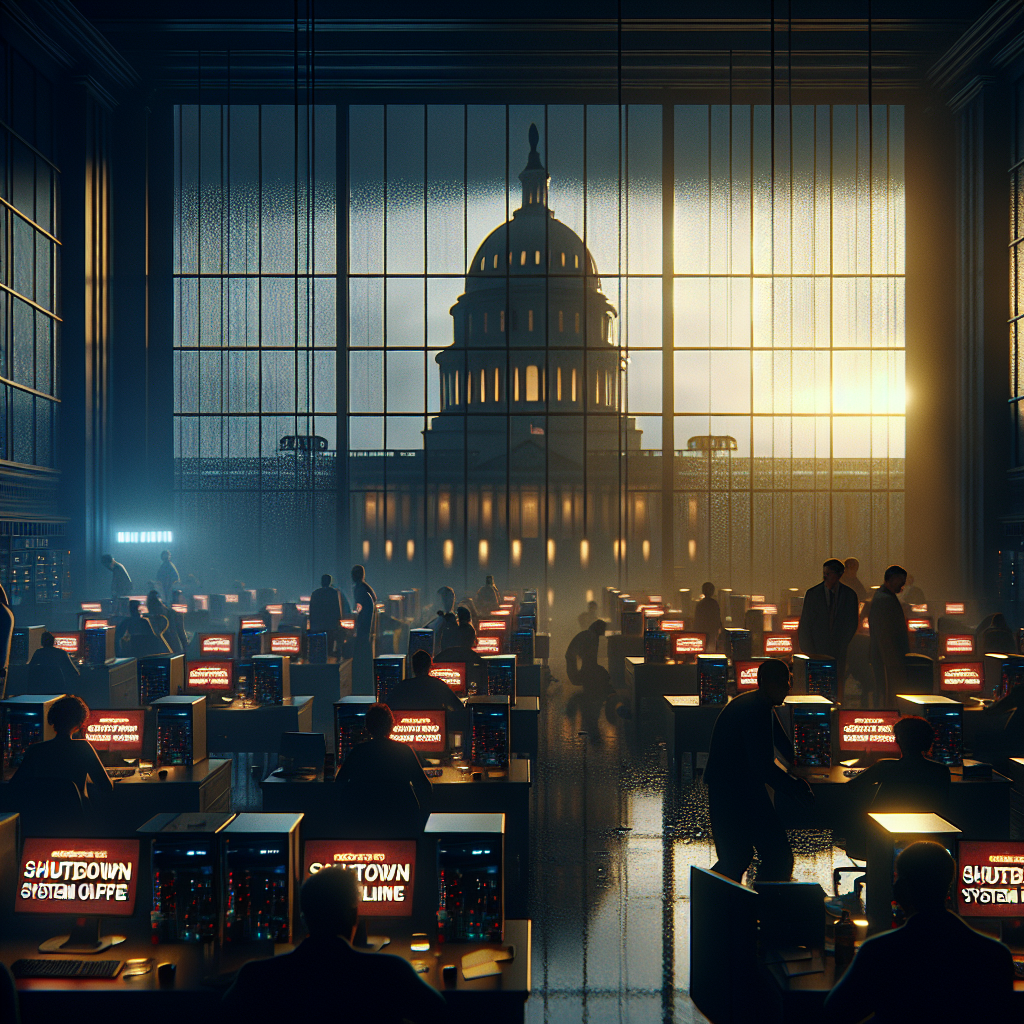
Lights Out in the Nation’s Server Rooms
It’s a bleak October morning in Washington. The glow from desktop monitors fades as thousands of federal tech workers roll their chairs back, faces drawn with uncertainty. The message spreading through bustling government offices is as chilling as the autumn air: “DCAA systems offline—indefinite government shutdown begins now.” For the IT backbone of America’s capital, it’s not just the lights flickering out. It’s the heartbeat of defense audits, cybersecurity safeguards, and pulse-quickening innovation pausing in the middle of critical government routines[1][4].
Why It Matters: Invisible Hands Behind National Security
The Defense Contract Audit Agency (DCAA) is the unsung hero in America’s machinery, quietly ensuring billions in taxpayer dollars are spent wisely across military contracts[2][3]. Their tech teams enable audits of $352 billion every year, sniffing out waste and keeping defense suppliers honest[2]. When the shutdown hit, the invisible gears jammed—and with them, the assurance that planes, ships, and soldiers are equipped affordably and securely.
When Bureaucracy Meets the Binary Zero
A government shutdown isn’t just politicians arguing in marble hallways. For the people behind America’s digital defenses, it’s a hard switch—systems suspended, government contracts in limbo, software patches postponed[4][6]. As tech workers lost clearance to access key servers, routine licensing, export controls, and data audits ground to a halt. Even urgent matters like cybersecurity received only skeletal support from “excepted” staff, those who stay behind to guard the most vital national interests[4].
IT contractors watched their inboxes for “stop work” orders—official notifications that freeze all progress and paycheck expectations[6]. For many, working “at risk” meant burning midnight oil without any promise of payment or job continuity[5].
How Shutdown Scrambles the Systems
So, what exactly happens when federal tech offices shut down?
- Audits are paused: Contract price settlements and business system checks are stalled, risking budget overruns and wasted tax dollars[2][3].
- Cybersecurity lapses: With minimal staff, network vulnerabilities fester as patches, investigations, and updates are postponed[4].
- Tech vendors unplugged: Small businesses and contractors, who rely on timely payments and project milestones, see their cash flow freeze[6].
- Innovation on ice: Efforts to streamline federal IT—like merging suboffices or centralizing audits—are derailed, compounding inefficiency[1].
Even agencies like the Department of Commerce or Treasury halt routine licensing and advisory functions, leaving American innovation exposed to costly delays[4].
Human Faces in the Dark: An IT Analyst’s Family
Picture Rosa Martinez, an IT support analyst at a small DCAA field office. As the shutdown drags on, her laptop stays closed. Her kids, wide-eyed, ask why she’s home again, clutching a government-issued badge that suddenly holds no authority. Rosa worries about paying rent—a paycheck suspended, projects idled, and colleagues scattered across merged offices[1]. In group chats, DCAA staff share stories not just of mission impact but the anxiety gripping tech families. The shutdown’s ripple reaches far beyond the agency—into grocery stores, to mortgage lenders, and into every home dependent on that steady government check.
Expert Voices: Real Risks and Uncertain Futures
According to defense analyst Gary Thomas, “Every day federal audits are delayed, DoD procurement risk climbs and taxpayer exposure multiplies… The shutdown isn’t just a budget story, it’s a security vulnerability.” Even agency leadership has voiced concern that staff shortages—already strained by declining auditor numbers—will lead to growing backlogs and compliance headaches for months after the shutdown ends[3].
Meanwhile, a senior DCAA official shares (on condition of anonymity), “The people most impacted are those least visible—a handful of digital operations staff keep entire military supply chains running. Without them, the risk isn’t hypothetical. It’s frontline.”
Reaction: Scrambling for Safeguards
Industry responded with a mix of frustration and urgency.
- Contractors sought clarity: Monitoring agency websites, calling contracting officers, and hiring legal counsel to parse the shutdown’s maze of uncertainties[4][6].
- Government sought efficiencies: The DCAA push to close and combine small offices—a move to cut costs and foster collaboration—faced new hurdles, as teams scattered and morale waned[1].
- Community support emerged: Professional networks and local organizations extended help to impacted workers, offering everything from resume workshops to emergency loans.
What’s Next / Could It Happen Again?
As shutdowns become more common, agencies like DCAA are rethinking disaster plans and workforce resilience. Automation, centralization, and investment in cloud infrastructure may buffer future disruptions, but real change demands bipartisan resolve on Capitol Hill and smarter public IT strategy[1][3].
Could another shutdown disrupt federal tech again?
History—and budget politics—say yes.
So, how can America’s most critical digital defenders future-proof their mission and their paychecks in an era of recurring shutdowns?
FAQ
Q: What is the impact of a government shutdown on DCAA tech workers and audits?
A: Shutdowns halt DCAA audits, freeze contractor work, disrupt payments, and suspend routine cybersecurity and compliance activity, placing massive strain on federal tech workers and impacting national security oversight[1][2][4][6].
Q: How do government contractors manage shutdown risks?
A: Contractors stay updated on agency guidance, maintain communication with officials, and document all actions to ensure compliance and mitigate revenue loss during shutoffs[4][5][6].
Q: What happens to federal IT projects during a shutdown?
A: Most new IT initiatives pause, ongoing projects receive minimal support, and innovation efforts—like the DCAA reorganization—are badly delayed or derailed[1][3].
Q: Who keeps working during a government shutdown?
A: Excepted employees handling urgent national security or public safety matters continue, but most tech roles are furloughed or forced to work “at risk,” often without pay or legal guarantee of compensation[4][5][6].
Q: Could future shutdowns hit government tech teams?
A: Unless deeper legislative fixes and smarter IT planning are established, future shutdowns may trigger even more severe disruptions for federal tech workers, contractors, and defense oversight[1][3][4].