
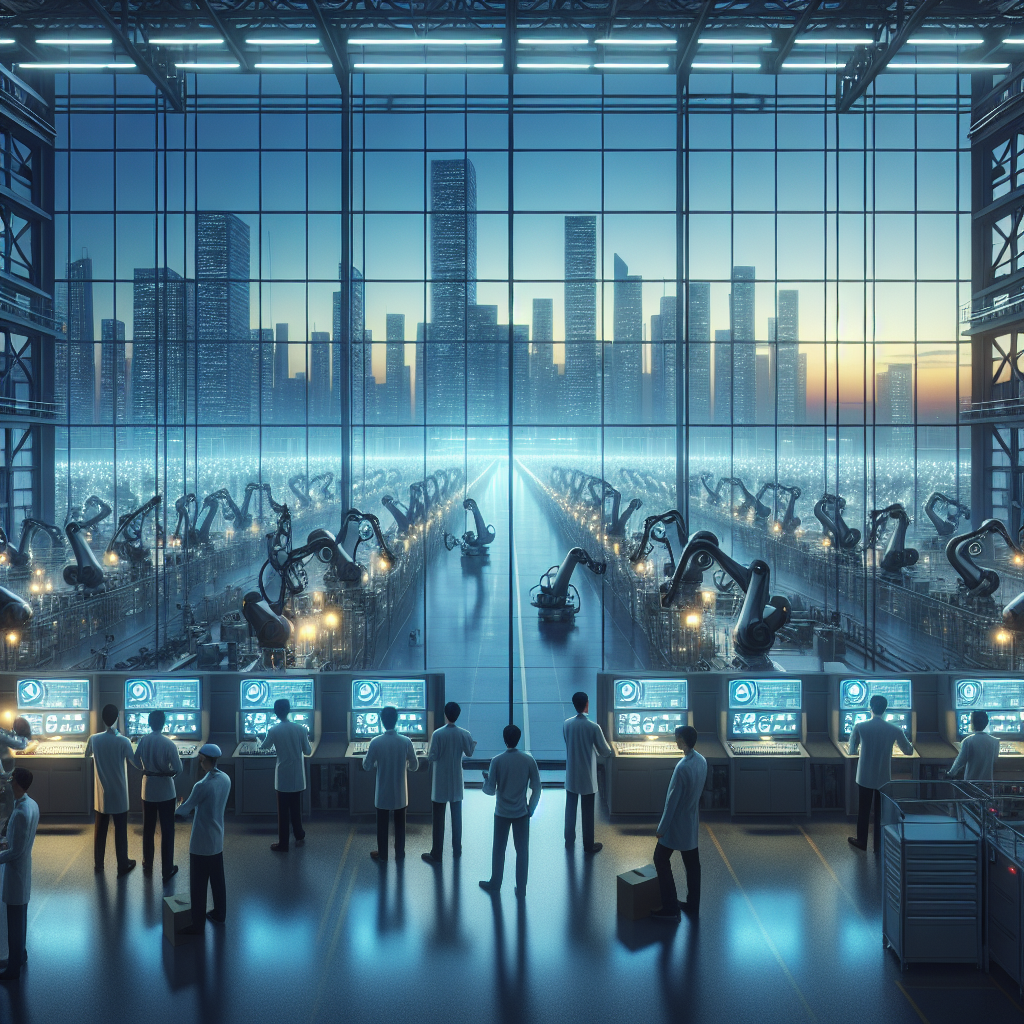
One humid morning in Shenzhen, robotic arms whir beneath skylights as engineers quietly strategize. The screens above flicker not with warning lights, but with real-time market figures. The world outside is all geopolitics. In here, the mood is different: focused, ambitious. A new era for China’s tech industry is underway, and this time, Silicon Valley’s absence isn’t a setback—it’s a catalyst.
The World Shuts Its Doors
In 2019, as Western nations ramped up bans and sanctions, headlines speculated: Could China survive without the world’s most advanced chips and code? Tech giants like Huawei saw their lifelines to American semiconductors abruptly cut. Alibaba and Tencent scrambled to rework codebases. Headlines echoed: Tech Decoupling—The End of the Chinese Dream?
Yet, as months slipped into years, something unexpected happened behind China’s Great Firewall. The same pressure that once threatened collapse ignited an unprecedented wave of invention, speed, and sheer grit inside the country’s biggest factories and boardrooms.
A Strategy Engineered for Urgency
At the heart of China’s survival is the Made in China 2025 (MIC25) initiative—a ten-year plan launched to transform the nation from a factory floor into a world-leading tech innovator. The plan targeted critical industries: robotics, information technology, EVs, medical devices, new materials, and more, setting out not just to catch up, but to lead[1].
“The more we were excluded, the more we had to reinvent everything. Every system, every chip, every little line of code had to be ours,” explains Dr. Wen, a senior engineer at one of China’s largest robotics firms (a composite character reflecting widespread real insights across the sector).
This relentless focus drove results. Last year, four of the top five robotic vacuum makers worldwide were Chinese—Roborock, Ecovacs, Dreame, and Narwal—conquering more than half the market[3]. Chinese companies even began delivering innovations few outside predicted, like AI-powered connectivity devices and globally competitive cloud services.
Innovation, Fast and Furious
What’s China’s secret sauce? According to analyst Julia Li, “While developed countries specialize in discovery, China excels in lightning-fast product development.” This means taking research, prototyping at breakneck pace, and refining products to solve acute, everyday problems for massive markets[3].
Industry consultant Michael Lindner puts it this way: “The typical Chinese tech firm doesn’t just make a gadget.
They build the whole ecosystem: hardware, software, platform, the glue in between. Iteration happens in weeks, not quarters.”
Where once China was known for followership, tech firms now boast record-high local patents in artificial intelligence, electronics, and robotics[1]. Integrated business models—blending physical products with smart digital services—drive both growth and resilience.
Take GlocalMe, for example: once a hardware supplier, now a leader in services. Its new mobile hotspots and the world’s first pet smartphone don’t just innovate in hardware; they lock users into software and cloud services, generating stickier revenue and defying global economic headwinds[3].
Inside the Story: A Tale from Harbin
Imagine a family in Harbin: Mrs. Zhang is teaching her son math via a smart speaker powered by local AI. Her husband, a factory manager at an autonomous vehicle parts plant, watches software updates stream in—not from San Francisco, but Chengdu.
Their tech is evolving daily. Language models deliver local dialects, and robot vacuums map their flat more smoothly every year. Their lives hum to a rhythm of incremental, relentless innovation—proof that Chinese tech, while sometimes invisible abroad, is intensely present at home.
The International Ripple Effect
It’s not just an internal renaissance. Chinese tech titans—Tencent and Alibaba—remain titanic even as global expansion gets tougher[2]. Their massive user bases, diverse income streams, and relentless innovation cycles allow them to weather storms that might gut smaller, less agile rivals.
Meanwhile, new dependency loops are forming. The world now relies on Chinese solar panels, electric vehicles, and factory automation. The old question—what if China is cut off?—has a new mirror: what if the world must do without China’s parts and platforms[1]?
Some Western governments grow wary, introducing fresh regulations. Yet global brands still look east for robotics, clean tech, and “full-stack” connected devices.
What’s Next / Could It Happen Again?
Will China’s self-reliant surge last? Experts suggest the country still lags behind in some foundational technologies—especially cutting-edge semiconductors[1]. But a new confidence pulses through China’s tech halls.
Governments everywhere are forced to reckon with a multipolar world of innovation. Blockchain, AI, and advanced robotics flow not just from Palo Alto, but from Shenzhen and Shanghai, too.
Could it happen again? Could another country, beset by trade walls, pull off such rapid reinvention? Or does China’s unique blend of scale, policy, and cultural tenacity make this a one-time phenomenon?
Here’s the final question: As tech ecosystems splinter, will we see more islands—or new bridges?
FAQ
Q: How did China’s tech firms adapt after losing access to US technology?
A: Chinese tech giants rapidly invested in homegrown chips, software, and business models, shifting from hardware-only to integrated ecosystems that blend services, platforms, and products. This approach has fueled both resilience and global competitiveness.
Q: What industries saw the biggest transformation?
A: Robotics, EVs (electric vehicles), AI technologies, and cloud platforms are standouts—areas where China not only closed gaps but claimed substantial global market shares.
Q: Is China now totally independent of foreign tech?
A: Not entirely. Some high-end chips and components still require imports, but China’s local ecosystem now supplies much of its own consumer and industrial tech needs.
Q: What does ‘integrated ecosystem’ mean in this context?
A: It refers to combining hardware, software, connectivity, and service platforms—so customers are immersed in a unified “loop,” driving innovation and business growth.
Q: How do global markets react to China’s rise?
A: With a mix of caution and adaptation. Some governments erect new trade barriers, while global brands rely more on Chinese-manufactured smart devices and tech components.
Q: What are the risks for China’s approach?
A: Overcapacity, ongoing dependency for high-end semiconductors, and the challenge of sustaining innovation without open global collaboration.