
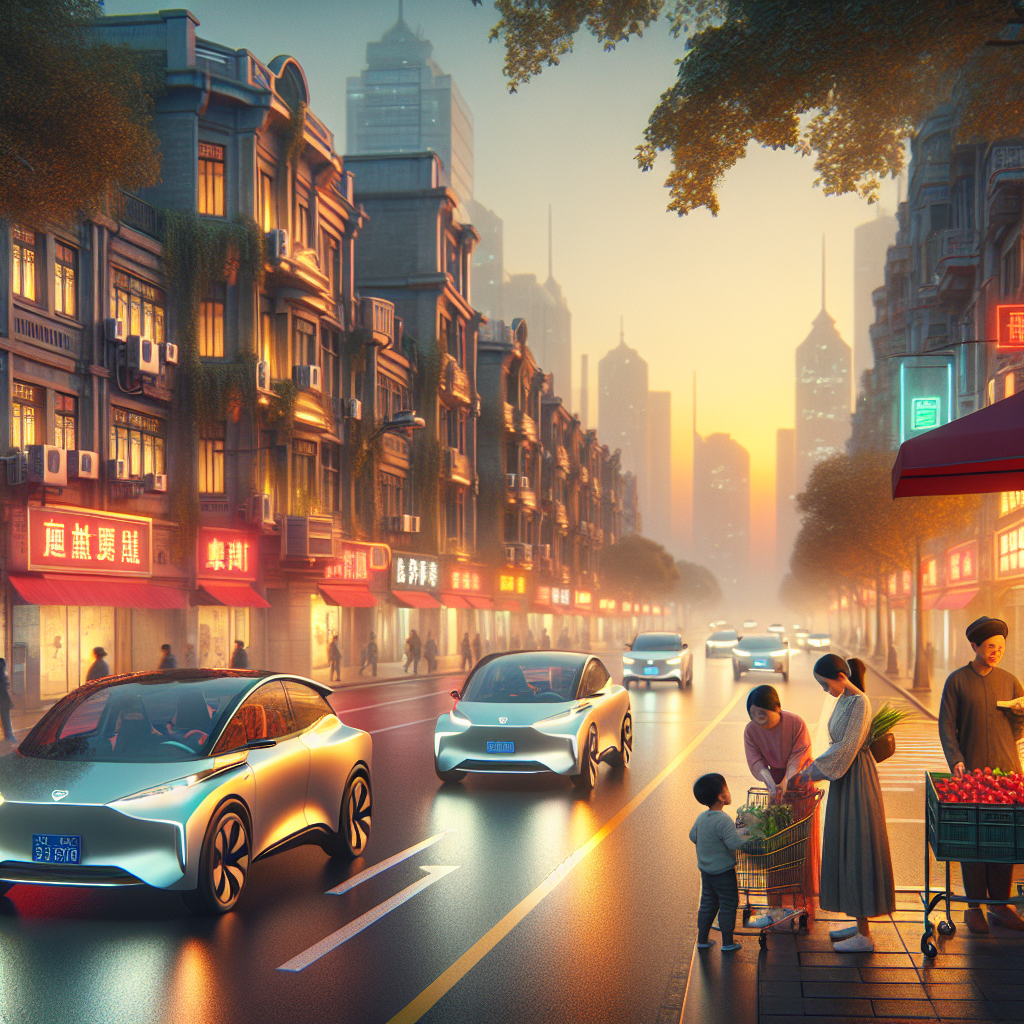
The Shanghai Surge: A Dawn on Electric Dreams
It’s 6:30 a.m. in Shanghai. A delivery van, silent except for the hum of its motor, weaves through dawn-lit streets. It’s a snapshot of something bigger: the world’s largest electric vehicle (EV) market springing to life, battery packs pulsing with energy and ambition. As the city awakens, an invisible current surges—a revolution not in oil and steel, but in electrons and innovation. In 2025, over half of every new car sold in China runs on electricity, a tipping point that has left the rest of the world racing to catch up—or opting out[1][2].
Why China’s Electric Charge Matters
There’s a reason the buzz about EVs these days sounds suspiciously like Mandarin. China now sells nearly 70% of the world’s EVs—over 12 million out of 17 million produced globally in 2024[1][2]. Imagine every other new car in the world plugging in, and you’ll sense the scale. It’s not just about vehicles. It’s about the re-wiring of global industry: battery factories, rare metal supply chains, and tech know-how—all pivoting around China[3].
For decades, Western automakers defined the rhythm of global car culture. Now, those tables have flipped. “If you look at any major Chinese city, EV chargers are more common than gas stations,” remarks Lin Zhang, an auto industry analyst in Beijing. “The government saw clean mobility not as a fringe disruptor, but as national strategy. The results are everywhere”[1][3].
Inside the Engine Room: China’s EV Ecosystem
What powers this juggernaut? Three words: scale, tech, and supply. China’s vast domestic market let EV makers go big fast. But it’s the batteries—those mysterious boxes under the hood—that tell the real story. By 2024, nearly four out of every five EV battery cells are made in Chinese factories, often using locally sourced materials[3]. Battery prices have dropped 30% in a single year—falling twice as fast as in Europe and the U.S.—giving Chinese carmakers a price edge that’s hard to match[3].
Innovation never sleeps in this ecosystem. Chinese companies are abandoning costly metals, exploring safer, cheaper chemistries for batteries, and pioneering battery recycling at scale. “If you want to understand the future of batteries, watch China, not Silicon Valley,” says Dr. Sarah Quinn, battery researcher at MIT.
A Family’s First EV: The Human Shift
To see what all this means on the ground, meet the Wu family in Guangzhou. For years, commuting meant fossil-fueled gridlock and smoggy mornings. But after government subsidies made electric hatchbacks cheaper than gas models—even before fuel savings—they made the switch. Now, their weekday ritual is a quiet ride, punctuated by news that yet another cousin or coworker has gone electric. “Charging is easy, public transport feels cleaner, and we’re spending less,” says Mrs. Wu. For her son, it’s even simpler: “The car just works—and it’s fun.”
Blocked at the Border: The U.S. Dilemma
While Chinese EVs fan out across Latin America, Europe, and Southeast Asia, there’s one border they can’t cross: the United States. Political rhetoric paints Chinese brands as Trojan horses—potential threats to national security, job markets, or both. Facing steep tariffs and regulatory mazes, Chinese automakers have pulled back their American ambitions, watching as U.S. EV adoption lags[2]. Detroit scrambles to catch up, but American sales are a fraction of China’s—and many battery components still trace back east[2][3].
“Innovation here is moving at the speed of an interstate pileup,” says Alex Torres, a Michigan-based industry consultant. “We’re investing billions, but the supply chain is still China’s game. It’s a strategic headache, one we’re just waking up to.”
The Global Ripple: Reactions and Resistance
Europe’s auto giants are scrambling to electrify, but face homegrown hurdles: expensive batteries, slow infrastructure, and a patchwork of subsidies. EU officials cheer green targets, but worry about the flood of cheaper Chinese models outcompeting local brands[2]. Meanwhile, Japan, South Korea, and India build their own EV playbooks, mixing alliances, protectionism, and homegrown innovation.
Behind every trade dispute or battery patent war, families, workers, and cityscapes change. Old manufacturing towns adapt—or struggle. Air grows cleaner. Urban soundscapes quiet. Yet, in every boardroom and legislative chamber, a fierce debate simmers: Do you join China’s high-voltage parade, or try to chart your own electric future[3]?
What’s Next—and Could It Happen Again?
The story isn’t over. New battery chemicals are coming. Recycling is booming. Experts predict Chinese EV exports will soon outnumber traditional car shipments, even if America remains walled off[3]. Will global commerce adapt or fracture? Can U.S. and European carmakers leap ahead—or is this just the first act of China’s technological century?
These questions pulse like electricity, even as drivers across China unplug from the gas pump. The revolution’s engine is still running, but its destination? That’s up for grabs.
Are we witnessing the end of Detroit—and the rebirth of Shanghai as the new motor city of the world?
FAQ
What is China’s global EV influence?
China drives 70% of the world’s EV sales and dominates battery production, export, and innovation, reshaping both industry and policy worldwide.
Why aren’t Chinese EVs in the U.S. market?
U.S. tariffs and regulatory concerns over security and jobs have blocked most Chinese EV brands, leaving America on a slower EV adoption path.
What makes Chinese EVs so competitive?
Massive local demand, rapid battery innovation, vertical supply chains, and plummeting costs, especially in battery production.
How are other countries responding?
Europe tightens standards while ramping up its own EV efforts. Southeast Asia, Latin America, and Africa increasingly welcome affordable Chinese EVs.
What are potential risks of China’s EV dominance?
Dependence on Chinese batteries/metals poses supply chain and geopolitical risks, pushing calls for diversified sourcing and local production.
Where is the future of electric vehicles headed?
Expect further battery breakthroughs, recycling advances, new global trade shifts, and fierce competition over the next decade.