
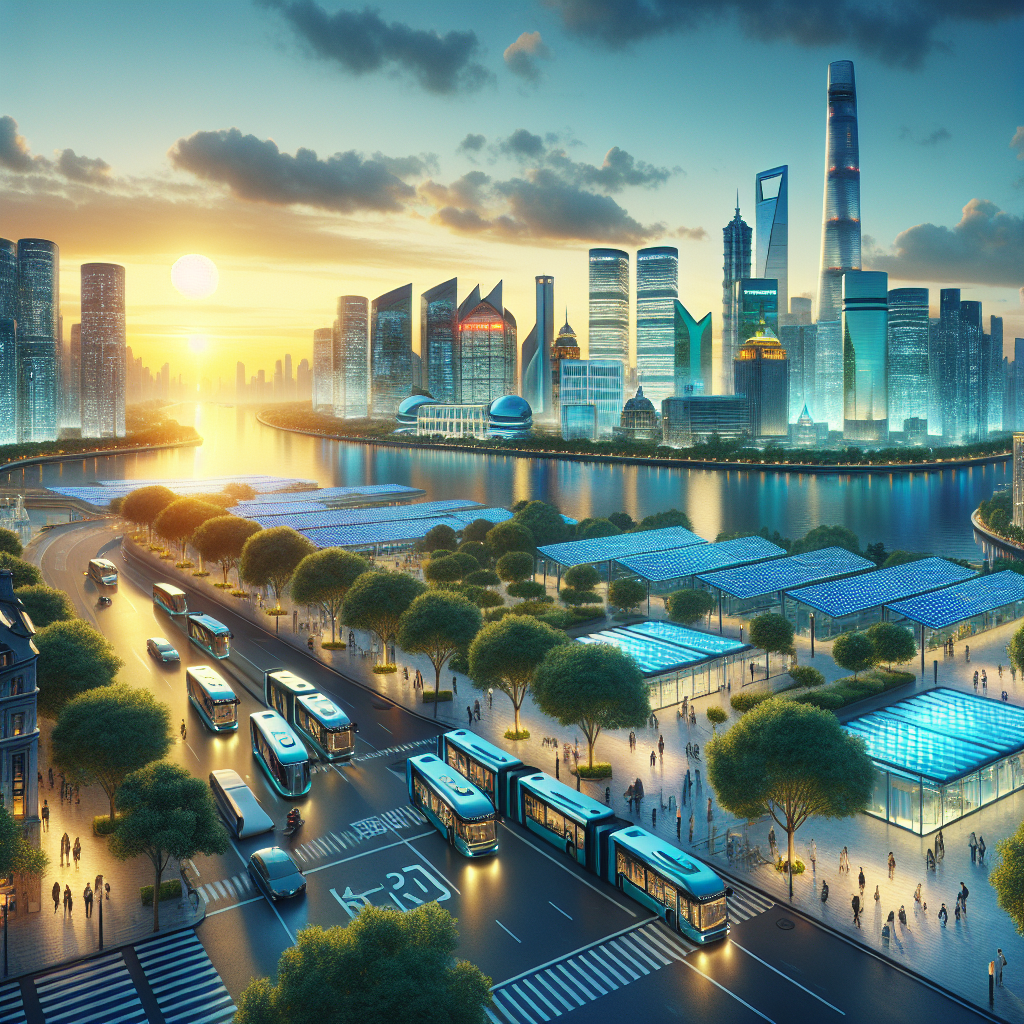
Shanghai, 2025. Dusk hums through the world’s most advanced skyline. A fleet of silent buses glides by on battery power, shimmering in electric blue. In a window-lit kitchen, a mother scrolls her phone—her utility bill is the lowest it’s been in years, thanks to an AI-driven smart grid that pipes renewable energy from deserts thousands of miles away.
This isn’t science fiction. It’s China’s reality. And the rest of the world—with America trailing—is scrambling to understand how the planet’s biggest polluter turned into the main engine of the clean energy revolution.
The Turning Point: A Green Sprint Out of the Smog
Rewind a decade: Chinese cities suffocated under coal-stained skies. Hospital ERs overflowed with respiratory cases. That public health nightmare, coupled with mounting climate warnings, forced a reckoning.
Beijing answered not with small gestures but with a top-down “green leap.” The 14th Five-Year Plan earmarked an eye-popping $6 trillion for climate and digital infrastructure between 2021 and 2025—an investment tsunami reshaping city grids, rural landscapes, and global supply chains alike[1]. Strategic plans like “Made in China 2025” funneled state support to solar, wind, and electric vehicles, while R&D raced ahead fueled by competitive private giants like LONGi Solar and BYD[1].
“China’s industrial policy was about scale—if we wanted clean air, we needed to dominate manufacturing for solar panels, batteries, and EVs,” explained Dr. Wen Li, a climate economist in Beijing. “Once the factories were humming, costs plummeted for everyone.”
Anatomy of an Energy Revolution
Here’s China’s formula in action, explained simply:
- Policy direction: The government sets ambitious targets—like 33% of all electricity from renewables by 2025, and 1,200 gigawatts of wind and solar by 2030 (already achieved six years early)[2].
- Industrial might: Factory floors hum from Shenzhen to Inner Mongolia, churning out solar panels and battery packs faster—and cheaper—than anywhere else on Earth[3][4].
- Smart technology: China’s grid isn’t just vast, it’s intelligent; millions of IoT sensors and AI decision systems ensure energy flows efficiently, smoothing out wind and solar’s ups and downs[1].
The result? In 2024 alone, China added 373 million kilowatts of new renewable power—86% of all new capacity, surpassing most nations’ total supply[2]. And by exporting this tech at scale, China’s green surge is reportedly shaving 1% off emissions in other countries each year[3].
Scenes from the Frontline: Li Meng’s Confession
Meet Li Meng, a factory shift manager in Hebei. At the start of her career, she dreaded the black dust that settled on everything she owned. Five years ago, her plant switched from coal to solar. “Now, the air smells clean. My daughter spends her weekends outside,” she beams. When the factory installed a rooftop solar array last fall, her employer saved thousands—and passed the savings to workers as a bonus. It’s not just her family breathing easier. “We’re exporting panels to India, the US—everywhere. I make a product the world needs,” she says with pride.
The World Reacts: Anxiety in America, Admiration in Europe
The world is watching with a mix of envy and alarm. US lawmakers sound the alarm: “China’s dominance in green tech puts our energy security at risk,” warns one Congressional report. Across Europe, clean energy executives describe China as an “unstoppable force”[4].
Why the panic? Cost. China is now the world’s cheapest manufacturer of key clean energy technologies, from solar panels to lithium batteries[4]. In 2023, it invested more in clean energy than the other top 10 nations combined, positioning itself as the global clean tech supplier, much as Saudi Arabia is for oil[4].
Meanwhile, the ripple effects stretch beyond the factory floor. African nations receive Belt and Road-funded solar parks; Southeast Asians ride Chinese-built electric trains. As one EU analyst observed, “If you want affordable clean energy, China is your storefront.”
Beyond the Headlines: Risks and Realities
Yet, the story isn’t all electric utopia. Critics warn of overcapacity—too many panels, not enough buyers. America and Europe fret about supply chain dependency. And environmental watchdogs argue that while renewables soar, China still consumes incredible amounts of coal at home.
But another perspective is emerging. “If China can turn the tide on pollution, anyone can,” says Sarah Caldwell, a US energy policy strategist. “The challenge now is to compete and collaborate, or risk being permanently left behind.”
What’s Next? Could the Tables Turn Again?
China shows no sign of slowing. Next up: green hydrogen, carbon capture, and smart cities run on AI. By 2035, clean tech exports could be more valuable to China than oil revenue is to OPEC nations[4]. America’s response—a surge in subsidies and “friendshoring” efforts—has just begun.
Yet, as night rolls in over Shanghai, whose air is sweetened by renewable ambition, one question burns brighter than neon:
Could Beijing’s clean energy charge wake up the world, or will America forever play catchup in our race for a liveable planet?
FAQ
What is China’s clean energy revolution?
China’s clean energy revolution refers to its rapid shift from coal to massive investment in solar, wind, batteries, and electrification, underpinned by government policy and technological integration.
How is China beating the US in clean energy?
China beats the US through record-scale investment, industry subsidies, world-leading manufacturing capacity, and the integration of smart technologies to manage and export clean energy infrastructure.
How does China’s clean tech boom affect global markets?
China’s large-scale, low-cost exports lower renewable energy costs globally, spur foreign investment, and force other nations to accelerate their own clean tech adoption.
Are there risks to China’s clean energy dominance?
Risks include overcapacity, reliance on Chinese supply chains, and the continued use of coal domestically—but the sheer scale means global emissions still fall.
What’s next for China and the world’s clean energy future?
New breakthroughs in green hydrogen and carbon capture, and intensifying international competition and cooperation, will shape whether the world can meet climate targets.