
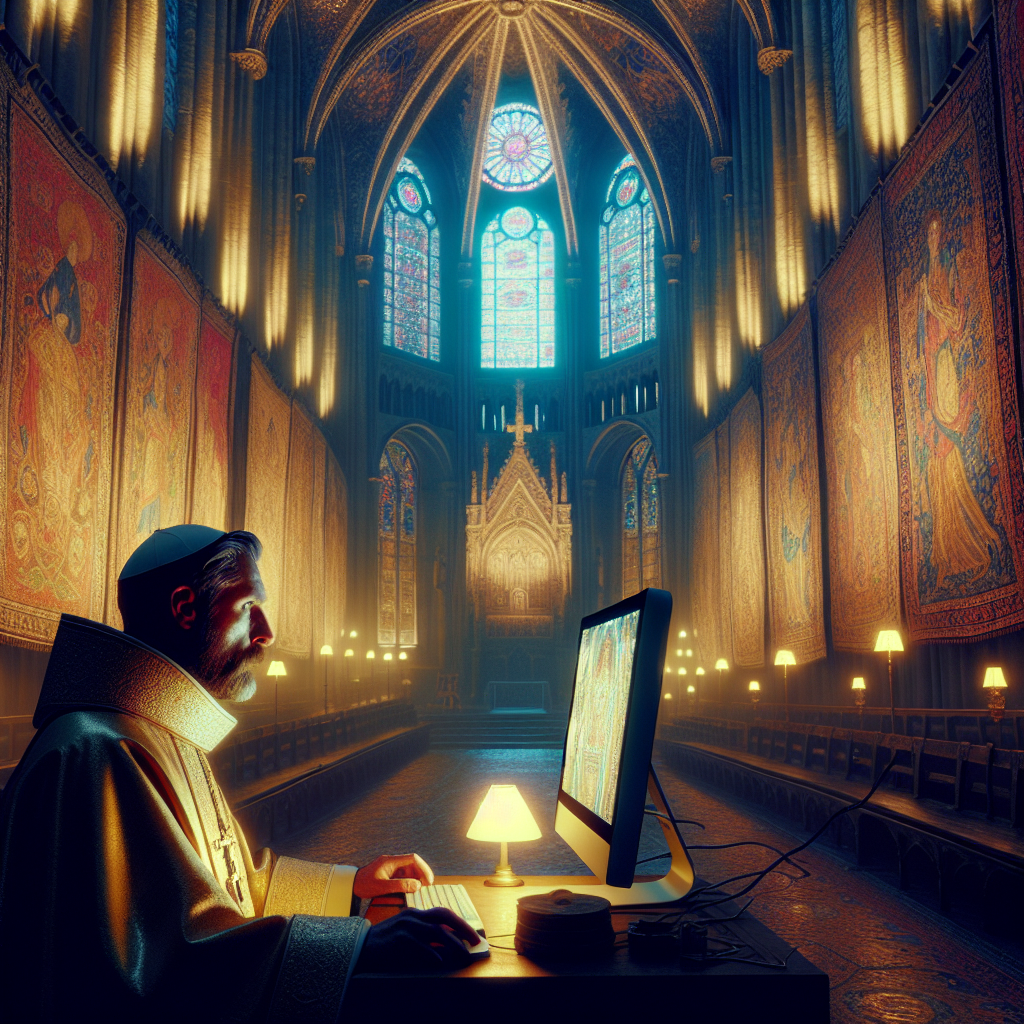
A Midnight Decree in Digital Rome
The screens across Vatican City never sleep—not even a day before Christmas Eve. As midnight settled on December 23, 2024, a quiet ripple spread behind the Vatican’s ancient walls. No bells tolled. Few even noticed as an extraordinary document emerged on the Vatican’s website, written in the formal, timeless cadence of papal authority but echoing urgent, modern fears: the world’s tiniest but most influential state was calling for a global reckoning with artificial intelligence.
The “Guidelines on Artificial Intelligence,” a 13-page decree, wasn’t just a technical policy—it was a manifesto for the soul of technology[1][2]. Those inside described the moment with reverent intensity. “It felt like we weren’t just writing rules,” a Vatican official recalls, “but standing before an avalanche and shouting: stop—remember you are human.”
Why the World Cares: A Spiritual Tech Reckoning
AI, once the playground of coders and CEOs, now touches everything: how we diagnose disease, how wars are fought, even who gets a bank loan. In the race to innovate, few have paused to ask: Should we? The Vatican did, and its answer was existential.
Pope Francis himself—a leader who’s tweeted hope, hosted refugees, and hugged climate activists—pressed for action[2]. Building on years of advocacy, he called for not just Vatican-wide but global guardrails: an international agreement to ensure AI preserves “human dignity” over “raw capability.” Automation, the Vatican argues, is a tool, not a replacement for mind or soul[3]. Machines may calculate faster, but only humans stand at the trembling intersection of compassion and power.
How It Works: Blacklists, Oversight, and a Tech Tribunal
Swing open the decree and you enter a labyrinth of principled boundaries. The Vatican’s law bans AI that discriminates—especially against the disabled—or makes “anthropological inferences” that could segregate or label people[2][1]. Imagine an algorithm deciding who sings in a choir, or which parishioners are flagged for “spiritual outreach,” based not on heart but on code. Not here.
Manipulative “subliminal techniques”—AI that nudges minds and harvests emotional data—are forbidden outright. The decree draws firewalls: systems that create social inequality or infringe upon human dignity are excommunicated, digitally speaking. A five-member Commission, blending legal, IT, and security minds, now watches over every byte of experimentation inside Vatican walls[2].
Even within courts, AI shall analyze records or suggest ideas—but never replace the sacred role of a human judge. “Judgment is spiritual,” says one clergy-jurist, “and only a human can own its consequences”.
Voices from the Frontline: Living with Algorithmic Grace
To see life on the edge of faith and code, meet Claudia, a fictional but relatable Vatican worker. Tasked with reviewing grant requests for a new digital literacy program, she’s offered an AI tool that promises to “eliminate bias.” The system, developed by an eager start-up, sifts through the personal stories and backgrounds in record time. One evening, Claudia hesitates: Did the software downgrade applicants from poorer districts, or favor essays matching previous winners—unconsciously reinforcing old divides? Protected by the new decree, she questions the results, demands transparency—and ultimately intervenes. Justice, she knows, cannot be outsourced.
Across Europe, other governments and tech industry leaders scramble to keep up. The Vatican’s guidelines draw inspiration from the European Union’s AI Regulation but go further—tying principles not just to legal rights, but to the “inalienable worth” of each person[2][4]. Tech CEOs watch closely; one industry consultant says, “If the Vatican draws a line, the world pays attention. Even Silicon Valley takes meetings when the Pope tweets.”
Ripple Effects: Governments, Faith Communities, and the Tech Titans React
While some critics label the law as idealistic, its ambitions spark real-world change. The European Parliament references Vatican language in new amendments. Faith communities across continents organize workshops to explore “ethical coding.” Ironically, developers—long suspicious of outside interference—begin to see Vatican oversight as a moral check, not just bureaucratic red tape.
For citizens, the impact is immediate: AI-generated content in Vatican media is now clearly labeled “IA”—intelligenza artificiale—so no one mistakes machine for ministry[2]. Families, educators, and hospital directors draft their own ethical checklists, inspired by these rules. In forums from Seoul to São Paulo, the question surfaces: Should our laws do the same?
What’s Next: Could It Happen Again?
As AI systems advance—learning not just to translate texts but to mimic empathy, suggest confessions, or offer “spiritual companionship”—the Vatican watches, and so does the world. Additional Vatican AI laws are expected by the end of 2025, hinting that this is just the first salvo in an ongoing culture war[2].
But in a universe of data and divine mystery, one question now resonates louder than cathedral bells: Who, or what, gets to decide the limits of the machine?
FAQ
What are the Vatican’s AI regulations?
The Vatican’s AI decree bans discriminatory, manipulative, or dignity-threatening uses of artificial intelligence, mandates transparency of AI-generated content, and establishes a commission to oversee experimentation—aimed at ensuring all AI serves the human good[2][1].
Why did the Catholic Church call for a global AI regulatory framework?
The Church believes unchecked AI risks violating human dignity, worsening social inequality, and eroding moral responsibility. It advocates an international AI treaty to set ethical boundaries worldwide[2][3].
How is the Vatican’s approach different from other AI regulations?
While inspired by Europe’s risk-based model, the Vatican uniquely grounds its rules in spiritual and ethical principles, referencing Catholic social teaching, and expressly ties AI guidelines to the common good and defense of the vulnerable[4][2].
Will these rules affect everyday people?
Yes. Vatican citizens and workers already operate under these rules—ensuring AI won’t interfere with decision-making or reinforce inequality. Many hope this model will inspire similar frameworks globally[2][1].
What could happen next?
More Vatican laws are set for 2025. Other governments, tech firms, and faith groups may increasingly look to the Vatican’s approach as a blueprint for balancing digital innovation and human values[2].