
The Night Silicon Valley Blinked
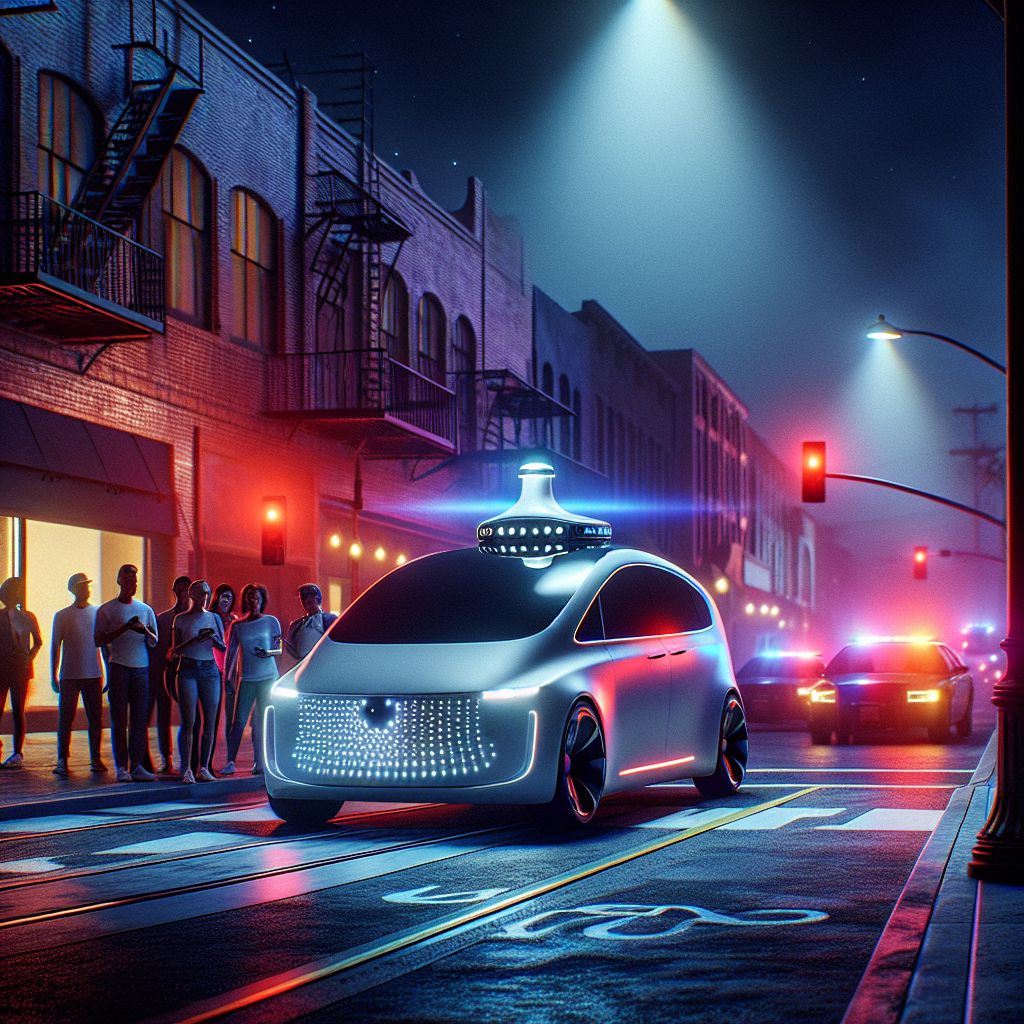
The street was drenched in sodium-orange light, an ordinary Californian evening humming gently in San Bruno. That suburban calm shattered when a midsize white Waymo sedan, gliding on its own intelligence, rolled to a gentle halt at the curbside—its destination? An encounter destined for viral fame. Blue and red police lights strobed across its sleek, LiDAR-crowned roof, transforming the driverless car into the weirdest protagonist of the night. Inside, no one. Not a single soul at the wheel[1].
Onlookers began filming within seconds. Cops, uncertain but professional, approached with the caution of people confronting not danger, but the uncanny. The world would soon learn: on that night, a police officer tried to write a ticket to a car that couldn’t take it.
“License, Registration, and… Wait—Hello?”
Picture this: You’re law enforcement. You see a vehicle make an illegal U-turn, an infraction that usually ends with a polite exchange, maybe a warning. But when the car you pull over turns out to be a Waymo robotaxi—empty, doors locked, screens silently blinking—routine dissolves into sci-fi confusion[1].
One witness described the moment: “It was like something out of Black Mirror, but here, on my street. The officer just stared through the window. It was unsettling—almost funny, until you realized nobody was in charge.” The mood? Suspended between bemused, bewildered, a beat away from existential angst.
Why does this matter? Because it was never about an illegal U-turn. It was about a question echoed in city halls and living rooms across America: What does accountability look like in the age of autonomous transportation?
What Really Happened: Driverless Disobedience
To be clear, Waymo vehicles are powered by artificial intelligence, not by a human hand. Their “drivers” are clusters of sensors, cameras, and navigation software—systems learning in real time from their mistakes, and reporting everything back to mission control.
That night, the Waymo performed a U-turn that police deemed illegal. An officer pulled it over, but protocol short-circuited immediately. The car can’t hand over documents. It can’t talk. Dashcams, license plate readers—those work. But the law was never designed to confront an algorithm’s misjudgment[1].
Waymo did respond: “Our vehicles are designed to be as safe and transparent as possible. We actively monitor trips and are working with local authorities to continually update our engagement protocols.” (A company spokesperson, in more corporate monotone than synthetic voice.)
The Personal Side: Life with Robo-Rides
Meet Lena, a fictional but quintessential San Bruno parent, who, like many locals, watches the rise of driverless cars with fascination and skepticism. “I want my kids to be safe,” Lena says. “If an AV makes a mistake, who pays the price? If a Waymo gets ticketed, does that even matter? Does safety improve, or do we just get new kinds of confusion?”
Her elderly neighbor, retired taxi driver Raul, jokes, “When the machines start doing donuts or getting pulled over, maybe it’s time I dust off my old hack license.” Humor aside, everyone wants the same thing: trust.
The Fallout: How Cities and States Scrambled
The San Bruno incident forced California’s Department of Motor Vehicles, city councils, and Silicon Valley itself into high-gear debate[1]. Some called for more robust emergency protocols: specific kill switches, live operator chat windows, or new digital documentation for AVs. Others worried about legal liability: If there’s no driver, does the ticket go to the car company— or into bureaucratic purgatory?
Industry analysts weighed in on podcasts and primetime news: “Incidents like these point to a coming storm,” says Dr. Priya Sabharwal, an urban mobility researcher. “The technology is outpacing the laws. Our entire framework for policing the roads is built around humans, not robots.”
Local governments launched new task forces. Tech companies, sensing risk and opportunity, invested in public outreach and policy teams. At least for now, every Waymo is a rolling experiment—and every traffic stop, a live test.
What’s Next: Can It Happen Again?
Absolutely. As driverless taxis proliferate from tech hubs to tourist towns, the odds are high for more weird, robotic encounters. Activists are calling for transparent data-sharing and incident logs. Cities want auto companies to build in remote response capabilities—like “attendants on call” for pullovers and accidents. Insurance and liability frameworks remain murky, especially after complex incidents.
All signs suggest an approaching age where a traffic ticket could mean a legal battle between an algorithm, its creators, and the system built for flesh-and-blood drivers.
The Big Question
When a machine makes a mistake and there’s nobody behind the wheel, who takes the fall—and will our laws ever keep up?
FAQ
Q: What exactly happened when California police pulled over a Waymo self-driving car?
A: Police in San Bruno stopped a Waymo robotaxi for making an illegal U-turn, but discovered the car was empty and driverless, leaving officers unable to issue a ticket the conventional way[1].
Q: How do Waymo self-driving cars respond to police stops?
A: Waymo vehicles are monitored remotely; if pulled over, they stop but cannot interact with officers directly. Typically, company representatives respond, and the car’s cameras record the interaction.
Q: Who is responsible if an autonomous vehicle breaks the law?
A: Responsibility usually falls to the company operating the vehicle, but specific legal processes are still evolving as laws often require a human driver to be cited.
Q: How are cities adapting to incidents like this?
A: Cities and states are creating new policies for autonomous vehicles, exploring concepts like digital documentation, emergency call features, and operational protocols for law enforcement.
Q: Can robotaxis like Waymo be pulled over again in the future?
A: Yes. As self-driving cars become more common, law enforcement and tech companies are both racing to adapt procedures to these inevitable human-machine encounters.