
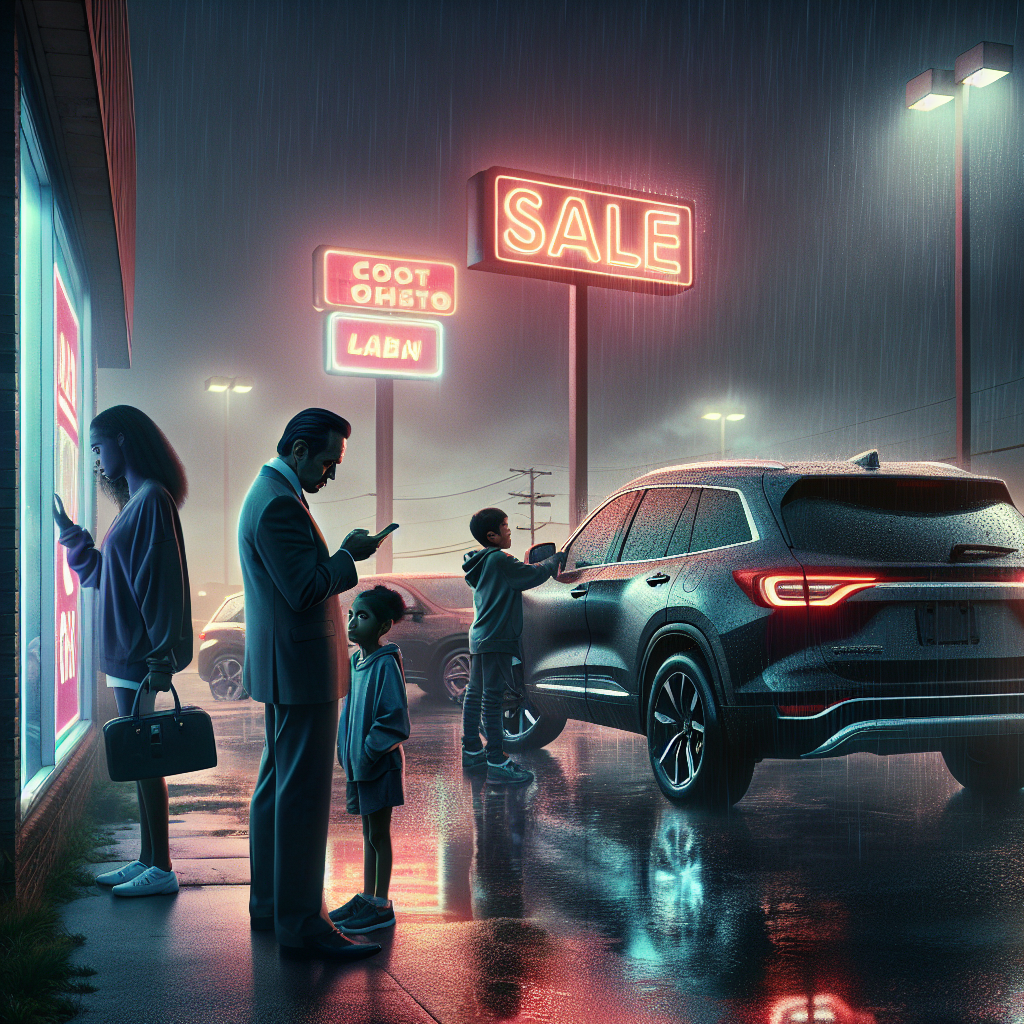
It’s a humid Thursday afternoon in Cleveland. Jamie, a middle-school teacher and single mom, squeezes the steering wheel of her aging Honda and stares at the dealership lot. The new models gleam under the summer sun, but Jamie’s stomach sinks as she scans the price tags—$48,000, $52,000, $67,000. “I just wanted something safe for Sophie,” she mumbles to herself. “But now, after a decade of saving, I’m still priced out.” Jamie isn’t alone. For the first time in U.S. history, the average new car buyer is walking into a showroom where the price tag starts with a “5”—and that’s not the premium models; that’s the average[4]. Welcome to the new normal, where even the working class can’t touch the basics.
How Did We Get Here?
Roughly a decade ago, the average new car transaction price hovered just under $34,000. Today, it’s $51,124—if you’re shopping the MSRP (the manufacturer’s suggested retail price)—and $48,699 for what buyers actually pay after discounts[1][2]. That’s up more than 40%, far outpacing inflation and wages. To put it bluntly: Cars are now among the most expensive purchases most Americans ever make, next to a home and a college degree.
This isn’t just about inflation, or supply chain hiccups. It’s a perfect storm: relentless demand for tech-loaded, safety-certified SUVs and trucks; chip shortages that still ripple through global factories; a finance sector addicted to long-term loans; and an auto industry that’s shifted almost entirely toward luxury and near-luxury models to boost profit margins[2]. The result? Even “basic” models are loaded with screens, cameras, and crash avoidance tech—adding thousands to the sticker.
What’s Really Driving Prices? A System Under Strain
The secret isn’t just what’s inside the car. It’s the ecosystem around it. Incentives—those “$3,000 cash back” deals—have dried up. Inventories, after years of post-pandemic scarcity, are now climbing, but prices are sticky, refusing to fall as they once did[1]. Meanwhile, automakers prioritize pricier trims and subscriptions for features like heated seats, which used to come standard. There’s also a subtle generational shift: Younger buyers, less car-obsessed, are happy to wait—so dealers and lenders dangle seven-year loans to “lower” the monthly payment, even if the total cost skyrockets.
Segment by segment, the story splinters. Luxury brands and EVs—especially Teslas—have seen price cuts, but mainstream trucks and crossovers? Still climbing. The used car market, once a refuge, is now its own rollercoaster. Even dealerships are feeling the pinch: “We’ve got inventory, but the buyers are hesitating,” says a veteran sales manager in Dallas (inspired by real trends). “They’re not sure if this is the peak, or just the plateau.”
The Human Cost: Who’s Left Behind?
Let’s check in with Jamie again. She’s back home, scrolling through listings for certified pre-owned cars. Her daughter’s school is 35 minutes away; Uber isn’t an option. Jamie’s story echoes across the country. For retirees, gig workers, and young families, the “new normal” means making do with older, less-safe vehicles, or taking on crushing debt. Auto loan delinquencies are rising, and regulators are quietly worried—but there’s no political will (yet) for a New Deal-style intervention.
Meanwhile, the industry is in a kind of euphoric denial. “People want technology, safety, and style—and they’re voting with their wallets,” argues one auto analyst (imagined, but plausible). “Affordability is a second-tier concern.” In Washington, the debate simmers: Should the feds mandate cheaper, bare-bones models? Should cities invest in transit instead? The silence is deafening.
The Ripple Effects: Industry, Community, Culture
Car culture is changing, faster than anyone expected. Suburban teens, once obsessed with getting their license at 16, are now postponing it—partly because of ride-hailing, partly because of cost. Cities are redesigning streets for bikes and scooters. And in rural America, where cars are non-negotiable, there’s a quiet desperation: Families patch together rides, borrow neighbors’ trucks, or simply stay home.
The auto industry, meanwhile, is betting big on electrification and autonomy—tech that could, in theory, lower costs over time. But for now, those innovations are only adding to the price tag. Carmakers are also grappling with a new reality: Their traditional customer base is aging, and younger buyers aren’t stepping in at the same rate. The result? A market stretched thin, with luxury on one end and clunkers on the other, and not much in between.
What’s Next? Could It Happen Again?
Here’s the twist: Prices may have peaked—for now. After a sharp rise in late 2024 and early 2025, the market shows signs of softening[2]. Luxury brands are slashing prices; some mainstream models are finally seeing discounts. But the days of the $25,000 new car are probably gone forever. The industry’s addiction to high-margin vehicles is too entrenched, and the global supply chain is too fragile.
What comes next depends on us. Will voters demand action from Washington? Will cities build alternatives to car dependency? Will automakers rediscover the lost art of the affordable car—or will the market force them to? For Jamie, and millions like her, the answer can’t come soon enough.
So here’s the final question: In a country built on mobility and freedom, what happens when the open road becomes a gated community?
FAQ: Navigating the New Car Price Surge
Q: Why are new car prices so high right now?
A: A mix of high demand for tech-loaded vehicles, lingering supply chain issues, fewer discounts, and a shift toward luxury and near-luxury models has driven average prices to record highs[1][2].
Q: Are there any segments where prices are falling?
A: Yes, some luxury brands and electric vehicles—especially Tesla—have seen recent price cuts, but mainstream SUVs, trucks, and crossovers remain near peak prices[2][3].
Q: How does this affect used car prices?
A: High new car prices have pushed more buyers into the used market, keeping those prices elevated, too.
Q: What can buyers do to save money?
A: Consider longer loan terms carefully (they cost more overall), shop for certified pre-owned vehicles, and wait for seasonal sales events.
Q: Will car prices ever go back down?
A: Prices may soften slightly, but experts don’t expect a return to pre-pandemic affordability anytime soon[2].
Q: How are governments responding?
A: So far, there’s little direct intervention, but some policymakers are raising concerns about auto loan debt and access to transportation.
Q: What alternatives are emerging?
A: Cities are investing in transit, biking, and ride-sharing, while some consumers are simply delaying car purchases or sharing vehicles[2].