
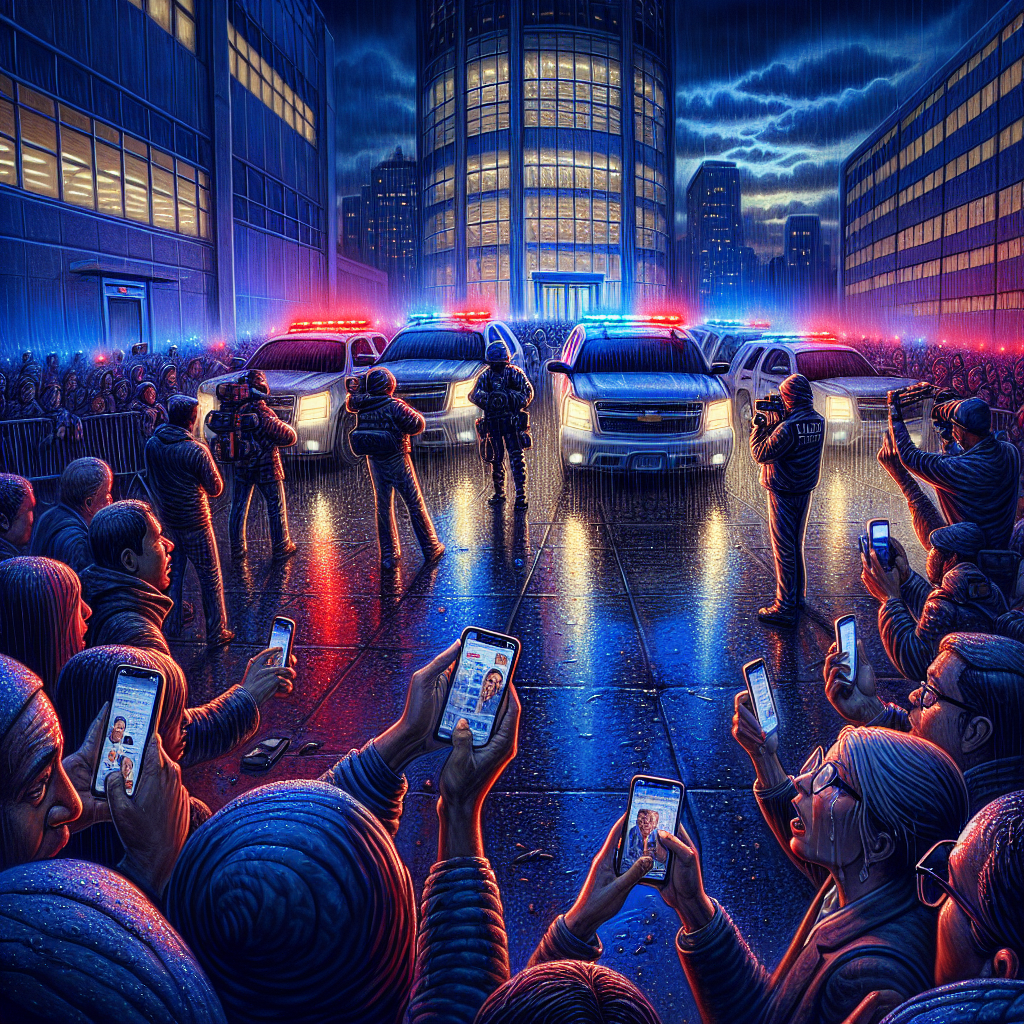
A Siren in the Night: Dallas, Unrest
It started—like so many shockwaves in tech—with a piercing midnight siren. On the rooftop of a Dallas ICE field office, police lights cut through the rain-drenched city as officers and onlookers scrambled. Gunshots echoed. By dawn, reports began filtering in: a detainee killed, two critically injured, and a trail of digital history leading to a single word scrolling on a suspect’s phone—ICEBlock[1][2].
The App That Lit a Fuse
ICEBlock was never meant to be just another icon on a smartphone. Developed in secrecy and launched into viral fame, it allowed users to crowdsource sightings of Immigration and Customs Enforcement (ICE) agents, giving communities a real-time map of local raids and officer presence[3]. Its popularity soared amidst rising immigration tensions, propelled by a single, nerve-jangling purpose: helping families avoid confrontations.
But that digital lifeline quickly morphed into controversy. Law enforcement sounded alarms, claiming ICEBlock had moved “beyond speech” and into active threat territory[1][2]. When Joshua Jahn—the Dallas shooter—searched for ICEBlock, it catapulted the app from legal gray zone into a flashpoint for the entire country.
How Did It Work? The Anatomy of an Outlawed App
Picture this: ICEBlock operated much like traffic apps that let drivers report speed traps. Users dropped pins marking ICE sightings; the app stitched those reports into a live map. Push notifications buzzed when ICE activity was nearby, letting families blend into crowds or retreat indoors[3]. It was simple, fast, and dizzyingly effective.
But where speed-trap alerts are seen as public safety features, ICEBlock’s purpose collided with the government’s territorial boundaries. The app’s defenders called it “protected speech under the First Amendment,” arguing that its essential function was community self-defense[3]. Authorities, meanwhile, saw a digital weapon aimed at federal agents[1][2].
Shockwaves: Politics, Safety, and Apple’s Crossroads
Last month’s Dallas shooting set off sirens far beyond Texas. Attorney General Pam Bondi declared a “new era of political violence” and pressed Apple to act[2]. The Department of Justice (DOJ) issued a stark warning: “Violence against law enforcement is an intolerable red line that cannot be crossed”[2]. Apple, suddenly at the fulcrum of a national debate, responded with measured finality:
“We created the App Store to be a safe and trusted place. Based on information we’ve received from law enforcement about the safety risks associated with ICEBlock, we have removed it and similar apps from the App Store.”[1][2]
ICE field offices ramped security. Activists accused Apple of “capitulating to an authoritarian regime.” Bonds of trust between tech platforms and users began fraying[3].
Inside a Family’s Fight for Safety
Consider the Vázquez family in Phoenix. Rosa, a mother of four, kept ICEBlock on her home screen, using it as a digital shield. School drop-offs, grocery runs—each became a tactical maneuver. When a push notification buzzed on a Saturday morning, she canceled plans and stayed inside. Her eldest son called ICEBlock “our angel app.”
Now, stripped of their forewarning, families like Rosa’s navigate uncertainty alone. For them, the ban wasn’t just a tech policy—it was a blow to everyday survival.
Expert Voices: Civil Liberties & Security
Tech analyst Maya Jepson notes, “The intersection of digital activism and national security is the new frontier. ICEBlock was the canary in the coal mine—a test of where speech, technology, and government power meet.”
Meanwhile, ICE’s Marcos Charles cited chilling statistics: more than “a 1000% increase in assaults on ICE officers since the rise of these tracking apps”[2]. For federal agents, the fight isn’t just online—it’s on city streets and in every moment their locations become public.
The Fallout: Communities and Industry React
Almost overnight, digital rights groups blasted Apple’s removal as a retreat from activist tech. Protests erupted in San Francisco’s Mission District and outside Apple’s Cupertino HQ. Petitions soared, and #RestoreICEBlock trended across social media.
Within Silicon Valley, insiders whispered about new policies—screening civic tech for “law enforcement risk” before launch. App developers scrambled to rewrite code, fearing that any feature with social mapping could draw the DOJ’s eye.
Governments, suddenly aware of tech’s power to shape street-level realities, began drafting new legal frameworks. Some cities quietly promoted official ICE alert systems, aiming to replace crowdsourced apps with government-run alternatives.
What’s Next / Could It Happen Again?
ICEBlock’s ban is neither the first nor last battleground in tech’s collision with authority. App developers are morphing strategies, civil rights groups prepping lawsuits, and Apple faces mounting pressure to arbitrate the line between safety and speech.
Could it happen again? Almost certainly. As one privacy lawyer warns, “Whenever public safety, activism, and software intersect, someone will redraw the red lines.” The only question: Who decides which sirens are silenced next?
So—should tech companies act as the gatekeepers of political activism, or does censorship start where safety ends?
FAQ
Q: Why did Apple pull ICEBlock from the App Store?
Apple removed ICEBlock following DOJ requests, citing safety risks and concerns that the app put federal agents in danger, particularly after violent incidents tied to its use[1][2].
Q: What is the ICEBlock app?
ICEBlock was an app that allowed users to crowdsource sightings of ICE agents, alerting nearby users in real-time about ICE activity[3].
Q: How did ICEBlock work?
Users reported ICE sightings, which were shown on a live map. The app sent notifications when immigration enforcement was nearby[3].
Q: What are the ripple effects of ICEBlock’s removal?
Activists criticized the ban as censorship, while government agencies applauded it for protecting law enforcement[2][3]. The event has led to reviews of social mapping apps and raised privacy, safety, and free speech debates.
Q: Could a similar app emerge in the future?
As tech and activism continue to collide, developers may launch successor apps, but these could face even stricter scrutiny and regulation.