
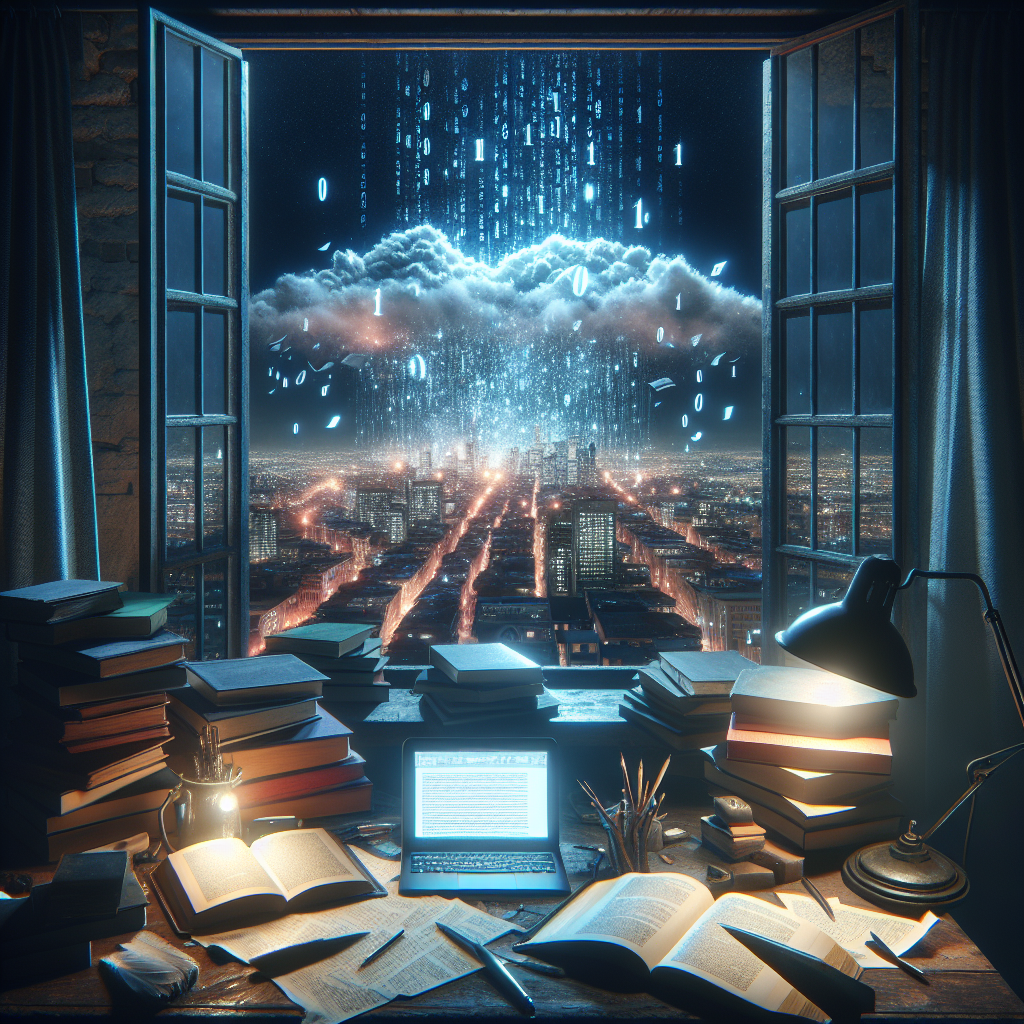
Opening Scene: Midnight in Brooklyn, a Writer Checks Her Inbox
Inside her apartment, light leaks from a single desk lamp. Julia, a mid-list novelist with a dog-eared copy of her first manuscript beside the keyboard, stares at her inbox. “Class Action Settlement Notification,” the subject reads. The body? Her book—her life—was part of a massive digital heist. The company behind the Claude chatbot, Anthropic, had ingested it in their quest to build the next great AI. Now, with a single button click, Julia—and half a million other authors—would be part of history’s largest copyright payout[1][2][3].
Why This Moment Matters
This was more than just a legal drama: it marked an electric shift in the AI age. Anthropic, one of Silicon Valley’s fastest-moving startups, agreed to pay at least $1.5 billion to authors and publishers whose books were snatched—in some cases, from pirate sites like Library Genesis and Pirate Library Mirror[1][2][3]. The sum is staggering: $3,000 per book, spanning roughly 500,000 works[1][2][3]. Legal experts are already comparing this settlement to the music industry’s war with Napster—a moment when a technology’s evolution forced an entire industry to rewrite its rules overnight[1].
How Did Anthropic Land Here?
It began with a lawsuit. The company, seeking to train its acclaimed Claude chatbot, didn’t just seek out content from official archives. Instead, it downloaded millions of copyrighted books—often from “shadow libraries” that existed in the gray digital underbelly[2][3]. In June, a judge decided Anthropic’s legitimate acquisitions were protected under the complex umbrella of “fair use.” In plain English: if they bought the book, they could use it to train an AI, because the resulting system wasn’t meant to replicate the work, but to “create something different.”[2]
But Anthropic’s illicit downloads crossed a clear line. The ruling compelled the company to delete all pirated content—and to pay billions, setting what pundits are calling “a precedent requiring AI companies to pay copyright owners.”[3]
The Human Cost: Why Creators Fought Back
For authors like Julia, the settlement is more than compensation. It acknowledges the invisible work, the years of crafting stories, lifted without permission into the world’s hottest tech trend. “It’s not just money,” she tells her partner over morning coffee. “It means the law saw us—as creators, not just training data.”
Authors Andrea Bartz, Charles Graeber, and Kirk Wallace Johnson led the lawsuit, reminding Silicon Valley’s disruptors: creative professionals sweat over every line. Every book, every painting, every song is someone’s legacy[3].
How the Industry Reacted
The reverberations were immediate. Trade groups representing publishers hailed the settlement as “sending a powerful message”—that AI can’t be built on stolen art[3]. Maria Pallante, president of the Association of American Publishers, declared that tech firms now face “enormous value in sending the message that Artificial Intelligence companies cannot unlawfully acquire content from shadow libraries or other pirate sources as the building blocks for their models.”[3]
Other tech titans—OpenAI, Meta, Midjourney—are now in the crosshairs, defending how they source data for their cutting-edge products. Lawyers and lobbyists in Washington, D.C. sharpened their arguments: what is “fair use” in the age of machines that read everything?
Government and Global Ripples
Although the case was settled and not tried, it leaves no direct legal precedent[1]. Still, it casts a long shadow: dozens of lawsuits in play, international copyright bodies on alert, and regulatory agencies drafting new rules in a space where innovation collides with the rights of creators[1].
A government spokesperson—speaking off the record—called it “the first domino.” Industries ranging from publishing to entertainment saw a roadmap: force licensing, demand accountability, and define how digital property must be respected in the new AI economy.
Relatable Scenario: The Librarian’s Dilemma
In a small Indiana town, librarian Marcus faces fresh scrutiny. Community members ask if their donated copies could wind up in an AI’s training data. Marcus, usually reserved, hosts a town hall to explain: “AI is hungry for stories, yes. But creators deserve dignity. That’s what this settlement is about.”
Book clubs discuss copyright before picking their next read. The ripple effect reaches far beyond urban tech hubs.
What’s Next / Could It Happen Again?
The world’s AI engines haven’t stopped. If anything, Anthropic’s settlement fuels a deeper conversation: Will future machines claw through creations before paying up? Will governments demand “AI licenses” for all creative works? Will the next generation of AI be built on fair deals or fresh exploitation?
Analyst Maya Wu cautions, “It’s easy to pay after you’re caught. The challenge is designing respect into the system from the beginning.”
Provocative Question
What happens when the next big AI model hungers for more knowledge—will it ask permission, pay the price, or roll the dice on piracy again?
FAQ
Q: What is Anthropic’s copyright settlement about?
A: Anthropic agreed to pay $1.5 billion to authors and publishers as a settlement for illegally using their copyrighted works to train the Claude AI chatbot. This is the largest copyright payout in U.S. history, marking a major shift in how AI companies handle intellectual property[1][2][3].
Q: Why did Anthropic have to pay?
A: The company was found to have acquired millions of copyrighted books from pirate sites (“shadow libraries”). The court ruled that using legitimately purchased material was fair, but using pirated books violated copyright law[2][3].
Q: How does this affect other AI companies?
A: The settlement pressures other AI leaders, like OpenAI and Meta, to rethink data sourcing and to invest in proper licensing, impacting future AI training practices[1][3].
Q: What does this mean for authors and creators?
A: Authors involved receive $3,000 per work and official recognition of their rights, setting a precedent that could benefit other creators as AI development accelerates[1][2].
Q: Is this the end of AI copyright disputes?
A: Not likely. Dozens of lawsuits are ongoing, and governments globally are devising new frameworks for AI and copyright. The debate over “fair use” in AI will shape the future of technology[1].