
A New Day at the Warehouse
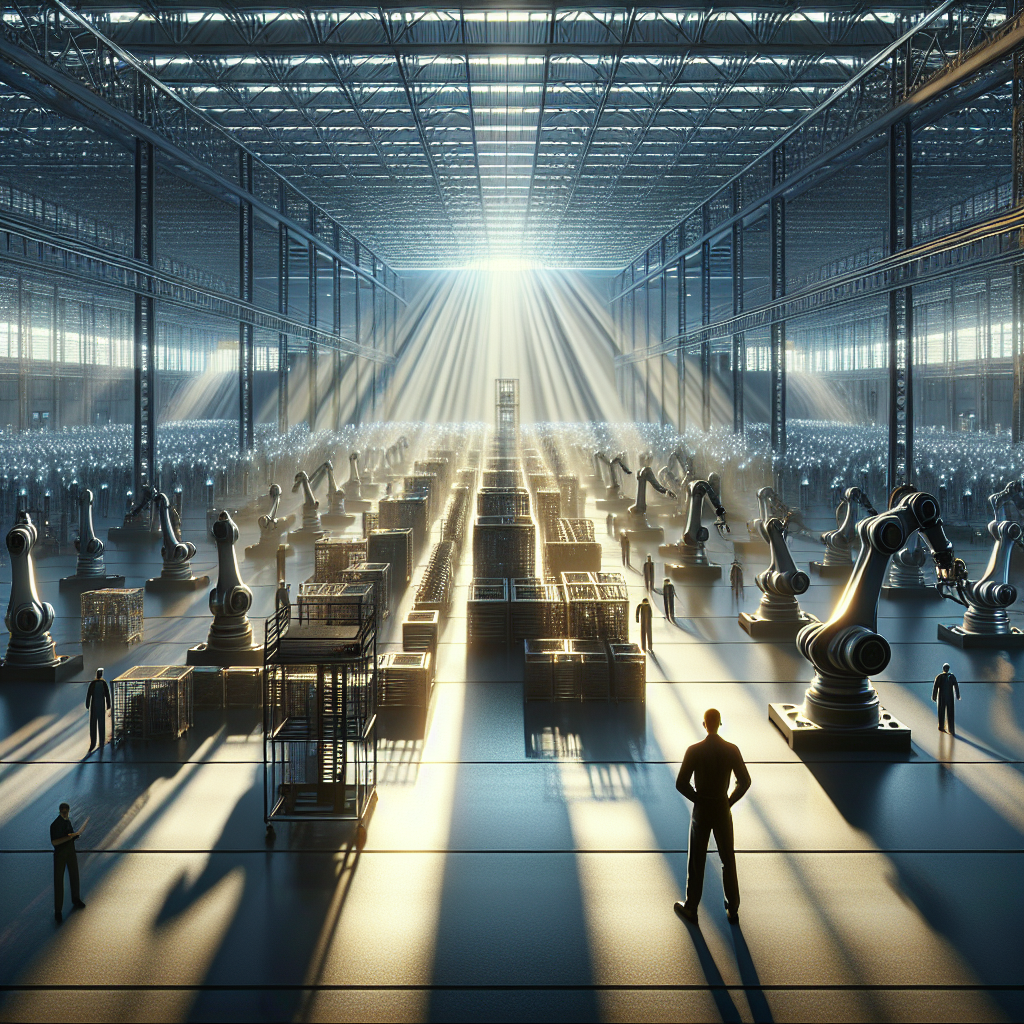
Morning sunlight filters through the vast, echoing corridors of Amazon’s flagship fulfillment center. The air vibrates with the hum of robotic arms, tireless wheels gliding across polished concrete. Human footsteps are scarce; here, the heartbeat of commerce seems to sync seamlessly with electric whirs, screens, and sensors. For warehouse worker Carmen, today feels different—a shift that makes her pause at the entrance and stare at the endless rows of machines primed to pick, pack, and ship.
The Promise and Peril of Automation
Amazon’s message is clear: these robots are the future. That future, according to leaked documents and analyst speculation, could mean 600,000 U.S. jobs replaced by robots by 2033[5]. The company’s aggressive automation strategy isn’t secret—new arrivals like Vulcan, the touch-sensing robot, and mobile carriers like Proteus are designed to handle previously labor-intensive tasks, flattening the “hiring curve” and addressing the growing labor shortages that have challenged Amazon’s breakneck growth[1][2][4].
This isn’t just technological bravado. Amazon could save as much as $10 billion annually by 2030 if 30–40% of its U.S. orders are fulfilled through next-gen robotic facilities[1]. That incentive powers a breathtaking series of innovations: arms precisely sort orders, scanners document packages from every angle, and systems like “Echelon” manage conveyor belts while “ZancaSort” delivers parcels right to ergonomic workstations, minimizing risky physical effort[3]. Every piece fits in a puzzle designed for speed, safety, and relentless efficiency.
How Robots Work Beside—and Against—Humans
The robots don’t just replace—they also reshape work. Cameras, AI, and sensors let the machines not only follow orders but adapt to new challenges: an unexpected item in the wrong bin, a shifting warehouse layout, a last-minute rush[4]. Amazon’s pitch is layered: robots and humans, side by side. Automation, executives insist, is a “solution for labor shortages” and a chance to upskill existing workers into roles like maintenance and robot operations[1][7].
Yet behind this narrative, unease lingers. Internal documents describe a company determined to automate “much of the warehouse workload over the next decade” to slash costs and keep up with surging demand[1][5]. For many employees, opportunity is shadowed by displacement.
The Human Cost: Carmen’s Story
Imagine Carmen, a single mother who’s spent five years at Amazon, balancing physical work with family life. This week, her manager calls a meeting: “Many of your tasks will soon be handled by Vulcan and Echelon. If you want to stay, we’ll train you as a robotics technician.” Carmen’s heart sinks. She’s proud of her efficiency and her team’s bond—but learning code and machine repair feels daunting, even impossible.
Her children ask why she seems so tired and distracted. She wonders aloud if warehouse work will exist at all for their generation. This isn’t just her story—it’s the reality for thousands watching their livelihoods shift beneath their feet.
Expert Insight: The Future of Labor
Analysts remain divided. Morgan Stanley reports: “Amazon’s warehouse robotics will expand relentlessly, but humans will not disappear overnight. Many manual roles are evolving, not evaporating—at least for now.”[1] Sarah Li, a labor economist, reflects: “Automation offers speed and safety, but risks deepening inequality for workers who can’t make the leap.” Tech advocates counter that robot-driven warehouses enable 24/7 operations and instant scaling, crucial as online retail demand explodes[4].
The government response is cautious. Congressional hearings probe the impact on American jobs, while states experiment with tax incentives for retraining and partnerships with labor unions. Worker protests surface across the country, echoing a shared anxiety: What does security look like when the robots arrive?
Ripple Effects Across Industry
Amazon is the canary in the coalmine. Competing retailers, delivery services, and logistics firms are testing similar systems in a race to keep up[4]. Communities built around fulfillment centers face uncertain futures; small businesses fear they’ll be squeezed out by the sheer efficiency giants can now muster.
Meanwhile, automation isn’t just a threat—it’s a promise of new careers in robotics, AI, and supply chain analytics. Some families see opportunity. Most feel the tension.
What’s Next / Could It Happen Again?
Amazon’s robots are already over one million strong[6], and the push to automate is far from over. As algorithms get smarter and robots nimbler, the vision of warehouses run by machines draws ever closer. Could this scenario repeat? If history is any guide, yes—with greater speed and broader reach.
Will humans find faster paths to retrain and reinvent themselves, or will the gap widen with each technological leap? Can the benefits of efficiency coexist with the dignity of work?
Provocative Question:
When the dust settles, will the robot revolution help us thrive—or will it leave a million silent warehouses and stories like Carmen’s behind?
FAQ
Q: Will Amazon replace 600,000 US workers with robots by 2033?
Recent reports and leaked documents suggest Amazon plans to automate hundreds of thousands of warehouse roles with robots by 2033[5]. While the company emphasizes collaboration and retraining, large-scale job displacement is likely.
Q: How does Amazon warehouse automation work?
Amazon uses fleets of robots (like Vulcan, Proteus, Echelon) equipped with AI, computer vision, and advanced sensors to pick, pack, and sort packages—reducing manual work, improving safety, and boosting efficiency[1][2][3][4].
Q: What jobs are most at risk from automation at Amazon?
Manual warehouse roles, especially picking, packing, sorting, and scanning, are most vulnerable. New roles in robot maintenance and programming are emerging, but require technical training[1][3][7].
Q: Are other companies adopting warehouse automation?
Yes. Major retailers, logistics firms, and startups are deploying similar robotics systems to manage labor shortages, speed up fulfillment, and reduce errors[4].
Q: Can workers transition to new roles?
Amazon and other companies offer retraining for tech roles, but not all employees will qualify. Worker support and retraining are key challenges as automation advances[1][7].
Q: What does the future hold for warehouse jobs?
Analysts expect a shift toward more tech-focused and maintenance roles. Manual positions may decline sharply as robots become more capable and cost-effective[1][4][7].