
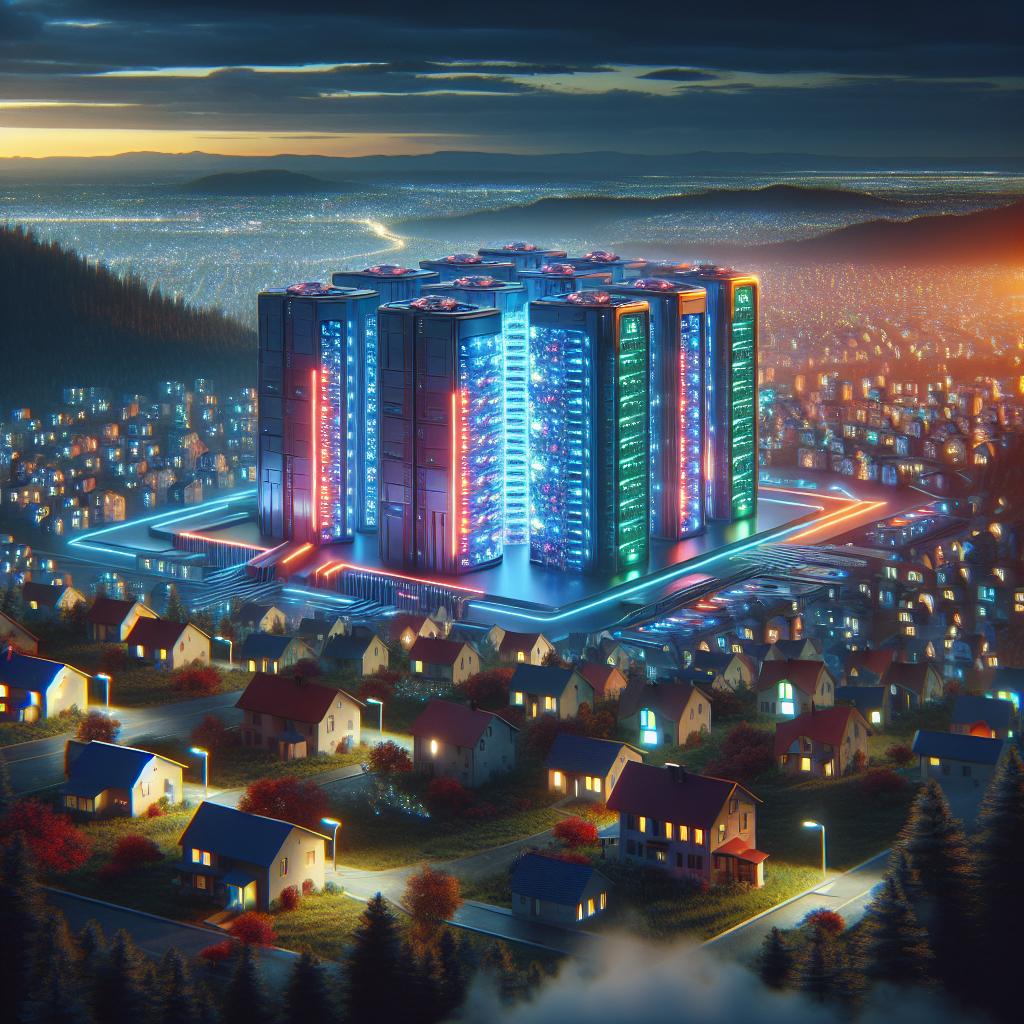
Prologue: The Night the Lights Flickered
It started with a flicker. In a quiet suburb outside Dallas, Emily Lane was microwaving dinner when the power pulsed—a brief blackout, then a surge. Streetlights blinked. Her phone buzzed with a local alert: “Unusual grid activity in your area.” She dismissed it at first, but within minutes, chatter spiked online. The culprit? Not a storm, not a fire—an AI data center ramping up nearby, draining more electricity than entire neighborhoods combined[1][2].
What’s Happening (And Why You Should Care)
America is in the throes of an invisible revolution. AI data centers, once hidden footnotes behind the digital cloud, are now monstrous consumers of power—soaring from 4 gigawatts in 2024 to a projected jaw-dropping 123 gigawatts by 2035, according to Deloitte[1]. To put it simply: these server farms are on track to outpace electric vehicles, hydrogen plants, and even some cities in their hunger for energy[2][4].
Unlike yesterday’s data centers, this new breed is built for artificial intelligence. They run massive, supercharged processors that “train” AI on mountains of data—GPT-4’s servers alone gulped about 30 megawatts just for a single generation[2].
And it’s only getting bigger. Hyperscalers (think: Amazon, Google, Microsoft) already run facilities that rival small power plants, and their next projects could eclipse even major energy utilities[1].
The Anatomy of a (Power-Hogging) Machine
Picture a data center: football fields lined with humming racks, each packed with custom AI chips. Training generative AI like ChatGPT is less like browsing the web and more like running thousands of high-performance engines—all at once[4].
Modern AI no longer just crunches numbers; it devours data, demanding more energy per square foot than ever before. One five-acre center’s jump from regular processors to AI-specialized chips pushed its usage from 5 megawatts up to 50—a tenfold leap[1].
Cooling systems must work overtime, not only to protect fragile electronics, but to keep the machine learning beast alive and stable. Water usage spikes. Local grids strain under demand. This isn’t tomorrow’s problem; it’s today’s crisis hidden in plain sight[2][4].
Human Consequences: Emily’s Everyday Fight
Now imagine Emily’s week:
- Every afternoon, rolling brownouts stalk her block.
- Local businesses complain their refrigeration isn’t reliable.
- Her son, prepping for a college Zoom interview, scrambles for backup power.
All the while, nearby, the AI data center hums with unyielding appetite. Emily wonders: Who decides which lights go out, or which machines stay on? Are the jobs promised by these mega-facilities enough to justify the chaos?
Expert Voices: Warning Bells and Innovation
“AI is a breakthrough, but if unchecked, its energy footprint risks outpacing our climate ambitions,” warns Dr. Linda Choi, an energy analyst at MIT. “Sixty percent of new demand is still fed by fossil fuels. If we don’t adapt, emissions could soar by hundreds of millions of tons by 2035”[4].
But there’s hope: experts point to new algorithms like DeepseekV3’s “Mixture of Experts,” slicing power use by splitting AI tasks across smaller, specialized chips[2]. Some states demand built-in green energy for new centers. Companies race to engineer smarter cooling, or even relocate facilities to regions awash in renewable wind or solar.
Government, Industry, Community: The Tug of War
As headlines spread, state leaders grapple with conflicting priorities.
- Tech lobbyists promise economic boons—jobs, taxes, prosperity.
- Environmentalists stage protests, citing rising emissions and grid instability.
- Utilities caution: “We can’t keep up without new infrastructure.”
The federal government, pressed by growing blackouts and mounting climate pledges, launches a task force. Local communities, frustrated by disruptions, push back with lawsuits and public forums.
Amid this tension, many smaller towns find themselves courted by tech giants—offered prestige, but saddled with higher electricity rates and environmental unknowns.
What’s Next / Could It Happen Again?
Policy makers and engineers scramble for sustainable answers. Will innovations like more efficient AI architectures slow energy escalation? Will bold investments in renewables offset the damage? Or will urgent power needs force the return of coal and natural gas, setting climate progress back a generation[3][4]?
If building speeds up, expect more “Emilys” across the country: ordinary families contend with unexpected outages, rising bills, and the uncertain shadow of technological progress.
Closing Provocation
If AI demands keep surging, who should decide whose lights stay on—and whose dreams get unplugged? Would you trade digital innovation for everyday stability?
FAQ
-
What is an AI data center?
An AI data center is a specialized facility filled with computers designed for artificial intelligence workload—training, learning, and deploying AI models—all of which demand much more power than traditional data processing. -
Why are AI data centers causing power grid problems?
AI centers require enormous electricity, often outstripping what local grids can safely supply, leading to blackouts, high bills, and environmental tension[1][2][4]. -
How can AI data center impact everyday people?
Ordinary citizens may experience rolling blackouts, energy price hikes, and water shortages as local utilities struggle to support data center demands[2]. -
Are governments responding to this issue?
Yes. Many governments and communities are debating new green standards, infrastructure upgrades, and even restricting further data center construction to protect local stability[3][4]. -
Can more sustainable technology solve the problem?
New algorithmic efficiencies and renewable energy use can help lessen the impact, but experts warn these innovations must scale far faster to balance growth[2][4].