
The Call Nobody Wanted
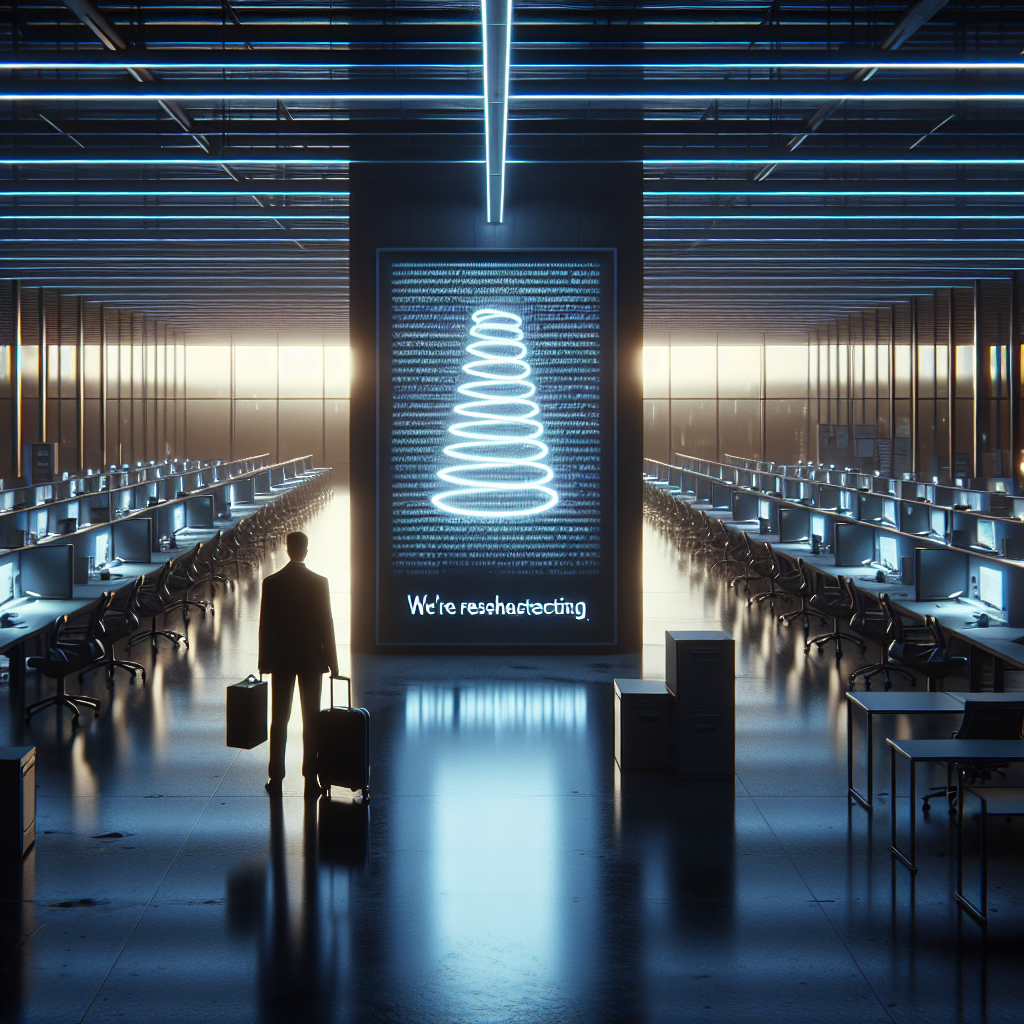
It’s a drizzly Wednesday morning in Seattle. Tasha, a veteran customer support agent at a thriving e-commerce giant, sips her coffee—routine jitter blending with an eerie premonition. Her phone lights up with a meeting invitation: “Urgent—Company Update.” Minutes later, a terse, impersonal video message delivers the news. Her role, along with hundreds of others, is being eliminated—replaced, almost in its entirety, by an “AI-powered customer experience solution.” The camera lingers just long enough to capture stunned faces flickering across the screen. For them—and nearly 50,000 other workers in 2025—AI isn’t the future. It’s the force upending their present[2].
Automation Moves from Silicon Valley Secret to Boardroom Boast
In years past, employers sidestepped hard questions about automation displacing jobs. Admitting AI-induced layoffs risked “bad optics”—the kind that scare Wall Street and rile up lawmakers. But 2025 has shattered that quiet discretion. From tech behemoths in California to global giants in Germany and South Korea, companies are now flaunting their efficiency crusades: “AI has allowed us to reduce headcount and optimize costs,” goes the new executive refrain[2].
The statistics have become impossible to ignore. In the U.S. alone, AI was cited in over 48,000 job cuts so far this year, with a staggering 31,000 announced in October—a single-month surge that accounts for nearly one in every five planned layoffs nationwide[1][2]. Tech firms, holding the torch of digital innovation, are leading the way. Their rationale? Streamlined workforce, higher margins, and readiness for a world “increasingly driven by AI”[2].
The Rise of Machine Colleagues
How exactly is artificial intelligence taking over? The answer is both simple and unsettling.
Recent AI breakthroughs mean software systems—once limited to basic chatbots—now handle far more sophisticated tasks: from conducting complex research and writing flawless code to running entire HR departments or fielding thousands of customer complaints a minute[2]. Major firms like IBM have openly replaced hundreds of back-office staff with what they call “AI agents”—digital workers as tireless as they are uncomplaining. Other giants, like ServiceNow, say they’re using AI to eliminate “soul-crushing” clerical roles, shifting instead to teams that design and oversee these automated systems[2].
To many leaders, it’s an irresistible offer. “AI doesn’t take lunch breaks, won’t ask for sick days, and delivers efficiency at unprecedented scale,” one tech CEO summed up in a recent panel[2]. The ROI is already materializing: tens of millions in cost savings, leaner operations, and steady stock market applause.
The Human Cost: One Family’s Story
For Tasha, the numbers are cold comfort. She’s no stranger to workplace change—her company once promoted “human-plus-AI” teams, with software assisting but never replacing staff. That changed overnight. Now, she finds herself navigating a crowded job market, competing with hundreds of former colleagues, all while helping her daughter adjust to a new school and explaining to aging parents why her “secure tech job” evaporated.
She’s resilient but admits to anxiety: “AI is everywhere now. You can’t even get an interview for another customer service job without being asked how you’d work alongside bots. And they know the bots are doing more and more every month.” Her story echoes across kitchen tables nationwide—from families of lifelong coders to late-career HR pros told their years of experience now matter less than ever.
Governments and Industry: Reaction and Ripple Effects
Policymakers sense a paradigm shift—and pressure is building. The U.S. Federal Reserve Chair, Jerome Powell, has called out the wave of AI-specific job cuts, warning that the “pace of change has outstripped our existing safety nets”[2]. Congressional committees have launched urgent hearings, grilling CEOs on ethics and corporate responsibility. Major unions are negotiating for retraining funds, while mayors in tech hotspots urge Congress to expand unemployment benefits and fund “AI transition programs.”
Corporate leaders are offering their own reassurances: investment in “upskilling,” promises of net job creation elsewhere, and claims that automation will rescue workers from repetitive drudgery[4]. When IBM’s CEO says, “We’ve hired more in AI than we’ve eliminated,” critics ask, “But for whom?” Many worry the new jobs require skills that laid-off workers simply don’t have—and can’t acquire fast enough[3].
Personal, National—and Global
This isn’t just a tech story. It’s a saga unfolding in finance, retail, airlines, and manufacturing. Lufthansa is eliminating thousands of admin roles as it doubles down on AI. ING, a major European bank, is paring back human staff in favor of smarter software. The global implications are enormous: analysts project up to 300 million jobs worldwide could be at risk by decade’s end[3].
For many, the net effect is less security, more anxiety. Yet the technological leap is not easily reversed. As AI gets smarter, does society get bolder—or just more brittle?
What’s Next / Could It Happen Again?
If the current momentum continues, analysts warn, automation will reach deeper into white-collar, creative, and even managerial jobs. Goldman Sachs projects a further 4% cut in corporate headcount over the next 12 months—possibly rising to 11% in just three years[2]. Governments are racing to revamp education and social safety nets, but progress is slow.
Could we be on the cusp not just of disruption, but of lasting realignment? Or, as some believe, will new opportunities emerge, powered by the very AI now blamed for so many layoffs?
Here’s the question: As AI grows, do we risk trading human connection for machine efficiency—and what would you give up to keep your job safe?
FAQ
How many jobs has AI replaced in 2025?
According to Challenger, Gray & Christmas, AI has been cited in over 48,000 U.S. job cuts in 2025, with a significant spike of 31,000 in October alone[1][2].
What industries are most affected by AI layoffs?
Technology, finance, retail, and even sectors like aviation and gaming are experiencing major AI-driven reductions[2][3].
What is causing companies to accelerate AI automation?
Executives cite efficiency gains, cost reduction, and pressure to remain competitive as main motivators. Many openly admit using AI to replace repetitive, high-volume jobs[2].
Are new jobs being created to offset AI-related losses?
Some firms promise new, higher-skilled positions, but experts warn that workers displaced by AI may lack the training needed for these roles[4][3].
What can workers do to protect themselves from AI-driven layoffs?
Upskilling in technology and adaptability remain key strategies, but the rapid pace of AI advancement creates ongoing uncertainty for many workers[5].